 Kelpie
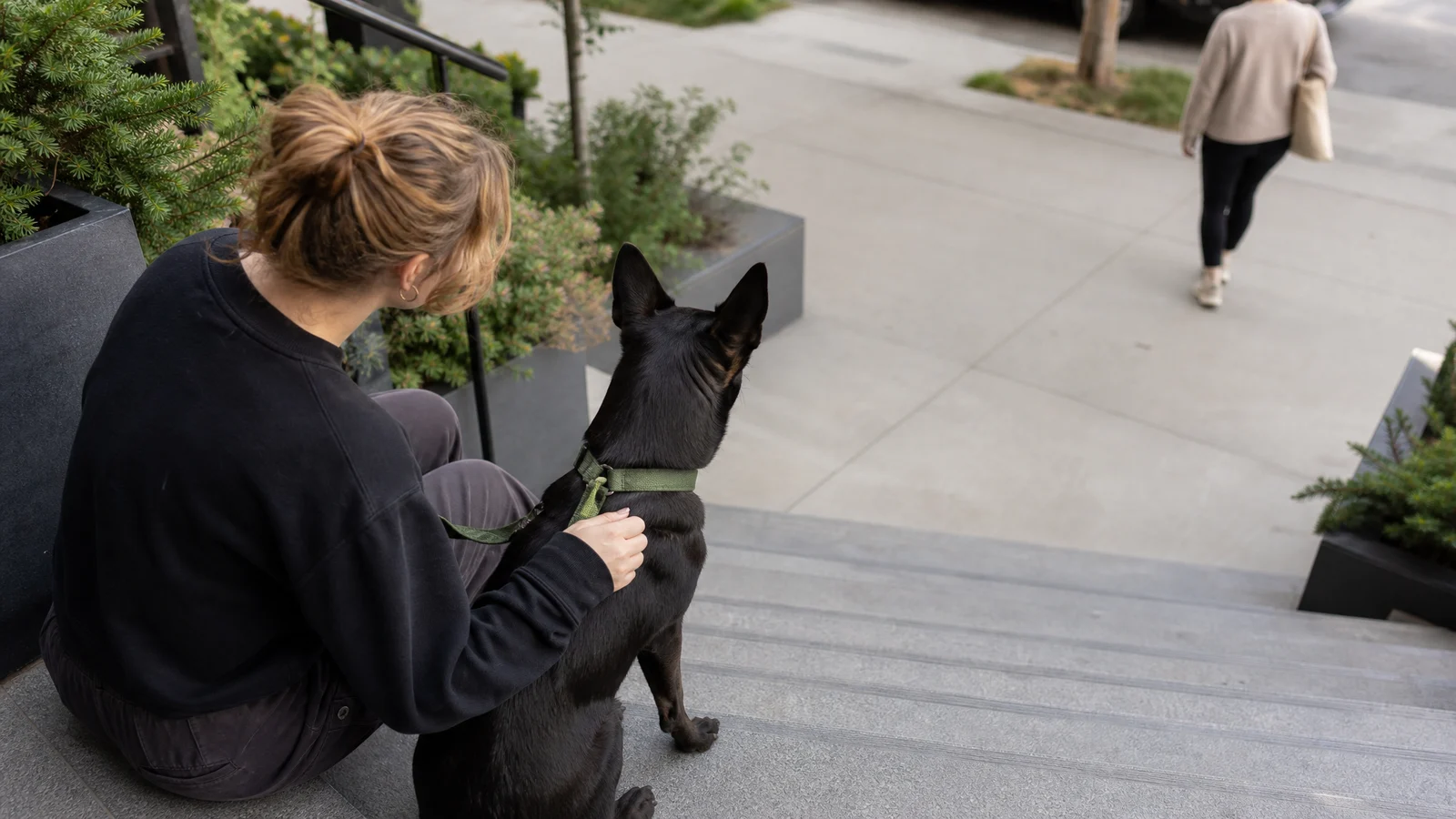
Most Kelpies stay reserved with strangers well past puppyhood. Weeks and months, not days, are the realistic measure. A working-Kelpie source calls the breed basically a one-man dog who usually does not take to strangers for a long time, more so in the good ones. Treat that as a trait to work with.
The breed standard asks for an open, friendly, alert but placid disposition and disqualifies extreme shyness and viciousness. Between those poles sits a wide, normal band. Handled badly, slow warm-up turns into barking, raised hackles and a dog who cannot cope with the street. Handled well, it gives you a loyal dog who watches, decides and settles.
We'll cover four situations: life in an apartment, a household with small children, living alongside another dog, and days when you work long hours. Then we answer the questions owners ask next. We specialize in Kelpie behavior and training, so each plan is built around how this breed actually reacts.
Apartment Socializing for an Australian Kelpie
An apartment puts strangers in your dog's day without asking. Neighbors pass in the corridor, riders share the lift, footsteps stop outside the door and people walk below the window. You cannot control who shows up. You can control the distance and what happens next.
Corridors and Lifts
Start in the corridor with tiny treats in your pocket. Stand far enough from a neighbor that your dog still takes food. Each calm look at the person gets a cheerful marker word and a treat. Then let your dog look away or step back. Choice builds confidence faster than being asked to hold still.
Lifts are tighter. Let others board first, or wait for the next car if it is crowded. Keep your dog on the side away from the other riders and feed a steady trickle of treats until you step out. A dog who ignores the other passengers is winning.
If barking or reactivity jumped after a move, treat the move as a reset. Some owners link the jump to a new apartment with a window, others to a move across the country. Return to a distance your dog can handle, reward calm and rebuild over weeks. Do not judge the dog by the first days in a new building.
Visitors and the Window
Window barking is the apartment's signature problem. Many Kelpies bark hard at passers-by even with two hours of outings and plenty of sprinting every day. Owners who give that much exercise suspect something other than boredom, and we agree. More exercise alone may not fix it. Pair exercise with rewarding quiet and calm at the window.
Some dogs watch the street quietly and only escalate when an unfamiliar person steps onto the property. Catch the quiet part. Drop a treat on a mat each time your dog watches calmly, before any barking starts. Frost the lower half of the glass or turn the furniture so the street is not a constant show. Teach a settle on a mat away from the window.
For guests, put your dog behind a gate or on the mat before the door opens. Ask visitors to ignore the dog completely. No staring, no reaching over the head, no crouching and cooing. A guest can toss a treat to the side and look elsewhere. Many Kelpies warm up after several visits, long after the first hello.
Walks Outside
Some Kelpies bark at any person or dog who approaches in public. On leash this can turn to growling with raised hackles. Create distance first. Turn around, curve wide or put a parked van between you and the other party. Reward calm looks. Let your dog choose to move away before anyone gets close.
Wariness depends on context. Many Kelpies guard at home or react on leash, yet are friendly, happy and playful with people and dogs at the dog park. The table shows the pattern many owners report and the fix for each setting.
| Setting | What many owners report | What to do |
|---|---|---|
| Home or window | Barking or guard mode as strangers pass or arrive | Reward quiet and shrink the view |
| Leash in public | Barking at approaching people and dogs, sometimes growling | Add distance and reward calm looks |
| Dog park | Friendly, happy and playful | Enjoy it, but it is only one setting |
| After a move | A jump in barking or reactivity | Rebuild at a distance your dog handles |
Practice in several places, not only the easy one. Where your dog relaxes shows what is possible. Where they do not shows where to add distance.
Slow Warm-Up Kelpies Around Kids
Children are fast, loud and unpredictable. That is hard on a dog who is slow to accept adults, and Kelpies are extremely alert, so running and shrieking register at once. Your plan has two halves: clear rules for the people and a private place for the dog.
Supervision Rules
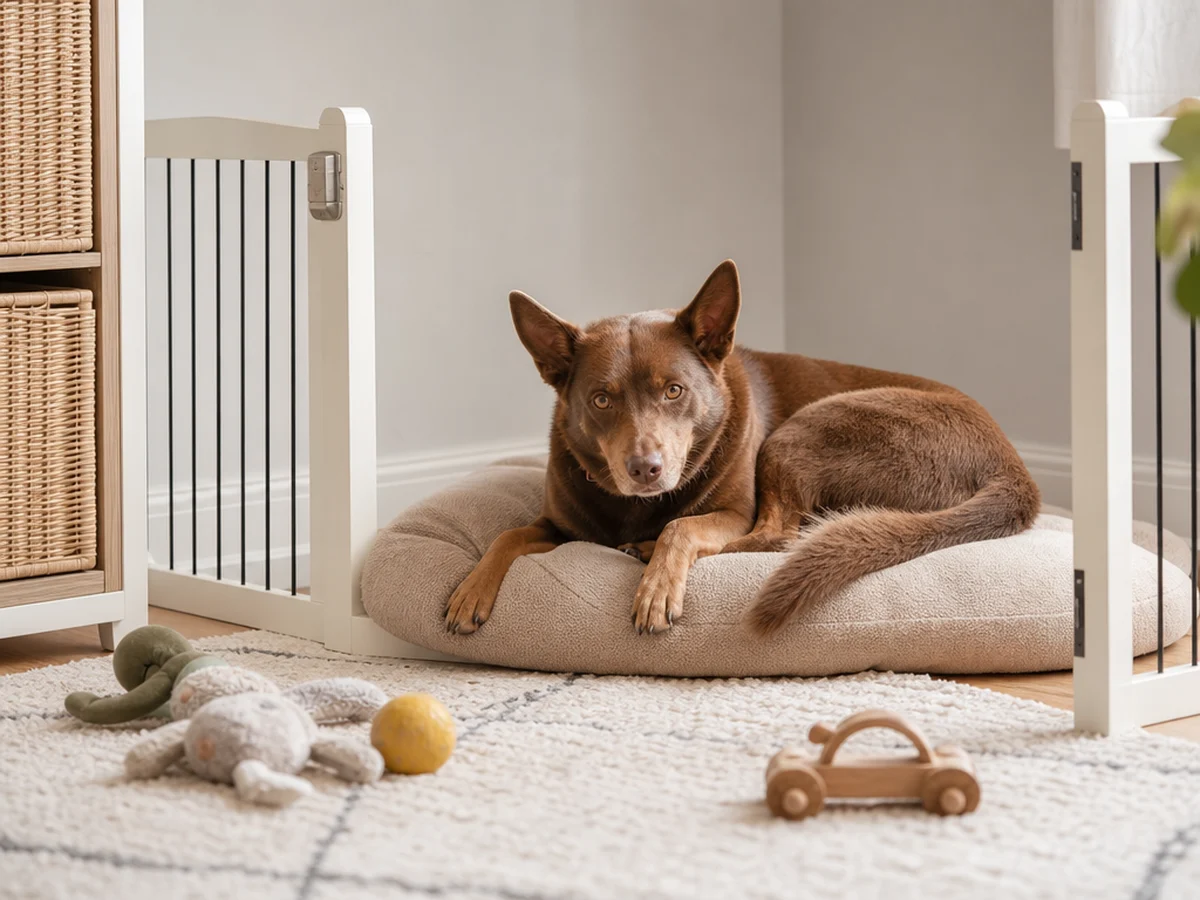
An adult watches every contact, eyes on both dog and child. Keep sessions brief and stop while your dog is still loose and comfortable. When nobody can watch, use a gate or a closed door. Supervision is not distrust. It lets you step in before your dog has to.
Learn the signs that mean "give me room": turning away, lip licking, a stiff body, the whites of the eyes. If your dog walks off, let them go. A dog who is allowed to leave rarely needs to get louder.
Staring, circling or grabbing at clothes when kids run can be herding habits rather than aggression. Calmly end the game, move your dog away and hand over a chew on the mat. If it repeats, bring in a qualified reward-based trainer.
Many owners find public outings go better with the whole family along than with one person alone. Use that. Build skills on family walks first, then try solo walks at a greater distance.
Rules for Visiting Kids
Give every visiting child the same short list before they meet your dog. Post it by the door if that helps.
- Walk, do not run, and keep voices low. No chasing, hugging or grabbing tails.
- Drop treats on the floor or offer them on a flat hand. Never wave food at the dog's face.
- Let the dog come to you. Do not lean over or corner them.
- Leave the dog alone at meals, with chews and during naps. Reaching into the bowl or often taking food away can create resource guarding.
- Ask for greetings once your dog has every paw on the floor. Large dogs who jump can knock people over, which is especially dangerous for children.
Run the first visit from across the room. Your dog rests on their mat while the child plays quietly, and you feed for every calm look. Close the gap only on later visits, and only as fast as your dog stays loose. A child who visits often and does little earns trust faster than one who visits rarely and tries hard.
A Retreat for Your Dog
Set up a bed or crate in a quiet room that children never enter. Hand out chews and treats there. Tell the kids it is the dog's room, and enforce it. When your Kelpie goes there on their own, they are saying they have had enough. Leave them be and reward the choice with a quiet treat later.
Keep the pace slow. A new child can take as many weeks to accept as a new adult. Measure progress by how close your dog tolerates and how fast they recover, not by whether they greet anyone.
Socializing With a Resident Dog
A second dog in the house can help or hinder. A calm, friendly dog shows your Kelpie that strangers are ordinary. A dog who erupts at every knock teaches the reverse, and an alert Kelpie copies quickly. Decide which example your dog sees.
Introduce the dogs on neutral ground before they share a home. Work through this order:
- Walk side by side with a wide gap and reward each dog for looking at you.
- Narrow the gap across several walks while both keep moving.
- Allow one brief sniff on loose leashes, then call both away and pay them.
- Indoors, keep early visits short and calm, with bowls and chews in separate spots.
To prevent copied wariness, manage the doorbell. When guests arrive, send the louder dog to a gate, a mat and a chew in another room. Your Kelpie then does not rehearse alarm beside a model. Reward each dog separately for calm at the door.
Kelpies lean toward one person and like to do their own thing, so do not expect yours to take every cue from the other dog. Reward check-ins with you. Let the friendlier dog join guest greetings only when both are loose, and send both to their mats if either stiffens.
On walks, put your Kelpie on the side away from approaching strangers and give them the distance they need. If the resident dog is also wary, walk them separately for a while. Two worried dogs feed each other.
Slow Warm-Up Socializing While Working
An owner who is out all day has fewer hours, but a slow warm-up dog needs consistency more than volume. The pivotal moment is the handover. A dog walker or sitter is a stranger, and a one-person dog notices the swap at once.
The Walker or Sitter Handover
- Meet at home with you present. The walker ignores your dog and tosses treats to the side.
- Walk together over several visits, with the walker holding the leash and you close by.
- Give the walker your treats, cue words, leash and route so nothing feels new.
- Only then step away for short stretches, and keep goodbyes quiet.
Expect this to take weeks. Keep early solo walks quiet and away from crowds. While you are out, leave a chew in a spot away from the window so the day is not spent rehearsing barking.
Building Trust on Short Evenings
Evenings are short, so make them count. Exercise in the morning, then run a calm session at dusk. Sit at a distance from a quiet path and feed your dog for noticing passers-by. A few minutes beats a long outing. Learning goes best with structure and routine, so repeat the same time and the same steps each night.
Use weekends for longer practice, such as a bench outside a quiet shop. On every day of the week, keep one rule: your dog always has a way to move away from a stranger.
Schedule regular vet visits, and book one sooner if wariness appears suddenly. Pain can change how a dog meets people.
Australian Kelpie Socializing Questions
Slow warm-up is normal for a Kelpie as long as the dog is neither shy nor aggressive. These are the questions owners raise next, each with a short answer.
- How long until a Kelpie relaxes with guests? Plan on weeks to months, and some stay reserved with strangers for life.
- Is window barking aggression? Often it is alert barking, and our guide to nipping, stalking and barking explains the herding instinct behind it.
- Will more exercise fix it? Not alone. Pair exercise with rewarding calm.
- Does a happy dog park visit mean the dog is fine? No. It is one setting, and wariness depends on context.
- When is it more than slow warm-up? Extreme shyness, or growling with raised hackles at people. See your vet, then a qualified reward-based trainer.
Loyalty to one person is part of this breed, and so is alertness. Give your Kelpie time, distance and rewards in every setting, and the watchfulness stays a quiet look instead of an alarm.
 Puppy trainingTeaching a Kelpie Puppy to Settle: The Off Switch Lesson
 CareDo Australian Kelpies Shed? Turning Grooming Into a Rewarded Routine
 BehaviorWhy Your Kelpie Roams and How to Teach Them to Stay Home