 Kelpie
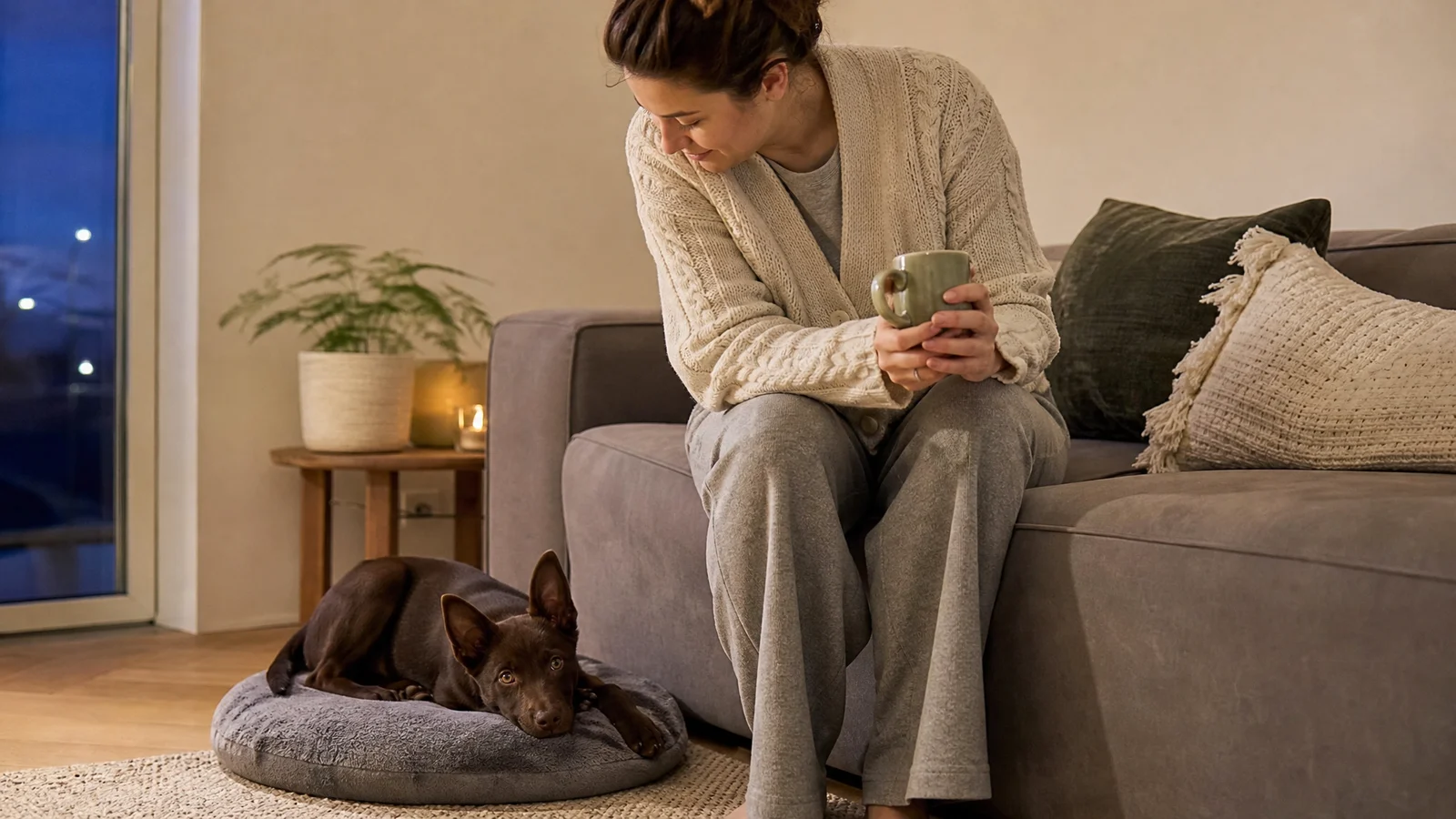
Settling can start the week your Australian Kelpie puppy comes home, and your real question is how soon calm will actually show up. Sooner than you fear, though not on the schedule of a puppy who is wide awake. Rest tends to build through short daily practice, as long as you teach it instead of waiting for it.
Below, you'll find how to choose the mat and the room, the stages of rewarding calm, how long sessions should run, how to stretch the rest with mild distraction, what to do when your puppy winds back up, and how to carry the skill into daily life. Done well, you get a dog with an off switch. Done badly, you get a keen worker who treats your living room as a flock.
The Australian Kelpie Puppy Settling Mechanism
The honest answer is the day they walk in your door. A young puppy is old enough to learn that a rectangular mat pays out for doing nothing, and early practice gives the calm pattern a clean start. You are not teaching obedience so much as a pattern: lie down, stop thinking, get paid.
The reason to start early is written into the breed. The breed standard calls an alert but placid disposition essential, "with a good balance between keenness to work and ability to rest." Notice that rest shares a sentence with keenness. Kelpies are described as keen and active, always ready to work, so the keenness arrives on its own. The resting half is the part you build.
What the First Weeks Look Like
Expect the first mat sessions to produce a puppy who steps on, gets a treat and leaves. Progress varies by puppy, so move on only when the current stage is reliable and add duration in small pieces. Adolescence will poke holes in it, as the week-by-week Kelpie training timeline explains, but a puppy who learned rest young rebuilds it far faster than one who never did.
We treat rest as a skill because a keen, active puppy with no practice at it is likely to invent work. That may involve your ankles, your shoes or the table leg, which is why settling and redirecting chewing into jobs belong in the same week.
Why Australian Kelpie Settling Breaks Down
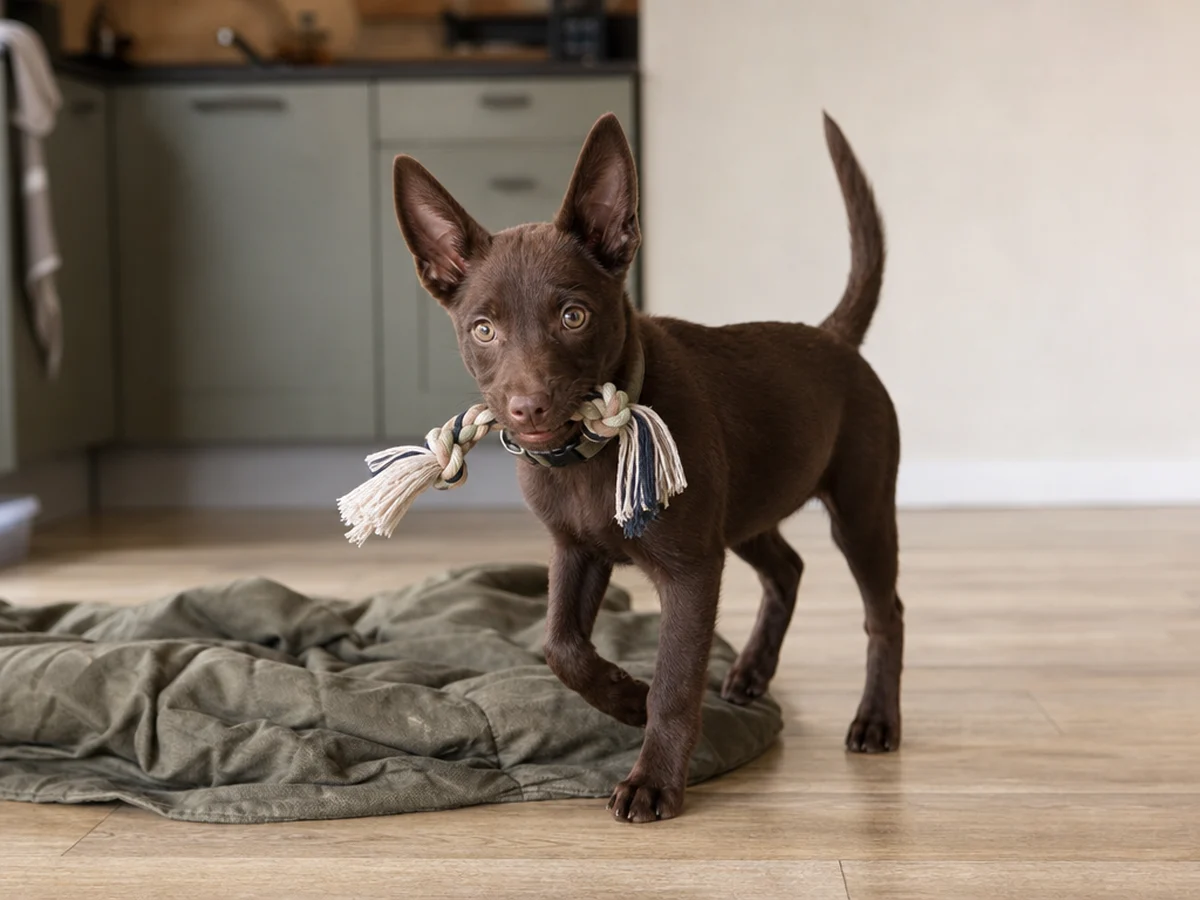
Because they are a Kelpie puppy, and winding up is the factory setting. It does not mean the lesson failed. Re-revving often comes down to a few common causes, and each gives you a practical place to adjust the lesson.
Overtiredness
A puppy past their limit does not slump, they sprint. Sudden zoomies, frantic nipping and ignoring treats are the classic signs. The fix is not a longer lesson, it is an earlier nap. Move the mat session ahead of the meltdown, and when the meltdown arrives anyway, take the puppy somewhere quiet and boring until sleep wins.
Timing
If the puppy lies down and the treat arrives late, you have rewarded the sit-up. Mark while the elbows are still down, feed in position and never pay a puppy who is already rising. Also end calmly. If release is the best party of the day, the puppy will spend the lesson waiting for it.
Pacing
A frequent cause is too much, too soon, usually distance and distraction added before the seconds were solid. Drop back a stage without fuss. A Kelpie puppy with no outlet also winds up from boredom, so give the brain real work outside settle time. K9 Nose Work begins with a game of searching for a treat hidden among several boxes, and it tires a clever head fast.
If a puppy who used to rest suddenly cannot, or seems restless in a way that does not fit the day, mention it at your regular vet visits. Training can wait while your veterinarian rules out discomfort.
Mat Mechanics for Australian Kelpie Settling
Choose a mat small enough to be a destination, non-slip, washable and unlike anything else the puppy owns. A rubber-backed bath mat is the usual winner. Use it for settling and nothing else, with no tug games on it and no dinner served on it, because the mat should predict exactly one thing: lying still pays.
Put it where the household lives but not where it moves. A corner of the living room with a wall behind it beats the middle of the floor, and it beats a spot facing the front window by a mile. Kelpies are extremely alert, and an alert puppy will happily spend a whole session auditing the mail carrier. Remove the show and there is less to be alert about.
The conditions matter more than the mat itself. Each one reduces excitement before you ask for stillness, making the first lesson easier to win. Use this setup:
- Offer a short walk or play session first, then a potty trip, so the puppy is not fighting a full bladder or a fresh burst of energy.
- Pick a moment when the puppy is a little tired but not frazzled, such as soon after a meal, rather than the hour when they are bouncing off furniture.
- Put toys away and keep other pets and children out of the room so nothing competes with the treats.
- Load a pouch with soft, pea-sized treats, and bring more than you think you need, because early sessions are paid per moment of calm.
- Keep your own energy low, with a quiet voice, slow hands and no cheering.
Building the Mat Choice
Reward-based learning cuts both ways. A puppy may try pawing you, spinning, grabbing the mat or nipping your hand to speed up the payout, so reward only the calmer choice you want repeated. The Working Kelpie Council quotes contributor Mike Donelan describing an independent streak in the breed, a dog who likes to do their own thing. In practice, you pay for what the puppy chooses. You do not push, pull or pose them onto the mat.
Stage One Uses Paws on the Mat
Stand beside the mat with treats. The moment the puppy steps on, say your marker, then drop the food onto the mat rather than lifting it toward their face. Treats on the mat teach where the good stuff lives. Repeat a handful of times, then let the puppy wander off and come back. A Kelpie puppy who chooses the mat on their own is already ahead of schedule.
Stage Two Adds Standing or Sitting Still
Now wait. Stop marking the step and mark a moment of stillness instead, such as a sit or any pause in the fidgeting. Feed low and slowly between the front paws so the head stays down. If the puppy mouths your fingers or spins, pull your hand away and look elsewhere for a few seconds, then try again. That mild time-out is plenty. Grabbing ends the game and stillness restarts it.
Stage Three Rewards Lying Down
Lying down is the stage you wait for rather than ask for. Hold a treat still near the mat, and when the puppy's elbows or chest drop, mark and feed on the mat. Many puppies go into a sphinx pose first, and that is worth paying for. Then pay for the stage after it: weight shifted onto a hip, a sigh, a head resting on paws. Praise in a quiet, low voice. Cheerful praise is exciting, and excitement is the opposite of the lesson.
Duration Mechanics for a Longer Settle
Once the puppy lies down reliably, the middle stage is about making the same behavior last longer and survive the real world. Change one thing at a time. Add duration and distraction in the same session and you are back at stage one, and the puppy has learned that the mat sometimes pays and sometimes is a trick.
Add Seconds First
Feed, wait a beat, feed again, and slowly lengthen the pause between treats. Vary it, with short, shorter, longer, short, so the puppy cannot predict the pattern and stays interested. End with a release word such as free, so finishing is your decision and not theirs. That matters for a dog who is always ready to work, because it gives the job an ending.
Add Distance, Then Mild Distraction
Take a step back, return and reward. Build up to walking around the room, then sitting in a chair, then moving about the kitchen. Then add mild distraction: a family member strolling past, a dropped spoon, a door opening far away. The standard describes Kelpies as extremely alert, so start with the quietest version of each distraction.
Because the breed tends to be devoted to their person and slow to warm to strangers, keep visitors boring at first. Ask guests to ignore the puppy while you reward calm.
This is the same skill behind sports like rally, where speed is not the goal and the point is teamwork with the dog under control. A puppy who can hold a settle near activity is already building that.
Daily Rhythm Around Puppy Settling
Shorter than feels useful. At first a session is a handful of treats and a few minutes at the very most, and then the puppy gets up and you let them. End while they are still doing well, not after the fidgeting starts. A keen Kelpie mind can turn a dull lesson into a wrestling match in no time, so quit while the mat still looks like a good deal.
The sessions are not really where the rest lives, though. Breed standards describe the gait as tireless and the energy as almost inexhaustible, which means your puppy will never announce that they are done. They will keep going until they fall apart into biting and zoomies. Rest has to be scheduled by you, like meals. A daily rhythm that works:
- Run a brief mat session after meals and potty trips, a few times across the day.
- Follow every burst of play or walking with a rest period on the mat or in the puppy's sleeping spot while the excitement drains away.
- Add a calm evening stretch where the household is relaxed and the puppy lies on the mat while you watch television, with a treat now and then.
- Send the puppy somewhere quiet the moment sleepy signs show, such as slowing down, nipping at everything or ignoring toys.
Settling gets easier when the day itself has gaps in it. A puppy cannot practice calm if every waking minute is filled with action.
Keeping the Australian Kelpie Settle Working
Rest is a skill, taught and rewarded like sit or come. A breed built for almost limitless stamina will not stumble onto an off switch by accident, so you install one while the puppy is young and the habit is cheap to build. Here is the plan.
Begin with short mat sessions. Several times a day, hand over a few treats for stepping on, standing still and lying down, then let the puppy go. Keep the room quiet, the toys away and your voice low. Move on when the puppy walks to the mat on their own and drops within moments.
Once that choice is dependable, add duration and mild distraction. Stretch the gaps between treats, step away, then walk around the room, then add a quiet household sound. Add a cue word only once the puppy is already lying down, so the word comes to predict the behavior. When they wind up, drop back a stage and keep going.
Keep rewarded rest in the daily routine so it stays a habit and not a trick. The standard asks the Kelpie for keenness and the ability to rest in the same breath, and only one of those arrives unassisted. Pay for the quiet as generously as you pay for the sprint, and you will end up with a dog who can work hard in the morning and switch off on the mat by afternoon.
 CareDo Australian Kelpies Shed? Turning Grooming Into a Rewarded Routine
 BehaviorWhy Your Kelpie Roams and How to Teach Them to Stay Home
 BehaviorStop an Australian Kelpie Jumping on People