 Kelpie
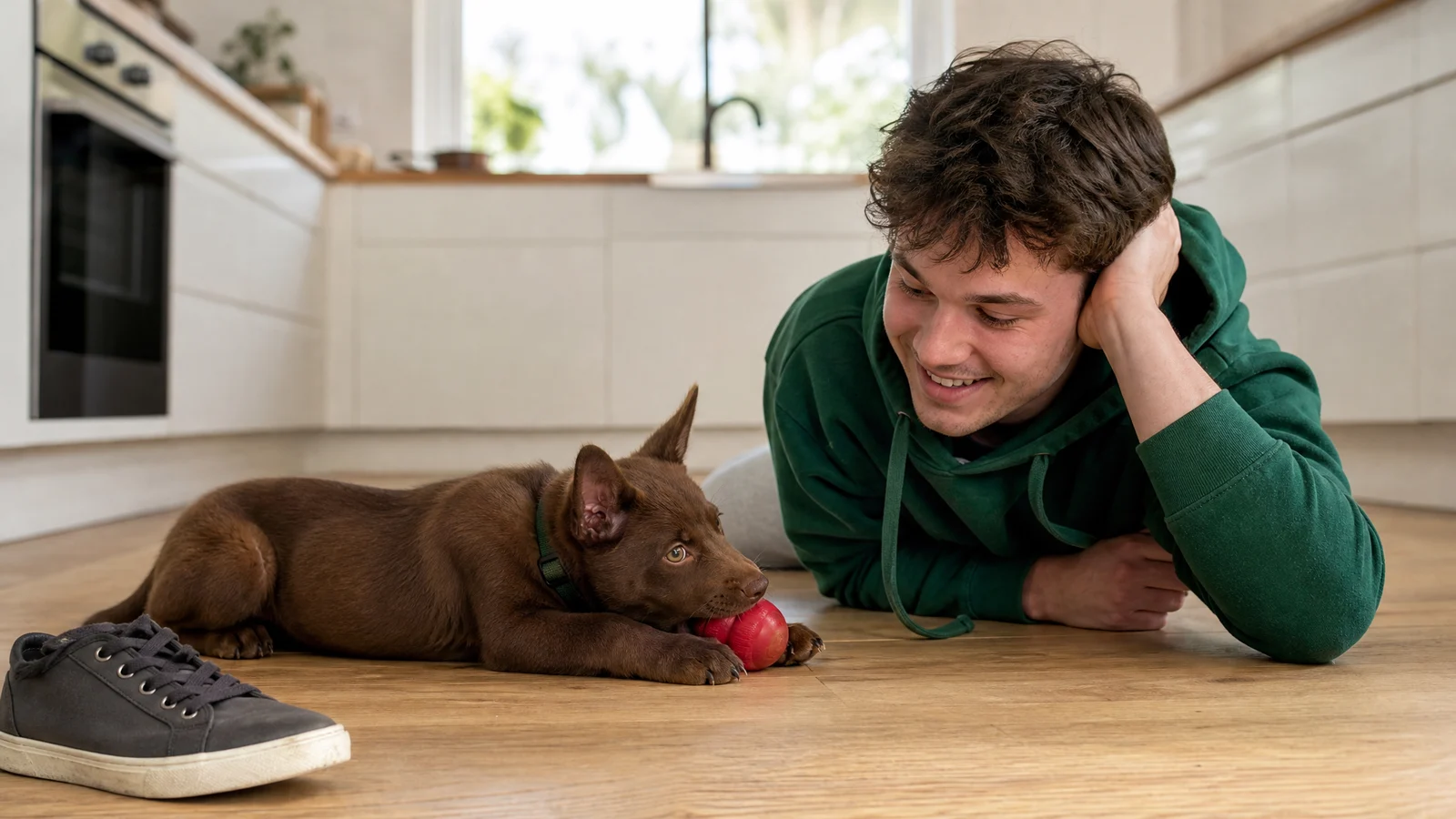
Some Australian Kelpie puppies settle on a mat with a chew and a small task, then watch the household with bright interest. Others take a sofa cushion apart before breakfast. Treat the contrast as a planning question: which legal job and chew has each puppy been given?
This article gives you a puppy-chewing toolkit: a managed chew station, a workday plan, separate resources for multiple dogs and small rewarded jobs your puppy can choose. Done well, you gain a focused, willing partner. Done badly, chewing grows into bigger projects. We have trained this breed for many years, and the practical goal is to make the right choice easy to repeat.
Why Australian Kelpie Puppy Chewing Needs a Job
Every puppy chews. Mouths are how young dogs explore, and teething is uncomfortable. The likely reason a bored Kelpie puppy finds their own work sits in the drive the standard describes.
Look at what the breed standard asks for: an extremely alert, eager and highly intelligent dog with almost inexhaustible energy and marked devotion to duty, plus a natural instinct for working sheep. Put that package in a living room where nothing has been assigned, and the puppy assigns something themselves. A cable becomes a project, a chair leg becomes a puzzle, and a shoe becomes something to carry off.
Working Drive With No Outlet
That is not spite, and it does not make yours a difficult puppy. It is working drive using the only outlet on offer. So the plan on this page is never to suppress the drive. It is to point it at chews and small tasks that you approve of, and then pay the puppy for choosing them.
Reward-based methods are also what veterinary behavior specialists recommend for all dog training, and everything below runs on chews, treats, praise and well-timed games. Because Kelpies tend to be independent, inviting the puppy into a rewarded job is a sensible way to make an approved choice worthwhile.
The tools differ in setup and timing, but the same rule runs through all of them. Keep the right options plentiful, keep the wrong ones out of reach, and make choosing well the most rewarding thing in the room.
The Australian Kelpie Puppy Chewing Station
A useful chew station makes a few approved objects easy to notice instead of scattering toys across the floor. A bright puppy may lose interest when the same objects are always available, while a floor covered in old toys can make none of them stand out.
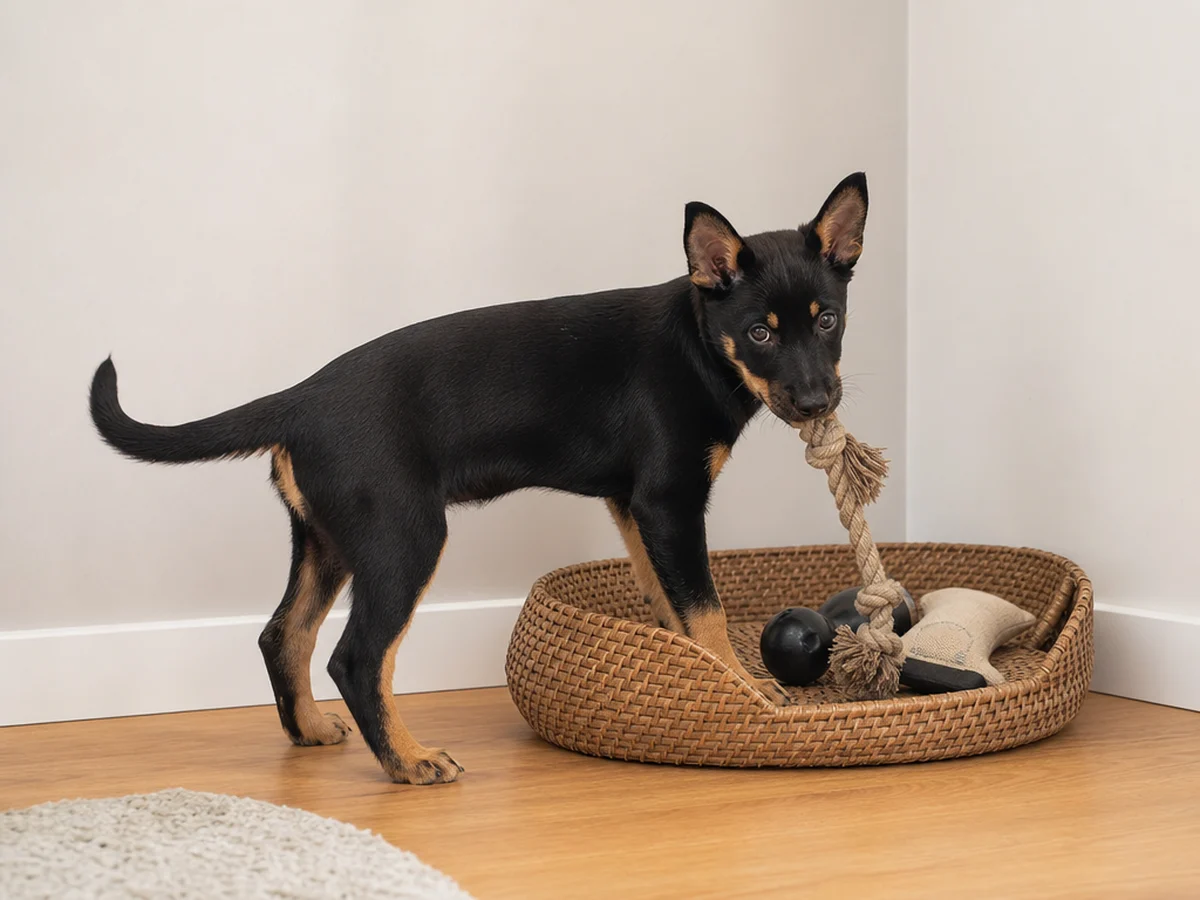
Set aside a shelf or a lidded basket, out of the puppy's reach, and keep only a few items out at any time. Swap them regularly, so that last week's boring toy comes back feeling new. Choose sturdy items too large to swallow, check them often and retire anything that starts to break apart.
Rotate the Chew Station
The shelf works best when it is part of a routine instead of a pile of options. Keep the choices clear enough that the puppy can succeed without constant interruption. These habits carry most of the weight:
- Put the current chews in one spot, such as a bed or a gated corner, so the puppy learns where chewing happens.
- Hand over a fresh chew when the apartment gets busy, before the puppy has found something of their own.
- Move shoes, cables and remote controls up high or behind doors, because a small home leaves little room for temptation.
- Mark and reward whenever the puppy picks up a chew without being asked.
Add a Carry-and-Fetch Tool
Add a small task for the moments when a chew is not enough. Teach your puppy to lift a soft toy and carry it over to you or to their bed. The trick is to break it into small steps, each marked and rewarded in turn: look at the toy, touch it, hold it, take a step with it, then deliver it.
The likely reason this small task suits a working breed is that it gives the puppy a clear start, finish and reward, and a hallway is plenty of room to practice. Stop while the puppy still wants more, and a few short rounds a day will beat one long one.
Reset Baskets and Closed Storage
Closed storage removes the wrong objects before the puppy has to choose. In a busy family home, children's toys and puppy chews can look almost the same to a puppy. Soft toys, plastic blocks and small figures all feel like fair game, and every dropped item is a fresh invitation.
Start with a clear split. The puppy gets a chew zone, such as a gated corner or play pen with a bed and a few approved chews, and the children get toy storage the puppy cannot reach. Shelves, lidded bins and closed doors do the job better than reminders, because management does not rely on small people remembering.
Kelpies tend to bond closely with one person and can be slow to warm to people outside that circle, so one adult should oversee chew time and the rest of the family joins in gradually. Children should leave the puppy alone while they chew, and an adult should supervise any hand-over of a chew or a treat. Keep the household routine calm and predictable while the puppy learns the chew rules.
Family Jobs at the Station
Once the basics are in place, you can give the children easy jobs of their own. Each task below is small, safe and run alongside an adult.
| Job | What the child does | What the puppy earns |
|---|---|---|
| Tidy-up basket | Waits while the puppy drops a toy into a basket | A treat from the adult, then praise from the child |
| Chew delivery | Places the chew in the puppy's bed | Calm time with the chew, with no hand-me-down chaos |
| Name the toy | Says the toy's name and rolls it gently | A treat for bringing it back to the adult |
| Go to bed | Points to the bed in a quiet voice | A chew once the puppy lies down |
Keep the treats with the adult and the rules the same for everyone. Consistency matters more than clever tricks, and a puppy who gets the same answer from every person learns far faster.
Australian Kelpie Puppy Chewing Rewards
Across the tools above, the same training rule applies: give the puppy an approved chew, a small task and a reason to choose both. The rule underneath is simple: pay the puppy for choosing the chew and the job, and watch for the moment they do it on their own.
That moment is the one to mark. When your puppy looks away from the cushion and heads for their own chew, say your marker word and deliver the treat straight away. Late rewards pay for the wrong thing, so keep treats close during the hours the puppy is loose. If you find a household object already in their mouth, stay relaxed, trade for a chew and praise the swap.
Later, structured work can add direction. Dog sports such as rally build on teamwork while performing skills, and they suit a Kelpie who has learned to work with you instead of around you. For now, small jobs and a good chew are plenty.
The central lesson is that a Kelpie puppy rewarded for choosing their own chew and job stops inventing work. They were bred for tireless effort and devotion to duty, so the energy does not disappear. It goes wherever it is paid best, and your job is to make sure that is a chew, a carried toy or a finished task.
The Daily Puppy Chewing Rotation
A daily rotation puts an approved outlet in place before the puppy starts searching for one. The aim is to alternate movement, thinking work, legal chewing and rest, including during the hours when nobody is home to direct the puppy.
Build the day around a few fixed points. Predictability gives the puppy fewer empty periods to fill with chewing. Start with these points:
- Give a morning outlet before you leave, made up of active play, a short walk or a training session that uses their brain as well as their legs.
- Offer a long-lasting chew or a puzzle feeder in the puppy's safe space just before you go, so leaving becomes the moment good things start.
- Leave only approved items within reach. A gated area with a bed and a few chews is far safer than a whole house.
- Return calmly. Wait until the puppy has settled, then say hello, offer a short break outside and play or train together.
The return routine matters more than it looks. A noisy, excited homecoming shows the puppy that the highlight of the day is the moment you walk in, which can turn waiting into restlessness. A calm one, followed by a few minutes of shared work, gives them something rewarding to look forward to.
The standard asks for a good balance between keenness to work and the ability to rest, and that balance is something you build. If your puppy struggles to wind down when alone, our guide to teaching a Kelpie puppy to settle shows how to teach that off switch step by step. Keep regular vet visits in the routine as well.
Separate Puppy Chewing Resource Stations
Because the breed standard emphasizes working drive, a separate station can turn legal chewing into a defined individual job. When another dog already lives in the house, distinct stations also keep each place and item easy to identify. A puppy may borrow the older dog's toy, and the older dog may not be happy about it. Or the puppy may start keeping their own chew away from the other dog. Either way, tension builds around objects, not around the dogs themselves.
The simplest fix is distance. Give each dog their own chews and offer them in separate spaces, with a gate, a door or a different room between them. For a Kelpie puppy with working drive, a consistent chew zone also makes the approved choice a clear, repeatable job.
Choose chews that look different, so the older dog's favorite does not get mistaken for the puppy's. Pick up leftovers at the end of each session and offer them again later. When no spare objects lie around, there is less to steal and less to guard.
Reward Stations
Treats can cause as much tension as chews. Reward each dog separately, in their own spot, and stagger the timing so neither one is watching the other get paid. If the older dog gets attention first, give the puppy something to do while they wait, such as carrying a toy to the bed.
The puppy also needs a job that belongs to them. A Kelpie who is busy and rewarded is far less interested in the other dog's property. Practice the carry-and-fetch task away from the older dog, then add short, calm shared moments once both are relaxed. If the older dog seems stressed or the puppy keeps pushing the issue, your veterinarian or a qualified trainer can help you read what is going on.
The Puppy Chewing Toolkit Handoff
The toolkit connects directly to three next skills. For relaxation after the work is done, the Kelpie settle lesson covers the off switch. For age-by-age progression, the week-by-week Kelpie puppy timeline lays it out. For an older puppy who keeps chewing from boredom, giving busy jaws a real job goes deeper into what to offer instead.
 Training basicsWhat Is an Australian Kelpie? Their Working Drive Explained
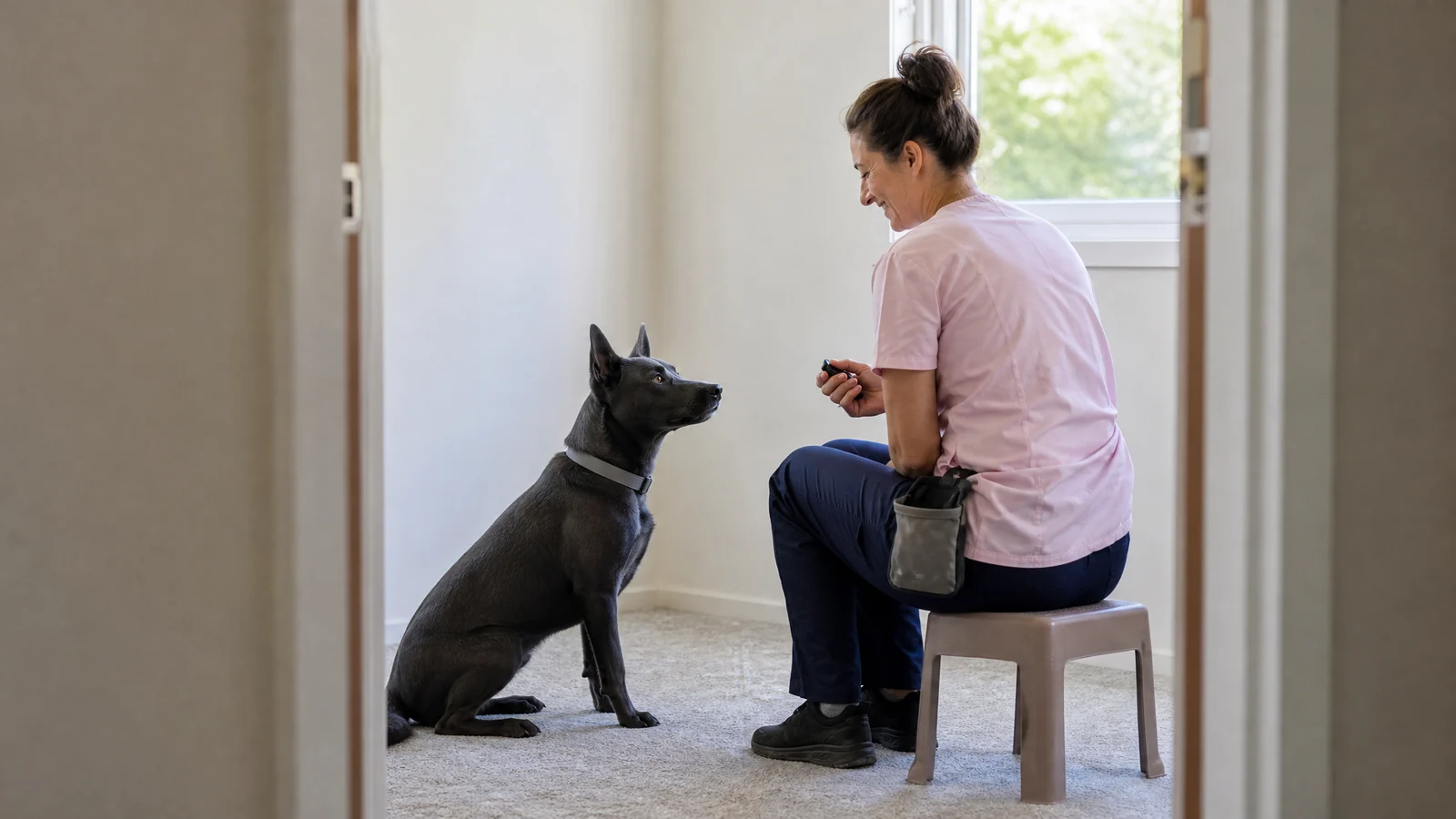 Training basicsMarker Training 101: Using a Clicker With a Quick Kelpie
 Training basicsImpulse Control Games: Teaching Your Kelpie to Wait Before It Works