 Kelpie
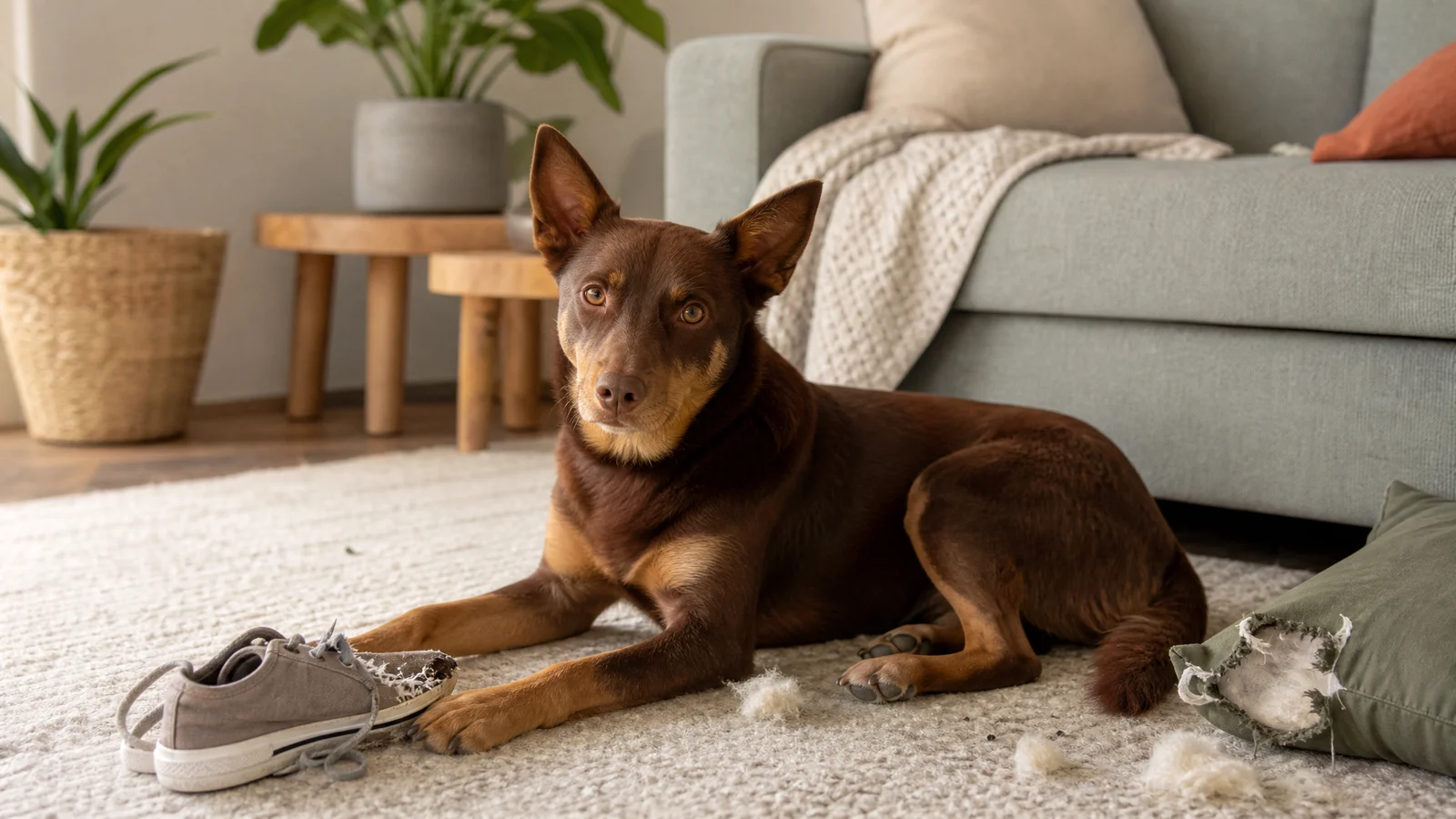
Boredom chewing in an Australian Kelpie stops when their jaws and mind get real daily work, not just more exercise. This is a working-bred dog with a strong need for tasks, and an adolescent or adult left without any will make a job out of your shoes, cushions and furniture.
The fix is to supply better work and pay the dog for choosing it. A Kelpie with a full day of purposeful tasks gives back a calm evening and a house that stays in one piece.
We'll walk you through why undone work turns into chewing, what daily jaw work looks like and why shoes and cushions get picked first, then how food puzzles, chew toys and short thinking tasks fit into one routine and which single job to set up tonight.
Boredom Chewing Is Work Left Undone
The first principle is simple: when a Kelpie chews from boredom, the chewing is a symptom of a need that has gone unmet. Banning the behavior does not remove the need, so the dog finds another outlet. The better answer is a job that uses the same energy in a way you can live with.
The need is built in. The breed standard describes a dog with "almost inexhaustible energy," great suppleness of limb and the capability of untiring work. A quiet day does not switch that off.
Think of a capable office worker handed an empty desk. They will click pens, shred scrap paper and rearrange the supplies. Your Kelpie does the same with a sneaker or a sofa cushion. It is not spite. It is a skilled worker inventing a task.
This article is about adolescent and adult dogs. Puppy chewing has teething behind it and a different plan, which our Kelpie puppy training timeline covers. For an older dog, the method has three parts: manage what they can reach, offer suitable chews and puzzles, and reward them every time they pick those items.
An Australian Kelpie Needs Jaw Work Every Day
Kelpies are gathering-style dogs, and their traditional work uses eye, bark and grip. The mouth is part of the toolkit. In the Australian bush these dogs often worked unsupervised, relying on their own wits to find and gather livestock. A dog with that history does not sit and wait for instructions. They decide what to do next, and if you have not decided for them, the decision may land on your furniture.
Stockmen quoted by the Working Kelpie Council describe the Kelpie as an individual who likes to do their own thing. For you, that means a bored dog will not lie politely and wait to be entertained. They will self-employ.
What an Under-Employed Kelpie Looks Like
Boredom chewing has a recognizable pattern. Look for these signs:
- The damage happens when the dog is alone, or in the flat stretch of the evening after a day with little to do.
- They carry an item away and work on it steadily, rather than tearing at it in a panic.
- They shadow you from room to room, since the breed tends to bond closely with one person, and they chew when you stop giving them a task.
- The chewing drops on days packed with training and puzzles, even when the walk was no longer than usual.
If the chewing starts suddenly, comes with other changes in behavior, or is paired with distress when you leave, ask your veterinarian to rule out a health cause. Regular vet visits belong in any plan for an active working dog.
What Daily Jaw Work Means
Jaw work is any structured chewing, licking or tugging that you provide on purpose. A long chew on a mat, a stuffed hollow toy, a tug game with you and a puzzle that needs mouth and tongue all count. Aim for some of it every day, at the hours when boredom is most likely, which for most households is when you are busy or out of the room.
Why Does My Australian Kelpie Chew Shoes and Cushions From Boredom?
Shoes and cushions are not random choices. Each has features that suit a bored mouth, and understanding them tells you what to put out of reach and what to offer instead.
Shoes smell strongly of you, and they have a satisfying mix of leather, rubber and laces. For a dog who prefers to stay near one person, a shoe is the next best thing to your company. Cushions give way under the teeth, tear into fluffy stuffing and make a gratifying mess. Furniture edges offer a firm surface at jaw height.
The other piece is your reaction. If you rush over, chase the dog or make a fuss, you have just supplied the best game of the day. A calm trade teaches the better lesson:
- Keep shoes, bags, remote controls and laundry behind closed doors or on high shelves, and remove the cushions you cannot protect for now.
- When the dog picks up something that is not theirs, do not chase. Walk over calmly with a treat or an approved chew.
- Offer the treat or chew near their nose and let them drop the item to take it.
- As soon as they pick up the approved item, say "yes" to mark the moment and hand over a small treat.
- Pick up the forbidden item without comment and get the dog settled with a job.
Management is not a defeat. Every chewed shoe is practice, and practice strengthens the habit, so closed doors and gates keep the dog from rehearsing while the new routine takes hold. If chewing also happens in the yard, our article on why Kelpies roam covers the outdoor side.
How Do Food Puzzles Redirect Boredom Chewing?
A food puzzle turns a meal from a thirty-second event into a job. The dog has to use their nose, tongue and teeth to earn the food, which is exactly the work a bored Kelpie is trying to find. Start easy so they win, then raise the difficulty as they get quicker.
Easy Setups
Begin with tasks the dog can finish in a few minutes. Spread some of the daily food over a snuffle mat or a patch of floor so they hunt for each piece. Fill a hollow rubber toy with soft food. Use a slow-feeding dish in place of a bowl. Choose toys too big to be swallowed whole, and watch the first few sessions with anything new.
Harder Setups
Kelpies are extremely alert and highly intelligent, so a puzzle they solve in seconds does very little. Once an easy setup is no challenge, freeze the stuffed toy, hide it in a different room, or layer the filling with crunchy and soft parts. Put the food in a puzzle that needs several steps, such as sliding, lifting and nudging. The right level takes real effort but still ends in success.
Chew Toys Need Thinking Work
Chew toys alone rarely solve boredom. A pile of toys on the floor is the most common attempt at a fix and the one that fails most often. A toy that sits there all week loses its pull, and a dog who bonds closely with their person often wants you in the picture too. Novelty, variety and some involvement from you are what make a toy worth chewing.
The table below compares common types by what each does well and where it falls flat. Use the right column to spot where each option fails.
| Toy type | Does well | Falls flat when |
|---|---|---|
| Rigid rubber chew | Long solo chewing on a mat | It sits out all day and becomes boring |
| Stuffable hollow toy | Combines chewing with food work | The filling is too easy to lick out |
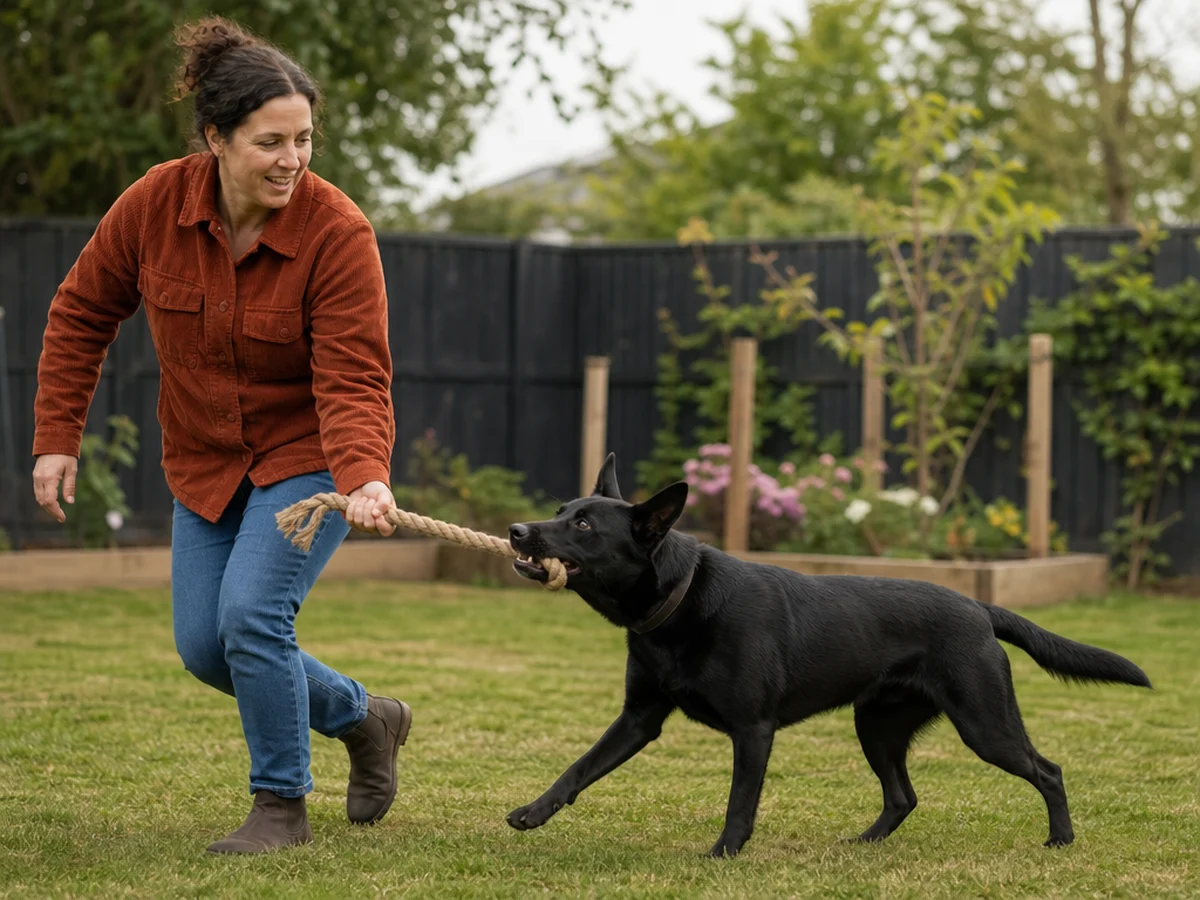
| Rope or tug toy | Shared play and a reward for good choices | You are not part of the game |
| Plush toy | Carrying and gentle comfort | A determined chewer rips the stuffing out |
Keep a small rotation and put out only a few items at a time. A toy that reappears after days away is more exciting than one that has lain on the carpet. Mix textures, since a dog who loves rubber may ignore rope.
Choose gear too big to swallow, with a little give so it does not feel like a rock. Check every item weekly and throw out anything with chunks missing, cracks or loose threads. Avoid handing over retired shoes or socks, since to a dog an old sneaker looks just like your current pair.
Thinking Tasks Cut Boredom Chewing More Than Extra Miles
The standard calls for movement that is free and tireless, with almost limitless stamina. Adding miles to a dog like that mostly builds fitness, and a fitter dog needs even more to do. Mental work tires a Kelpie in a way running cannot, because it asks them to decide, not just move.
Short Training Jobs
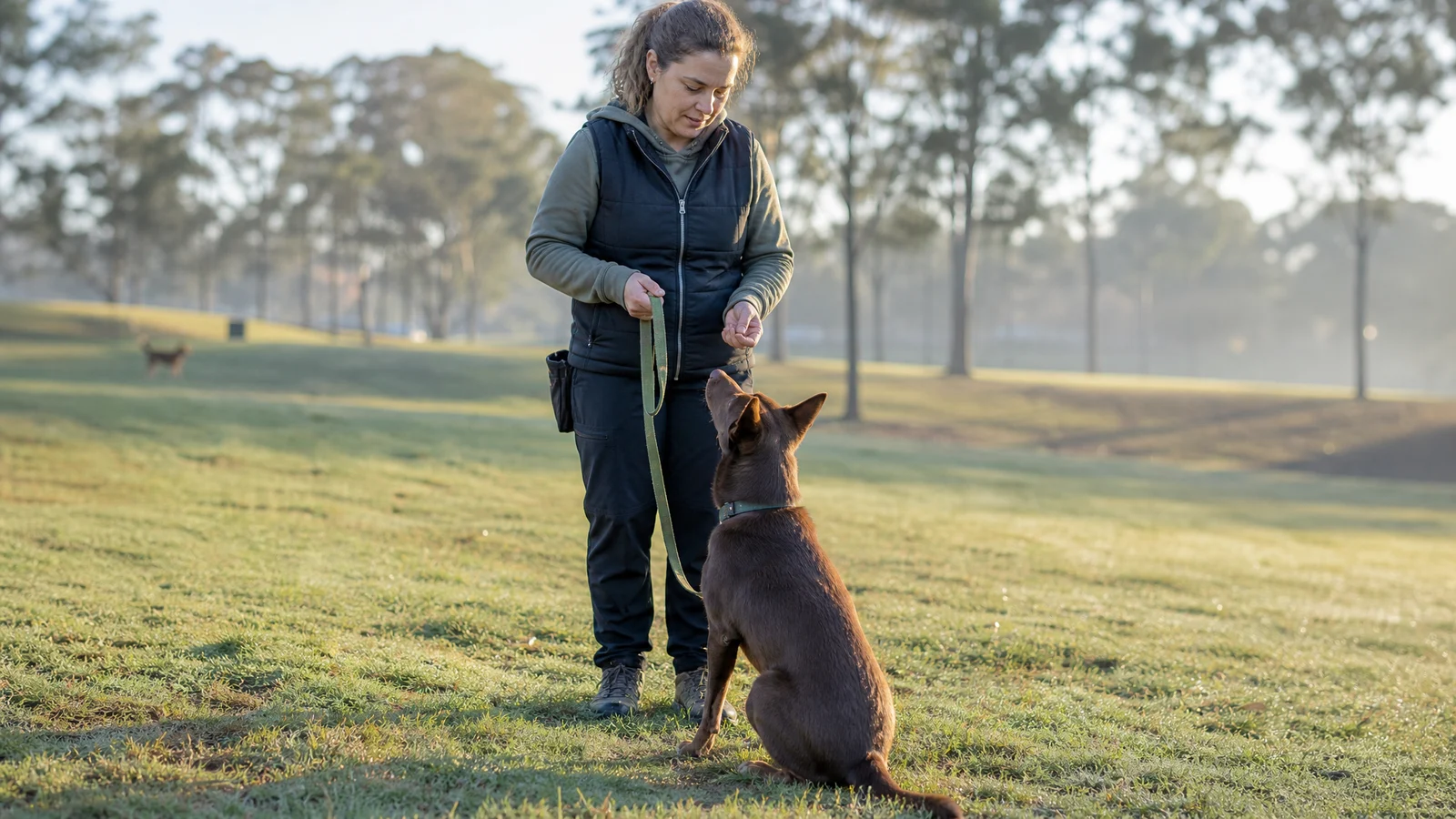
Keep sessions brief and end while the dog still wants more. Because Kelpies like to do things their own way, the best jobs let them make choices that you reward right away: finding a hidden treat, working out a new trick through small steps, or going to a mat on cue. Teach a settle on cue as well.
A good balance between keenness to work and ability to rest is part of what a Kelpie is meant to have, and the resting half is a skill you can train. Our complete Kelpie training guide covers the basics behind these jobs.
A Box Search Game
Scent work suits the breed, which is widely used in search and rescue. To start, set out several open cardboard boxes and bait half of them with smelly treats, so the dog finds the food and rewards themselves. As they improve, bait fewer boxes. It costs nothing and uses real problem-solving.
Fitting It Into a Normal Day
Work, then chew, then rest is the pattern. Adjust the order to your schedule:
- Start with a run or fast play, then serve breakfast in a puzzle or scattered on the floor.
- Do a short training job, such as a new trick or settle practice.
- Give a long chew on the mat while you work, and reward the settle.
- Run a box search or other scent game in the afternoon.
- End the evening with a stuffed toy in the chosen spot while the household quiets down.
If your dog also nips, stalks or barks when bored, our piece on why Kelpies nip, stalk and bark shows how to give those instincts a safe outlet. Work on that outlet alongside the chewing plan.
Build an Australian Kelpie Work Rotation
A workable rotation covers three needs instead of relying on one favorite toy. Give the mouth an approved chew, give the brain a food puzzle or scent search, and follow active work with a quiet settling job.
Choose one option from each group and rotate the specific item or game before it becomes background furniture. Keep shoes out of reach, reward your dog for settling into the approved job and note which combination holds attention without creating frantic play.
Repeat the useful combination on ordinary days, not only after damage appears. Regular jaw work, thinking work and rest give boredom fewer empty hours in which to turn the sofa or shoes into the next project.
 Training basicsAre Australian Kelpies Easy to Train? Temperament and Trainability FAQ
 Puppy trainingHow to Train Australian Kelpie Puppies Week by Week to Age Two
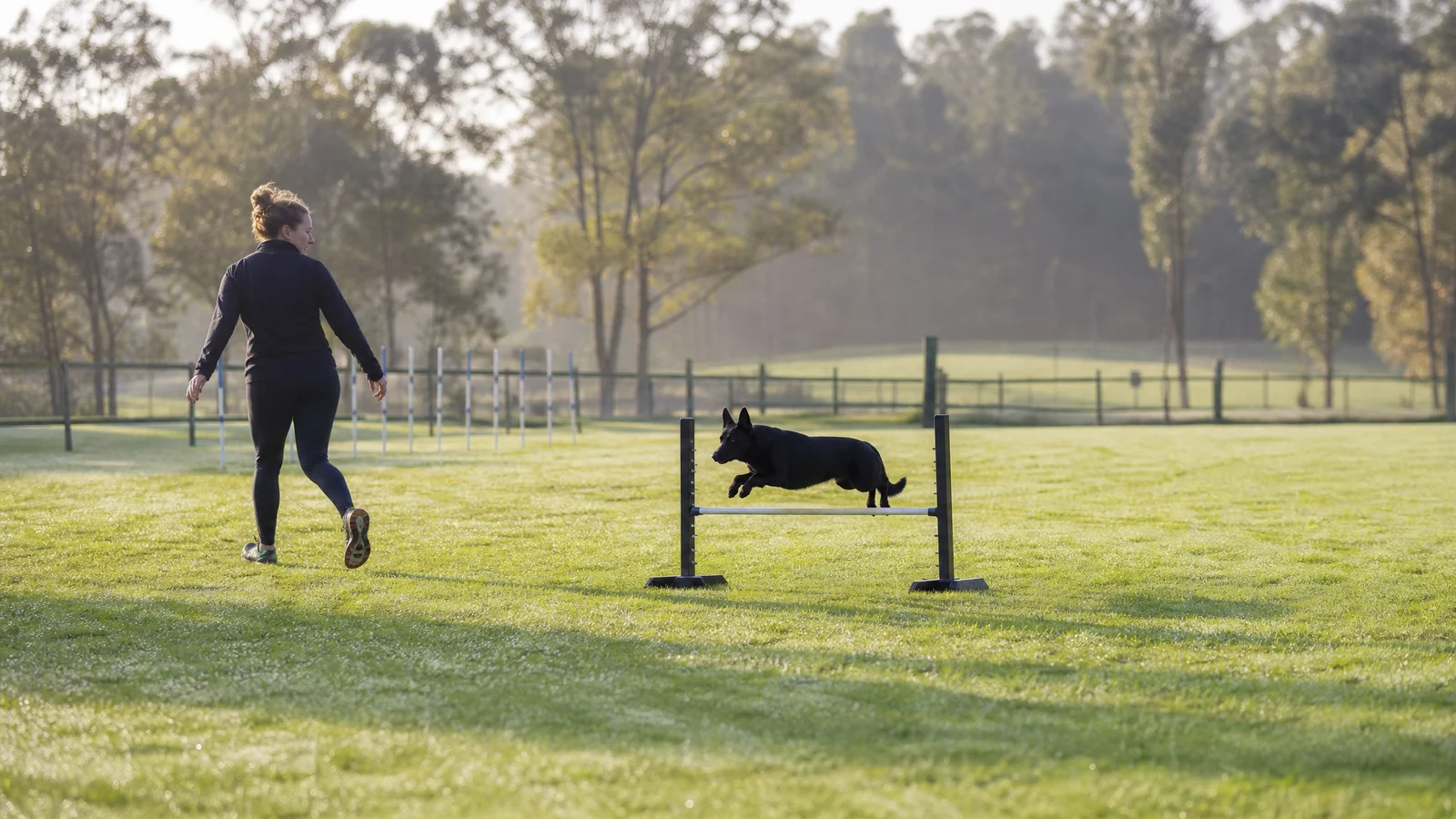 Exercise and jobsAustralian Kelpie Sports and Jobs for Their Instincts