 Kelpie
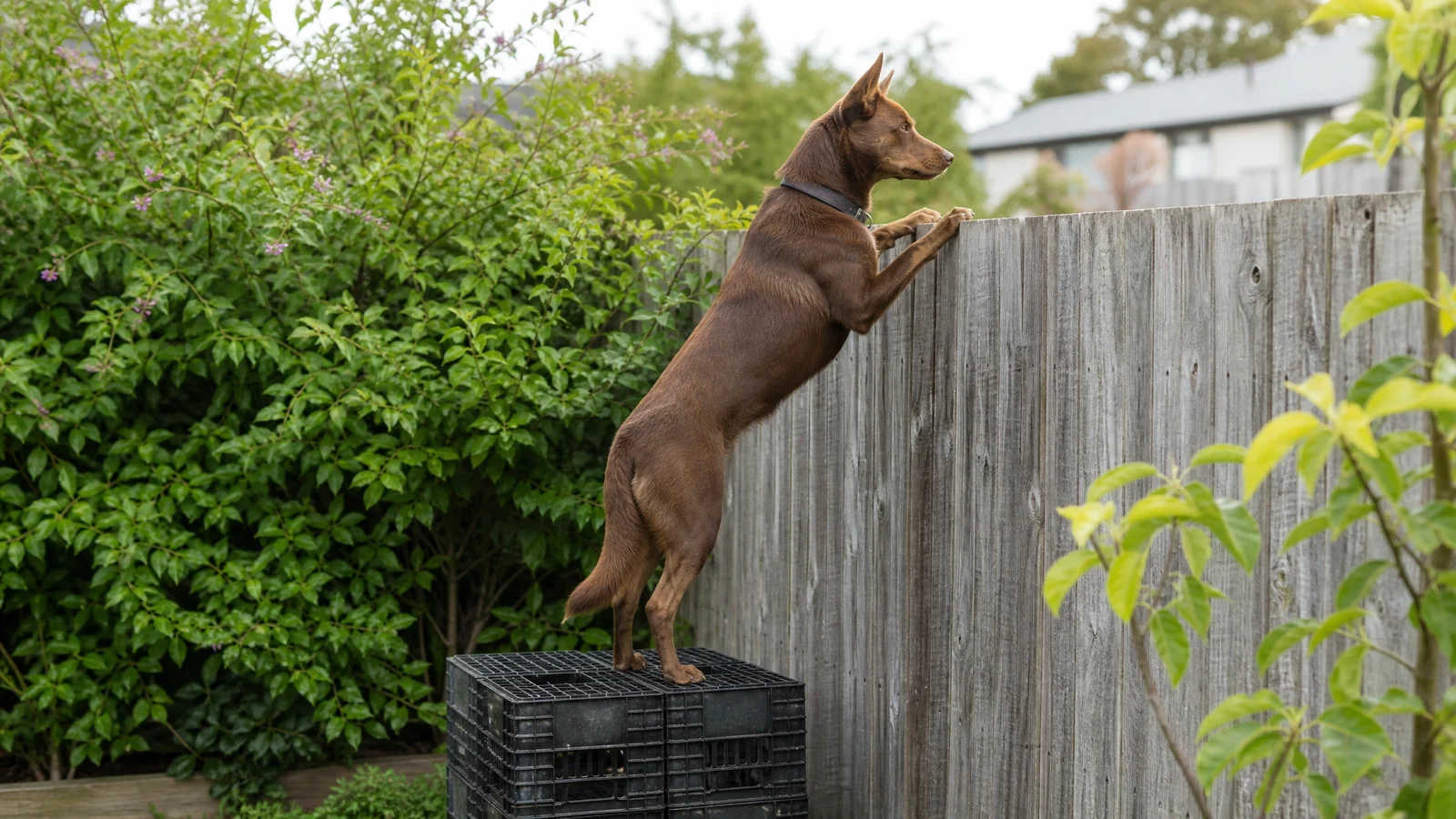
The usual advice for a wandering dog is a taller fence, a longer walk and a sturdier latch. A wandering dog may clear the top, dig underneath or slip through a gate, and a Kelpie's working history gives them reasons to keep moving once outside. None of those measures addresses why the dog is leaving.
A Kelpie who wanders meets traffic, livestock and strangers with no one to guide them, and every trip makes the next one likelier. A Kelpie who has learned that home pays best stays near you by choice, which holds up better than any latch. We specialize in Kelpie behavior and training, and roaming is a problem where management and rewards together beat either one alone.
This guide separates the reason your dog leaves from the boundary work that follows. It covers immediate security, rewards for staying close, a useful yard routine and the behaviors that make home the better choice.
Reading Why Your Australian Kelpie Roams Before Fixing Anything
Before you change anything, work out what is pulling your dog out, because each motive needs a different fix. The breed gives you a head start. In the Australian bush, Kelpies often worked unsupervised, relying on their own wits to find and gather livestock, and the breed standard asks for almost limitless stamina for work in wide open spaces.
A dog shaped by that history has little reason to treat your fence as meaningful. Leaving is not disloyalty, it is the very thing the breed was valued for. That means the job is to make staying more rewarding than going.
Sort what you see into one of four drivers. The pattern tells you what has been paying the escape. Use these drivers:
- Distance drive: the dog travels at a steady, purposeful trot, ignores calls, and seems to be going somewhere even when you are standing right there.
- Boredom: escapes follow long stretches with nothing to do, often after fence pacing, digging or lapping the yard.
- Chasing something: a sudden burst toward a passing dog, animal, bike or car, often using the eye and bark a gathering dog uses to move stock.
- Unsupervised habit: the dog leaves from the same spot at the same time of day, gets out easily, and returns on their own because the route has paid off before.
Watch for a few days and note the time, the spot and what happened just before each attempt. If one driver shows up most, work on it first. If your dog's wandering changes suddenly, book a vet appointment before you assume training is the cause, and keep regular checkups going either way. Pick your main driver and write it down, because the rest of the plan bends around it.
Securing the Fence Line While Roaming Training Begins
It is tempting to train first and fix the fence later, but a dog who escapes between sessions undoes the lessons. Every trip outside pays in smells, motion and freedom, which beats any treat in your pocket. If your dog has gotten out more than once, manage the perimeter first.
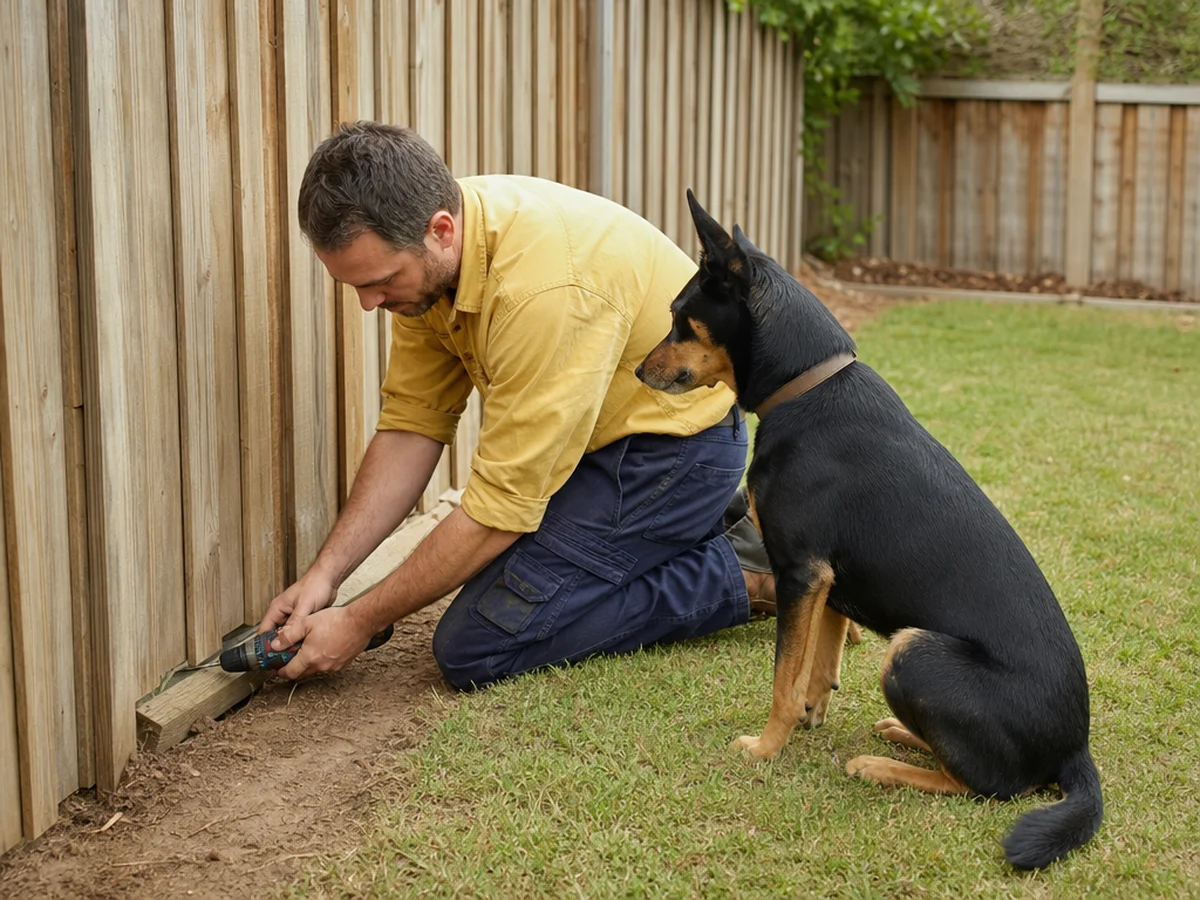
Height is only part of the problem. The breed standard calls for a lithe, supple dog who can turn suddenly at speed, so a dog this agile may clear a barrier more easily than you expect. Look at what stands near the fence before you add panels, since a bin, bench, woodpile or low shed roof works as a ladder.
Then match the fix to how your dog leaves. If they go over, remove the launch points. If they dig, bury wire or lay flat pavers along the base. If they dash through gates, build an airlock with a second gate or a closed interior door, and clip on a leash before anyone opens the exit.
If passersby set off the pacing, solid panels at dog height cut the view and lower the arousal. Until training holds, supervise every minute of yard time, or use a long line on days you cannot watch. Choose management that makes a successful exit impossible, so your dog never rehearses roaming while the teaching is under way.
Paying Your Australian Kelpie for Staying Close
Staying near you has to pay better than leaving, and the best payment is the one your dog values most. Rewarding a dog does not mean letting them do whatever they like, and dogs learn best with structure and routine taught without fear or pain. Your choice is among three kinds of payment.
Treats are fast and easy to deliver, but they lose to a fresh scent in a distracting yard. Some dogs, especially high-drive dogs, work harder for play than food, so test both and use the reward your Kelpie values in that setting. Access is the third: the release to sniff, run or go through the gate becomes the paycheck, which uses the very thing your dog wants outside.
Test each over a few days and watch which one makes your dog lock onto you. If food wins, use the best treats you have and save them for this job. If play wins, keep the toy out of sight until the moment of payment. Then break the habit into small steps, rewarded in sequence:
- Mark any voluntary glance or step toward you with a marker word, then pay beside you so the reward happens at your side.
- Pay more for harder choices, such as turning away from the fence, than for easy ones, such as walking past you.
- Wait for longer stays near you, then for check-ins from farther away, one small step at a time.
- Move to a new spot only when your dog succeeds easily in the last one, and drop back a step if they drift.
Choose the reward your dog works hardest for, keep it for this job, and carry it in a pouch so you can pay in a second. If your Kelpie drifts toward other dogs rather than the fence, our guide to herding other dogs fits alongside this step.
A Yard Routine With Enrichment for an Australian Kelpie
A yard is worth staying in when it offers more than the world beyond it, and when the offer is predictable. A Kelpie with nothing to do will find something to do, and the fence is often the answer. Build the day from short blocks of activity instead of leaving the dog outside for hours.
In the morning, scatter some treats across the grass or use a puzzle feeder so the first yard visit is a search job. At midday, run a brief session on the boundary behaviors described below. In the evening, give the longest outlet, including fast running in a safe enclosed space, then a chew or lick mat to wind down.
Exercise Alone Is Not Enough
Exercise alone will not carry the plan. A good routine may improve unwanted behaviors but rarely fixes them fully, and a stressed dog taken somewhere crowded to exercise can end up more stressed. If your Kelpie comes home from a crowded outing more wound up, move the miles somewhere quieter and add thinking work.
Rotate the enrichment, because a clever dog tires of repeats. Hide treats under cups, bury chews in a sandbox, or set up a simple course from objects around the yard, and remove anything the dog could use as a step over the fence.
Our guide to giving busy jaws a real job has more ideas. Choose a routine of scheduled enrichment, set jobs and supervised time outside, and keep it steady from day to day, since a dog who knows when the good things arrive goes looking less often.
Teaching Boundary Behaviors That Replace Roaming
Once the yard pays and the perimeter holds, give your dog clear jobs near the places they used to leave from. Three options cover most Kelpies, and you can build all of them eventually. The question is which one comes first.
Marked Edges and the Gate Wait
A marked edge means the dog pauses at the boundary and looks back at you. A gate wait means they stay still until released. If your dog bolts through openings, the wait is the better fit, taught from the easy version up: reward stillness with your hand on the closed door, then with it open a crack, then wider.
Add a release word and pay well when they wait for it. If greetings at the door get wild, the Kelpie jumping on people work helps lower that arousal.
A Place Cue
A mat that means "settle here" gives the dog somewhere to be when visitors, deliveries or yard noise would otherwise start the dash. It suits dogs who leave out of excitement or boredom. It does not teach them what to do when they spot something at the fence, so it works best as a partner to the next behavior.
Build the Check-In First
The check-in is the one to build first, because it answers the exact moment of leaving. Stand a little way back from the boundary with your dog on a long line. When they notice a distraction and then turn back to you on their own, mark the moment and pay.
Move closer to the fence as the habit holds. If a play session turns into a chase around the yard, end it and go inside for a short time-out rather than chasing them back. Build the check-in before anything else, and add the wait and the mat afterward.
Staying Home Wins Once Roaming Stops Paying Off
A dog bred to cover distance and make decisions alone will not stop wanting to move, and you do not need them to. What changes the outcome is making home the most rewarding place for this dog: a perimeter that cannot be rehearsed, a reward that beats the outside world, a yard day with real jobs, and one clear behavior to run back to you. When home pays best, a Kelpie stays by choice.
Watch for these signs in the weeks after you start the plan. Look for a trend, not one unusually easy day. Use these signs:
- Excursions get shorter, and the dog returns sooner on their own.
- Your Kelpie checks in with you more often during yard time without being asked.
- Fence patrols shrink, and the worn track along the boundary stops growing.
- The dog waits at the open door or gate for the release word, even with something exciting outside.
- Yard time becomes calmer, with more time on the mat or at a chew and less pacing.
Ask a trainer or a veterinary behaviorist for help if escapes continue despite a secure yard, since the setup or the dog then needs a trained eye. The same goes for bolting that looks driven by fear or panic, such as frantic attempts to leave when you go out, drooling or damage around exits. Injuries from fence attempts, such as cut paws or torn skin, call for a vet visit right away, followed by a closer look at why the dog is so desperate to leave.
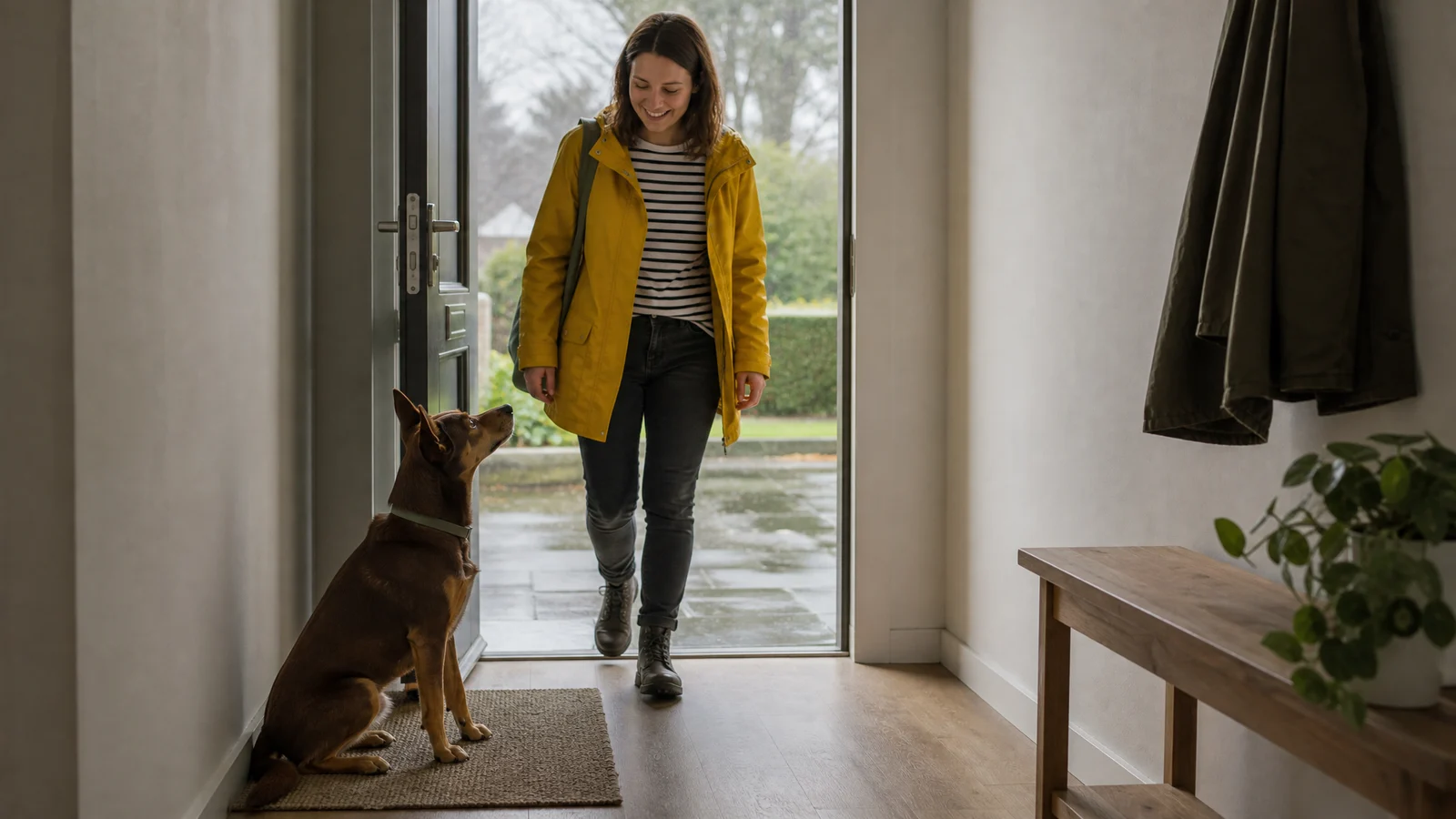 BehaviorStop an Australian Kelpie Jumping on People
 Training basicsReliable Recall for a Dog Bred to Work on Their Own
 Puppy trainingKelpie Puppy Chewing Everything? Redirecting Energy Into Rewarded Jobs