 Kelpie
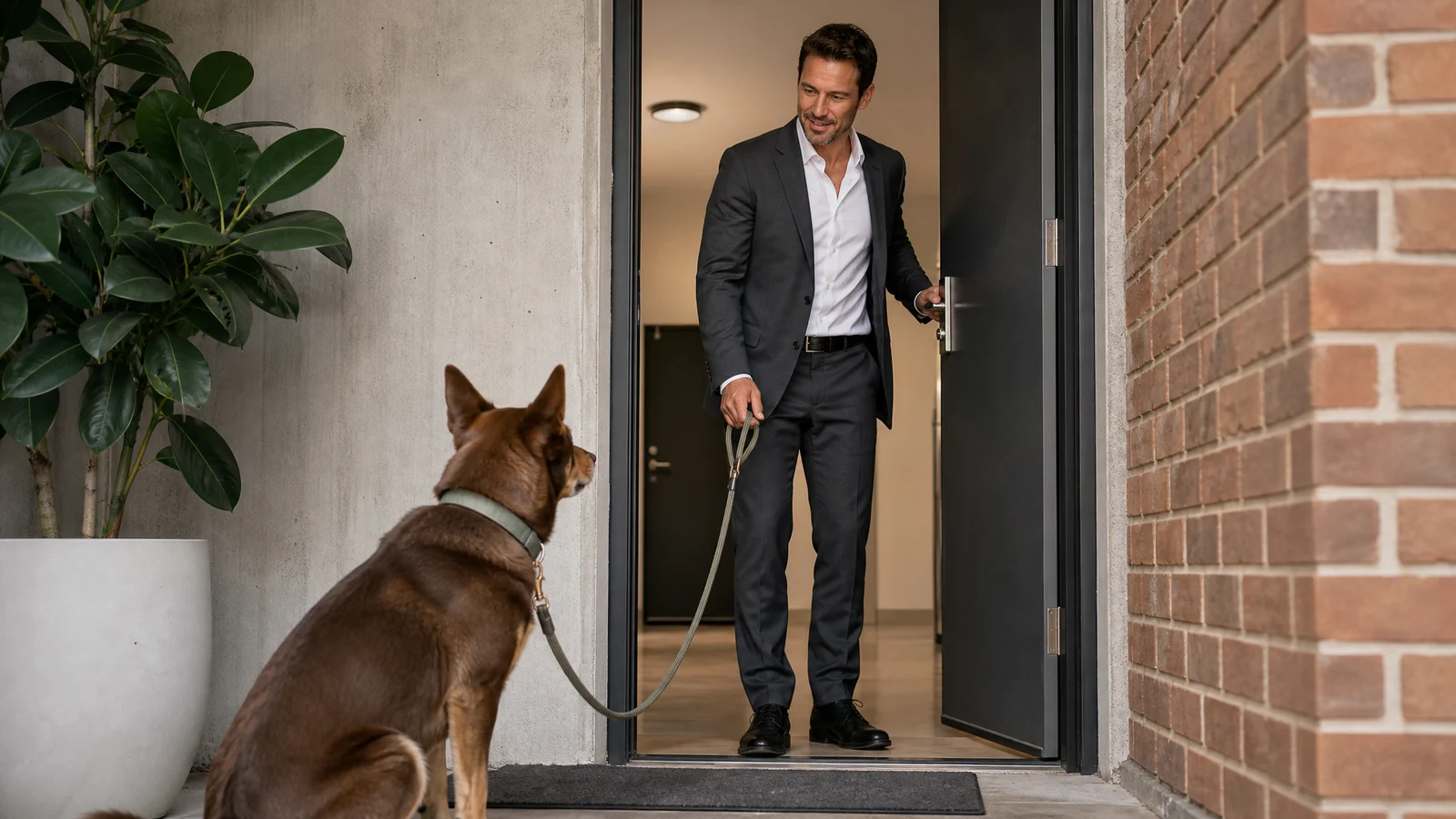
The front door cracks open and the puppy is through the gap before your hand has left the handle, quivering and spinning in the hallway. At dinner the same energy circles the bowl so hard that the calm moment you were waiting for never comes. This is not disobedience. It is keenness without a brake, and a young Australian Kelpie arrives with plenty of the first and none of the second.
Impulse control is that brake. The breed standard asks for the balance in plain terms: a good measure of keenness to work, together with the ability to rest. Built early, it lets a fast dog live in a small apartment and a busy building. Left alone, it hardens into door-dashing and gate-bolting.
This guide covers impulse control, from the first calm pause at the door and bowl to waits at gates and stairwells, and from a second or two of patience to the self-control you can expect in adulthood.
A Young Australian Kelpie Puppy in Two Bedrooms
Here is a worked example, a hypothetical setup invented to show the steps and not any particular dog. Start with a young Australian Kelpie puppy who has just come home, into an apartment with two bedrooms. A crate sits in the living room, a bowl waits in the kitchen, and the apartment door leads into the building corridor.
Behavior and training in this breed is our specialty, and an apartment is where a missing pause shows up fastest. A bolt through that door ends in a hallway, an elevator or a stairwell instead of a fenced yard, and a dog bred for almost limitless stamina will happily keep going.
The starting point is simple. Our puppy has no pause at all, because launching has paid every time: the door opened, the food arrived. Waiting has never paid. Rewarding a behavior with something they really like makes it more likely to return, so the plan is to pay for the pause itself. Planning in months, the goals look like this:
- In the first weeks, a pause at the door and the bowl, paid with treats and with the very thing the puppy is waiting for.
- In the early months, longer waits, and the same pause at the crate door, the stairwell and the yard gate.
- In adolescence, waits that survive new places, excitement and a bigger, faster body.
- In adulthood, a habit that needs only occasional refreshers.
Teach the Marker Before the Wait
Before the first session, spend a day teaching a marker word, for example yes. Say it, then pair it with food by handing over a treat no later than 3 seconds afterward. Repeat that several times in a quiet, calm room. Use tiny, soft treats so you can pay often without filling the puppy up.
Expect a thinking partner, not a push-button dog. A voice quoted by the Working Kelpie Council holds that the Kelpie is more of an individual than the Border Collie, and that anyone who cannot accept this has chosen the wrong breed. Our wider guide to Kelpie training covers that side of the breed, and here it means paying for the choice to pause until it becomes the puppy's own idea.
Impulse Control at the Apartment Door
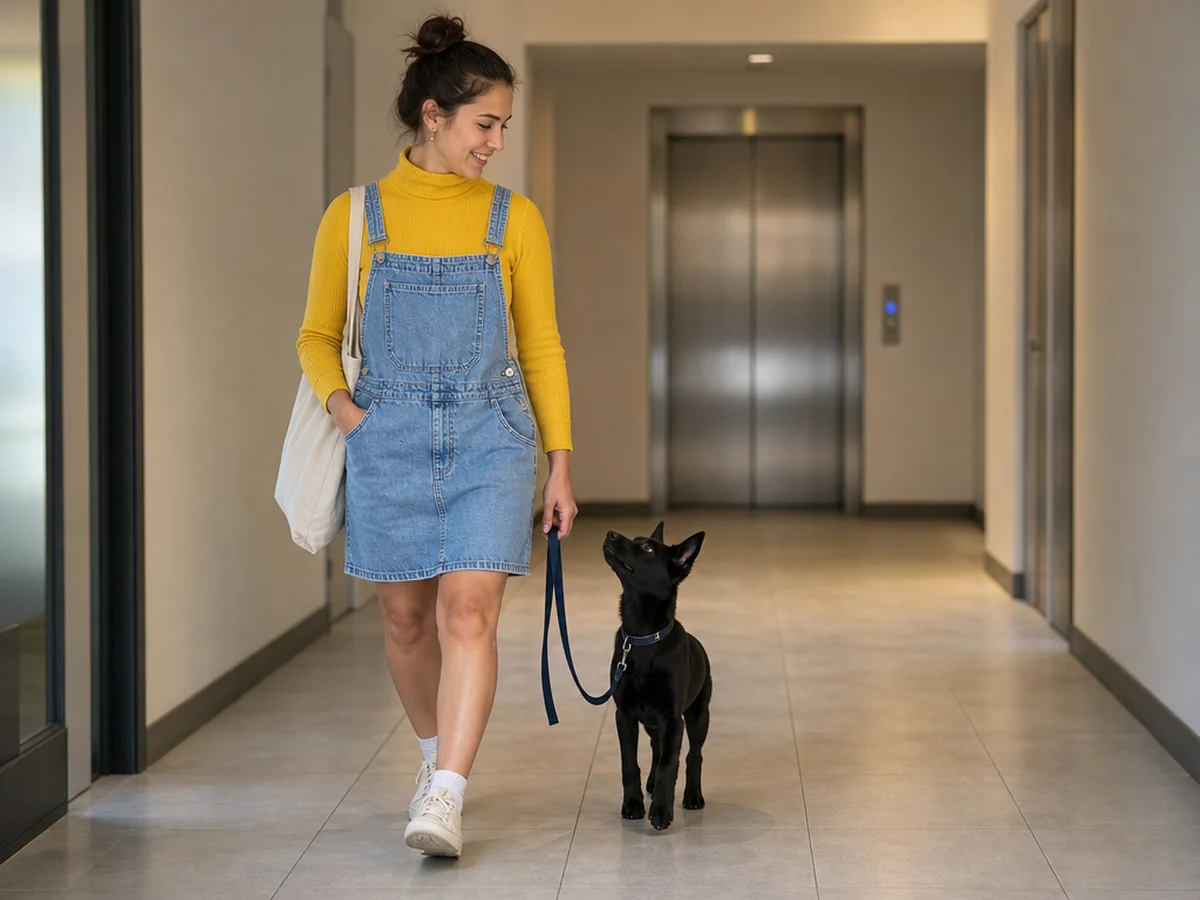
The front door is the first lesson because it is where the pause matters most and where the reward is already built in. For the example puppy, an opening door is the prize, so early sessions simply put a pause between the puppy and that prize. Clip on a leash before you touch the handle so you can calmly prevent a dash instead of chasing one, and keep each session to a few quick tries.
- Rest a hand on the handle. If the puppy lunges or spins, take the hand away and wait.
- The moment their feet are planted and the body goes still, even for a second or two, say the marker and give a treat.
- Open the door a crack. If the puppy surges, close it calmly and start that step again. If they hold, mark and treat.
- Open a little wider after each success, until the door stands fully open and the puppy is still waiting.
- Say the release word and walk out together. The walk is the biggest reward on offer.
In the first sessions the whole job is to reach a fully open door with the puppy still waiting. That may take several short sessions over a few days, and that is a fine pace. The cost of rushing is a puppy who learns that waiting is a trick for treats instead of the way doors work.
This breed is also described as faithful and rather reserved, a one-person dog who is slow to take to strangers. A knock or a neighbor's voice in the hallway adds worry to the excitement. Once the quiet door is solid, rehearse with a helper outside, paying for the pause each time.
Give the crate door the same rule: it opens when the puppy is quiet, and they leave on the release word. Our guide to crate training an Australian Kelpie shows how this fits into alone-time work.
Bowl Manners as Impulse Control Practice
Mealtime hands the example puppy the best practice slot of the day, every day. It teaches the same lesson as the door: waiting earns what the dog wants. Hold the bowl at chest height and ask for nothing. The moment the puppy's feet are still, mark and lower the bowl a little. If they jump or surge, lift it back up calmly and wait. Losing the lowering is all the consequence needed.
Common advice says to demand a sit before every meal. We would rather pay for whichever calm pause the puppy offers first. A sit can hide tension in a keen dog, so look for a settled pause with loose shoulders and a soft face. Add the sit later, once that softness is there.
Adding Time Before the Release
Keep lowering in stages until the bowl is on the floor and the puppy is still pausing, then give the release word and let them eat. Over the following days add a breath of waiting before the release, then a little more.
Do not turn dinner into a long test at first, since a hungry puppy is the hardest audience you will have. The aim is a puppy who has learned that a calm body, not a frantic one, is what lands the bowl. That is the balance between keenness and rest the standard describes, practiced at every meal.
How Long Should an Australian Kelpie Wait?
Pacing is where planning pays off. The example puppy begins with a wait of a second or two and stays there for the first days, because a puppy this young has short attention and little muscle control over excitement. A wait that outruns that ability only teaches failure. The balance between keenness and rest is built from many tiny successes, not a few heroic ones.
Lengthen only when the puppy succeeds almost every time, and change one thing per step: time first, then distance, then distraction. The table shows how the example puppy's waits might grow across the early months.
| Stage | What the wait looks like | Move on when |
|---|---|---|
| First days | A second or two at the bowl and door | The puppy succeeds almost every try |
| Following weeks | A slow count, with treats delivered during the wait | The face is soft and the body loose at the release |
| Early months | You step back, walk around the puppy or leave the room briefly | The puppy holds while you return to pay |
| Adolescence | Waits at gates and stairwells with people and dogs passing | The puppy holds in a new place after a short warm-up |
Hold the length steady when the puppy breaks several times in a row, when you change location, or when the day has been busy. A few days at the same length cost you nothing, while pushing costs you weeks.
Vary the lengths so the puppy cannot predict them, mix in some very easy ones, and pay during the wait, not only at the end. A dog described as always ready to work will want to move, so a treat delivered to the mouth while they stay still is what teaches the stillness.
Stretching Impulse Control Waits at Gates and Stairwells
By the early months the example puppy waits well at the apartment door, so the work moves to the places where a bolt costs the most. In the building those are the stairwell landing, the elevator doors and the street entrance, and outside, the yard gate.
A dog built to turn suddenly at speed can cover a lot of ground before you catch up, so each place gets its own rehearsals. The rule stays the same: the barrier opens when the puppy is calm, and they pass on the release word.
Stairwells and Elevators
Start at the top of the stairs with the leash on, and pay for stillness before you take the first step down. At the elevator, wait for the doors to open and ask the puppy to hold until you release them. Then add mild distractions one at a time: footsteps on the landing, a neighbor with a bag, a door closing somewhere below. Begin far enough from each that the puppy can still think, and close the gap as they succeed.
These spaces echo and the traffic is unpredictable, so expect to give up a step of progress the first time you change floors. The same groundwork helps with Kelpie pulling and lunging on leash once you are outside.
The Yard Gate and Car Door
Gates matter most because a bolt there can end on a street. Practice at the yard gate, the building entrance and the car door, starting with the latch closed and paying for stillness before you swing it wide. A Kelpie who has learned the pause in one spot has not yet learned it everywhere, so rehearse in every location.
Keep the leash on until the wait holds at every gate you use. When the puppy waits while something interesting moves nearby, the pause is becoming a habit.
What If the Puppy Breaks the Wait?
They will, often, and a slip is information, not failure. The step was too long, too exciting, or in a place that was too new. Reset calmly, with no scolding and no drama. Close the door, lift the bowl, or turn away for a moment, then try again with an easier version. The wait should stay a game the puppy wants to win.
- Shorten the wait to the length the puppy last managed easily, then build again from there.
- Move farther from the distraction, or ask in a quieter place.
- Pay more often during the wait, then thin the treats out gradually.
- Take a break if the puppy is frayed, and end the next session on an easy win.
- If a puppy suddenly cannot settle at all, mention it at the next regular vet visit, since checkups catch discomfort that can look like restlessness.
Protect the keenness while you do this. The aim is not a subdued puppy. The standard describes a dog who is extremely alert, eager and highly intelligent, with a mild, tractable disposition, and you want to keep all of that eagerness and give it a route. A cheerful release word, followed by the walk, the door or a quick game, keeps waiting from feeling like a penalty.
Impulse Control That Lasts in an Australian Kelpie
Follow the example puppy forward. In adolescence, waits that were solid may wobble, especially at gates and in new places, as growth spurts and new confidence bring bursts of excitement. Go back a step, pay generously and trust the groundwork. Plan on short refreshers at the door and bowl for a few weeks, and expect recovery to be faster than the first time.
Reward-based training suits the long haul. Survey research on obedience favors it, and a pause that has always paid stays dependable. The energy never fully disappears, as our look at the Kelpie's working drive explains, so waiting has to keep being worth it.
By adulthood, the example dog stops at the apartment door and waits for the release, eats after a calm pause, and holds a wait at the gate while the world moves past. Guests arriving, a favorite person coming home and an open gate on the way to a run will still test them, but the habit now holds under excitement. After a move, a vacation or a busy season, a few paid repetitions usually bring the pause back.
Keep paying for the pause, and let life rewards such as the walk itself do much of the work. This is a breed whose standard asks for keenness balanced with the ability to rest, so a brake does not dull them. Their keenness stays the most useful trait they have, and it now arrives with a brake of their own making.
 Training basicsHelp! My Kelpie Only Listens to One Person
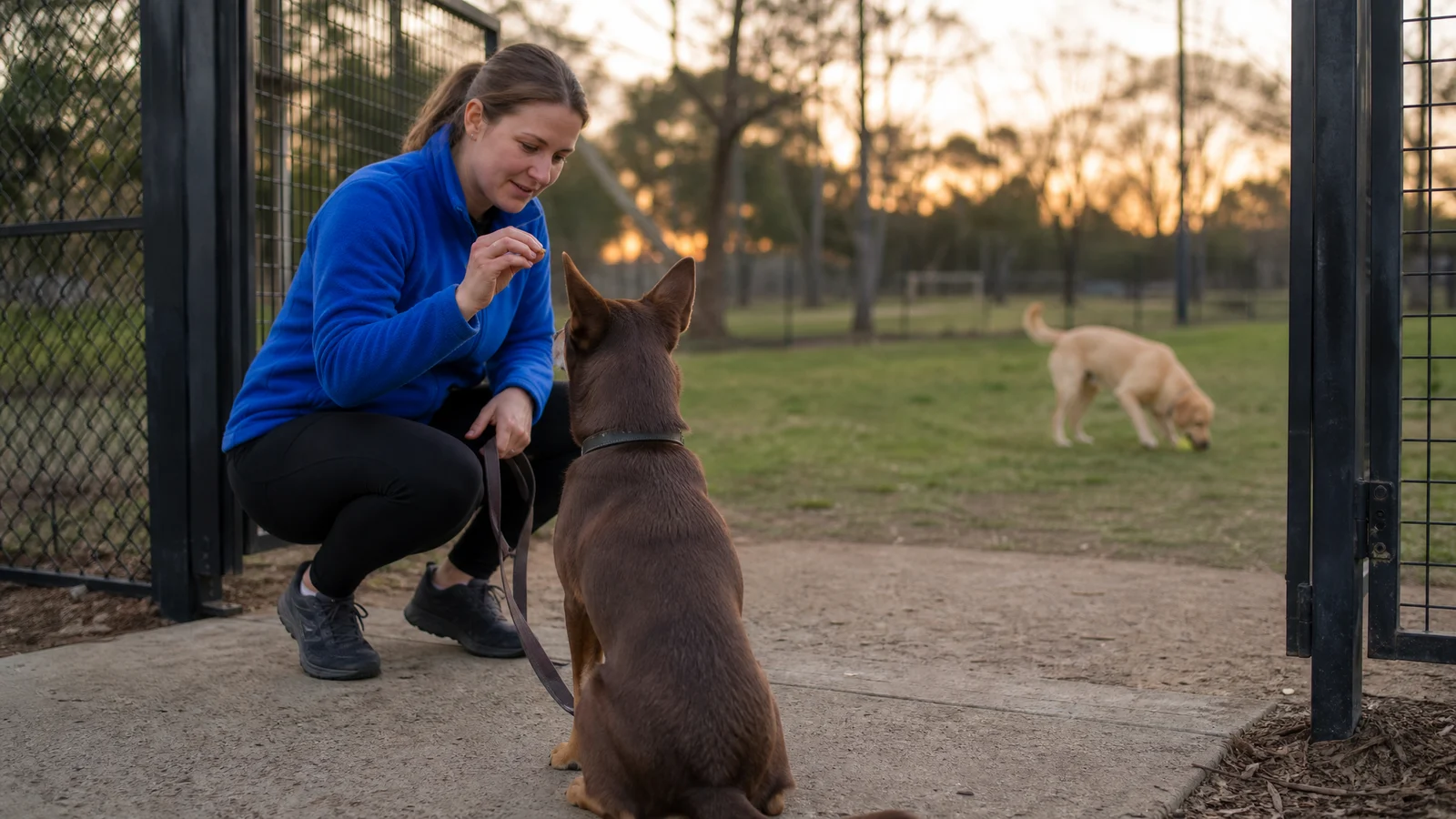 BehaviorAustralian Kelpies Herding Other Dogs at the Park: Fair Play Rules
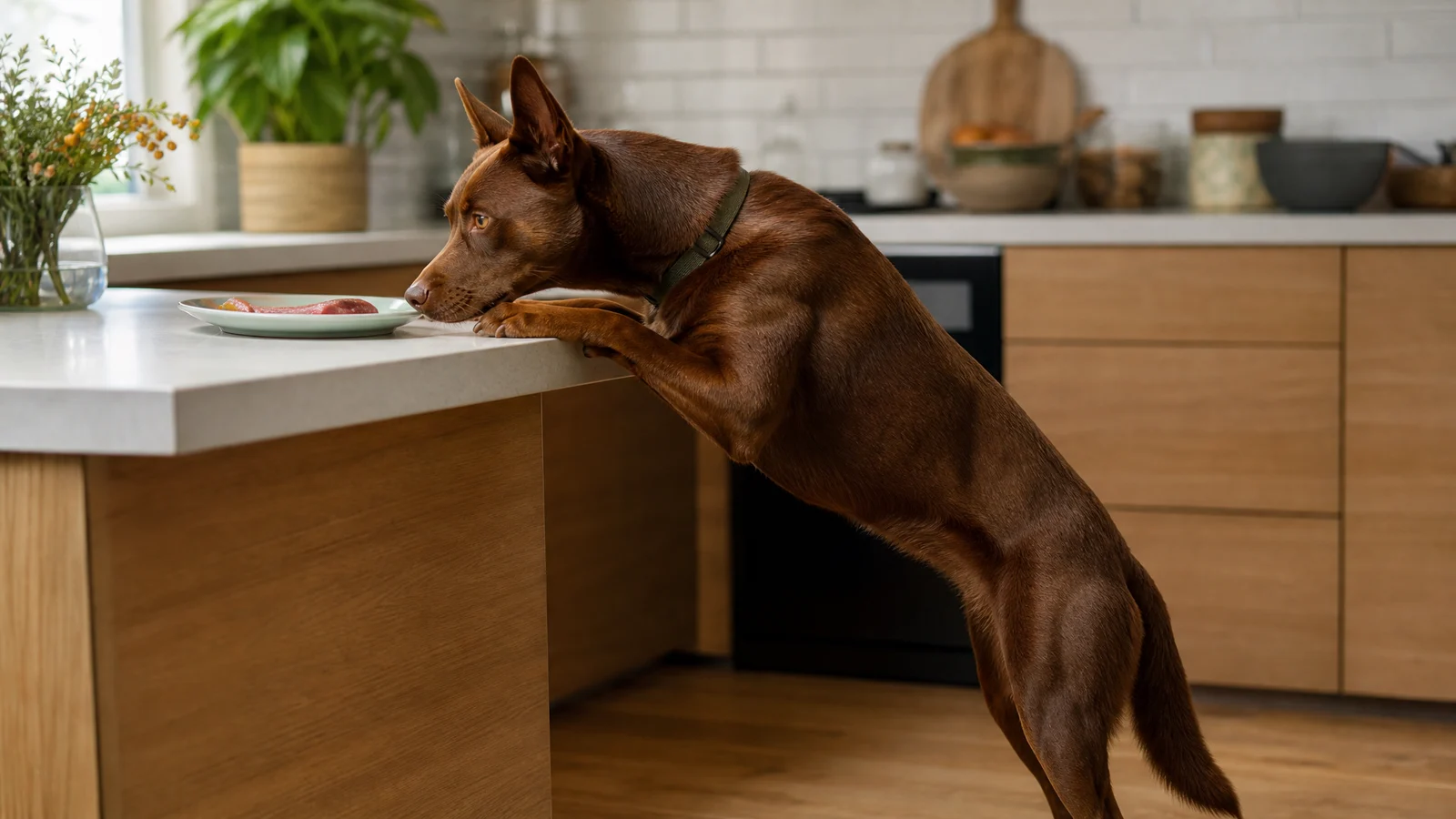 BehaviorTeaching Australian Kelpies to Keep Four Paws on the Floor