 Kelpie
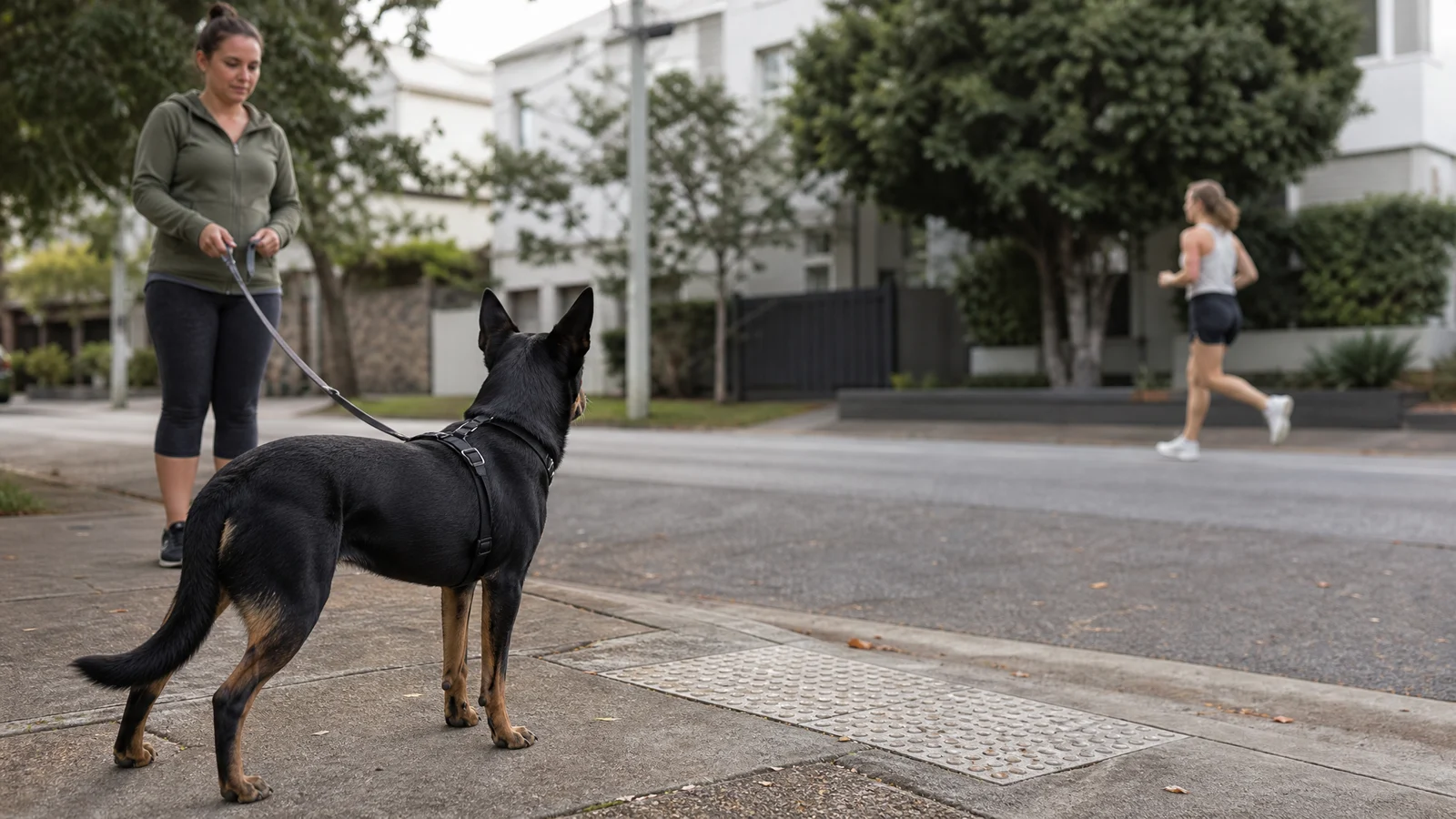
The leash tightens at a street corner. Your Australian Kelpie lowers their body, fixes on a runner, and surges as the person passes. It can feel like one explosive problem, but the sequence contains several moments that can be trained separately.
Forward pulling usually seeks access to something ahead. Fixation is attention narrowing until the dog stops consulting you. Lunging is the sudden movement at the end of that build, and its context may include excitement, frustration, uncertainty, or the breed's strong response to motion.
In this article, we'll go through the visible leash symptoms, the loose-leash foundation beneath them, recovery tools for difficult moments, and a moving practice plan. We read the symptom first because stopping forward pressure and helping a dog recover from fixation are different training jobs.
Leash Training Symptom Map
Start with what the body is doing before deciding what to teach. The Australian Kelpie standard describes free, tireless movement and the ability to turn suddenly at speed. On a leash, that athletic response can move from interest to full pressure faster than a handler can improvise. Observe the direction of weight, the dog's ability to eat, and whether attention can return. Those details locate the trainable moment before the final surge.
Forward Pressure
A pulling dog keeps traveling toward a destination with the leash tight. The destination may be a smell, open space, another dog, or the familiar place where running begins. If forward motion continues, tension has worked, regardless of whether the handler meant to reward it. The first change is mechanical and clear: slack must become the route forward. That rule addresses travel without assuming anything about the dog's feelings toward the destination.
Pressure is a travel pattern.
Visual Fixation
Fixation appears before the lunge. The head and eyes stay on movement, the mouth may close, the stride changes, and responses slow. A Kelpie bred for gathering work has good reason to notice and track motion, but a leash walk requires the dog to release that attention when asked. Work at a distance where the eyes can move back to you. If the body is already rigid and leaning, create room before requesting a precise behavior.
Catch the stare while it can still soften.
The Lunge
A lunge is an event, not a complete explanation. Look at what preceded it, what the dog did immediately afterward, and whether distance restored eating, movement, and attention. This is more useful than applying one motive to every fast movement at the end of the leash. A forward bounce toward a familiar playmate, a sudden turn at a bike, and repeated surges with a tight body may look similar from behind. Their useful starting distances can differ.
Context chooses the next step.
Loose-Leash Training
Loose-leash walking gives the dog a clear route to forward access. Slack makes the walk continue, while tension pauses progress. The system must stay consistent enough for a quick learner to discover it, and the reward should arrive where you want the dog to return. Allow sniffing and ordinary observation on slack so the rule does not become constant competition for attention. Loose-leash walking is a travel agreement, not uninterrupted performance.
Reward Position
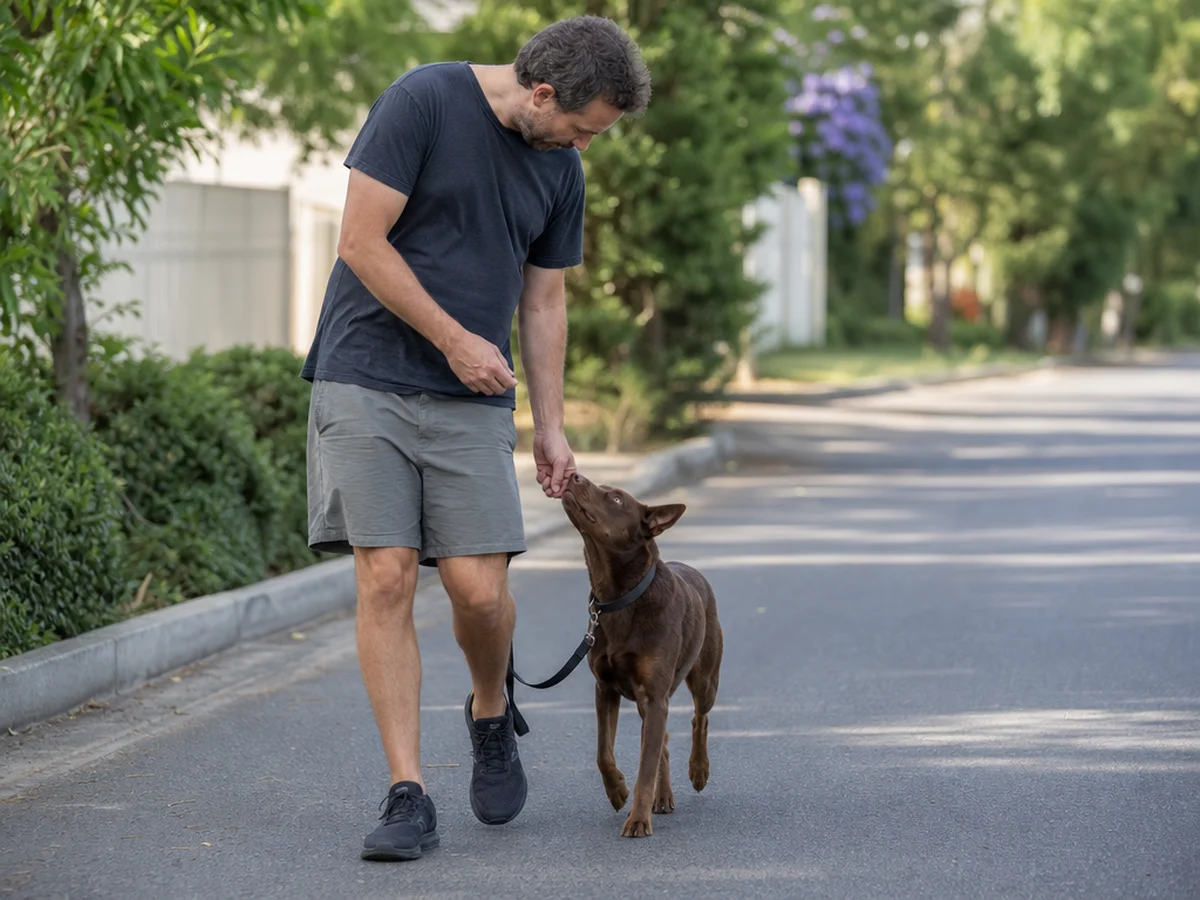
Begin somewhere uninteresting. Mark a glance toward you or a step near your side, then deliver the reward beside your leg rather than out in front. Placement builds a useful home base without requiring the dog to hold a formal heel for the whole walk. Alternate a few rewarded steps with release to continue. Over time, the paid position becomes a place the dog can find again after sniffing instead of a pose held under pressure.
Position becomes a habit through payment.
The Stop Rule
The loose-leash guidance says to stop when the dog pulls and wait for tension to end without pulling back. The important detail is consistency. If tight-leash travel sometimes succeeds, the dog has a reason to keep testing it. Begin on a route where you can truly stop without being dragged into danger or blocking others. Environment design makes consistency possible before distraction raises the cost.
Stop before your arm becomes the signal.
Direction Changes
When standing still only produces more leaning, change direction after the leash softens. Mark the dog for turning with you, reward at your side, and continue. Practice these easy turns away from triggers before relying on them on a crowded route. Reward the moment the dog's shoulders follow your new line. That body turn matters because it breaks forward commitment before the leash reaches full tension.
The turn should feel familiar, not surprising.
Leash Fixation and Recovery
Once attention narrows, asking for more precision rarely helps. The first goal is recovery, meaning the dog can move, eat, orient to you, and leave the visual line. Distance creates the conditions for that response, and a rehearsed exit tells both of you what to do. Recovery is not immediate obedience beside a trigger. It is the return of flexible movement and choice, which makes the next rewarded decision possible.
Working Distance
Choose a distance where your Kelpie can notice the moving person, dog, bike, or other distraction and still take a reward. Mark the first glance back, then move away or continue on a curve. A reward plus distance makes disengagement useful. Begin farther away than pride suggests and watch the quality of the response. A quick head turn and loose follow are more useful than a delayed glance followed by another hard stare.
If food is refused, increase space.
Distance is not surrender. It is the training setting that keeps the dog able to learn. The working-breed account describes the Kelpie's smooth, tireless gait and sudden turns, so planning room before the body commits is especially practical for this fast breed. Choose wide paths, visible exits, and times with lighter traffic while the skill is new. Good spacing lets you practice instead of merely recover.
The Emergency U-Turn
Teach the turn in a quiet area with a cheerful cue, immediate movement away, and a reward when the dog catches up. The frustration guidance recommends practicing an emergency U-turn before using it where a dog is likely to react. Practice from both directions so the cue does not depend on one side. The leash should stay short enough for safety and loose enough that the dog can turn without hitting tension first.
Rehearsal makes the exit available under pressure.
Use the turn when fixation is building, not after repeated lunges have exhausted both ends of the leash. Move far enough away for breathing and movement to loosen, then decide whether to resume at greater distance or end that exposure. Give the dog time to sniff or walk in an easier direction after the turn. That recovery activity can prevent an immediate second approach from stacking more arousal onto the first event.
Australian Kelpie Walking Sequence
Now assemble the tools into a walk that alternates ordinary movement with brief training moments. The goal is not constant eye contact. A connected dog can travel on slack, notice the environment, and reconnect before movement takes over. Begin with an easy stretch, place one planned challenge in the middle, and leave enough quiet route for recovery afterward.
Use this sequence on a route with enough room to adjust:
- Begin with rewarded check-ins in a quiet stretch before approaching harder movement.
- Deliver rewards beside your leg, then release the dog to continue or sniff on slack.
- Stop every time forward pressure tightens the leash, and move again when slack returns.
- Mark early disengagement from a distraction and curve away before fixation deepens.
- Use the practiced U-turn when the available distance is shrinking or recovery slows.
- Finish with an easy stretch so the last repetition is coordinated rather than frantic.
The reward can include access. A few loose steps may earn permission to sniff, approach a safe area, or move faster with you. This makes the handler part of the route to what the dog wants instead of an obstacle between the dog and the environment. Use access only when the destination is safe and the approach can remain loose. If excitement rises too quickly, reward with distance or a different sniffing area instead.
Build the distance gradually.
When Leash Training Stalls
When progress stalls, change the element that matches the symptom. More food cannot solve a route with no safe distance, and more physical exercise cannot make an inconsistent stop rule clear. Identify the repeated moment before adding difficulty. Ask whether the failure begins at the doorway, at the first sight of movement, when distance closes, or after the dog has already recovered once. Each answer points elsewhere.
Use these symptom-to-action checks:
- If the dog pulls from the doorway, practice reward position and the stop rule before the exciting part of the route.
- If the dog walks loosely until a trigger appears, work at more distance and pay the first disengagement.
- If fixation happens too quickly to interrupt, choose a quieter location with longer sight lines.
- If a U-turn becomes a struggle, rehearse it again away from triggers and reward the catch-up point.
- If the dog returns only when food is visible, mark voluntary check-ins and deliver the reward from out of sight.
- If behavior changes suddenly, maintain regular veterinary visits and ask your veterinarian about the change.
Remember the breed's work without using it as an excuse. The Australian Kelpie standard describes alertness, stamina, and quick turning. Those traits explain why early handling matters, while the stop, reward, distance, and exit plan determine what the dog learns to do with them. Breed traits explain the speed of the sequence, but repetition writes the walking habit. That is why early check-ins and predictable exits receive so much attention here.
Keep the assessment specific.
Calmer Australian Kelpie Walks
A better walk is visible in recovery. Your Kelpie notices movement without immediately loading the leash, offers check-ins before reaching full fixation, and can follow a familiar turn when space closes. A lunge may still happen, but the path back to thinking becomes shorter and clearer. Also notice your own recovery. A practiced plan should reduce bracing and last-second decisions, making the next repetition more consistent for the dog.
Connect this plan to the site's Kelpie temperament guide for marker timing and valuable releases, and to the puppy routine when a young dog needs consistent transitions. The same principle runs through both: arrange the useful choice, mark it, and pay it promptly. On a walk, distance and forward access often matter as much as food, so include them deliberately in the reward plan.
Judge the next walk by one sequence. The dog notices, the leash stays loose or regains slack, and attention can return to you. That is the working unit to repeat. Calm walking grows from recoverable moments, not from asking an alert Kelpie to ignore the world. Repeat that unit first in places where success is likely, then carry it toward harder motion in small steps. The Kelpie remains observant while the leash becomes a line of communication rather than a brake.
 BehaviorSocializing a Kelpie That Is Slow to Warm Up to Strangers
 Puppy trainingTeaching a Kelpie Puppy to Settle: The Off Switch Lesson
 CareDo Australian Kelpies Shed? Turning Grooming Into a Rewarded Routine