 Kelpie
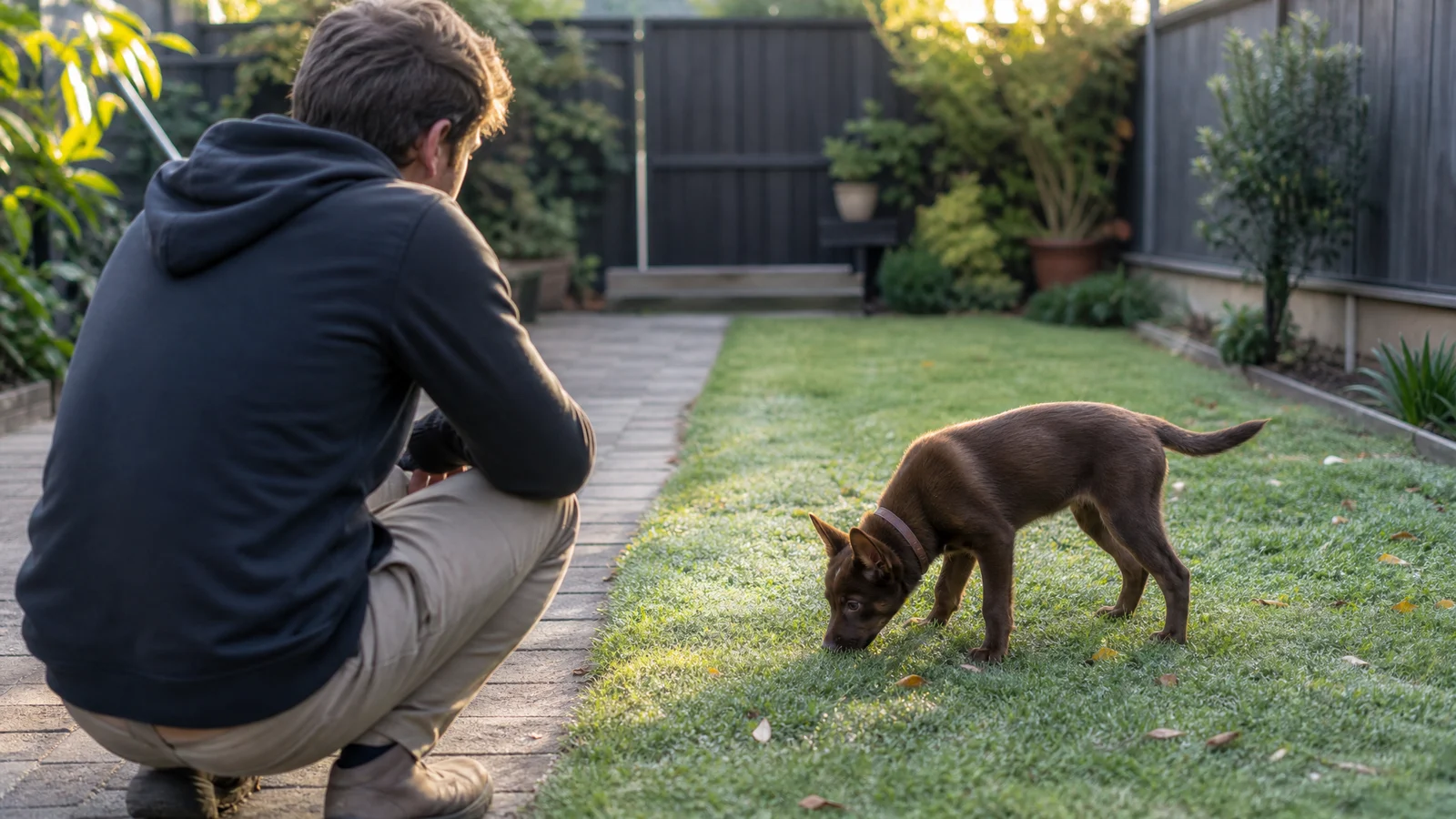
To potty train an Australian Kelpie puppy, supervise closely, take them to one consistent outdoor place after meaningful transitions, mark the moment they finish, and reward every success. When an accident happens, change the next setup instead of treating it as a character flaw. The puppy learns from the consequence that follows the current choice, so the next well-arranged repetition is the useful place to invest your attention.
Kelpies are described as alert, eager, and highly intelligent, so they notice patterns quickly. That helps when the path, destination, marker, and reward stay consistent. It works against you when wandering indoors is repeatedly available. Below, you'll find the complete feedback loop, including setup, timing, accidents, daily transitions, and fading supervision.
Start Australian Kelpie Potty Training
Good house training begins before the puppy needs to go. Decide which door you will use, where the outdoor destination is, which short marker announces success, and what reward will be ready. A repeatable route removes decisions when the puppy's behavior says the trip is urgent. We recommend preparing this small system before the puppy arrives in the room, because consistency is much harder to invent while carrying an active dog toward the door.
Choose One Potty Destination
Walk the puppy to the same practical patch at first. The destination should be easy to reach in ordinary weather and quiet enough that movement does not immediately turn the trip into exploration. Stand without starting a game, allowing the puppy to investigate the small area.
The place is a cue.
Consistency does not mean waiting outside indefinitely. If nothing happens, return indoors under close supervision and try again after the next clear transition. Free wandering after an unfinished trip gives the puppy an indoor opportunity before you have useful feedback.
Choose a brief word or a click that can land at the instant the puppy finishes. The marker training guidance pairs the sound with food and places the treat within three seconds. Practice that connection away from potty trips first so the sound already predicts payment.
Keep rewards by the exit or in a pouch before every trip. Searching the kitchen after the puppy returns makes the payment less clear and can accidentally reward coming inside rather than finishing outside. Delivery belongs at the destination. The contrast helps outdoor completion, rather than merely walking through the door, become the behavior that pays.
Reward every success.
Run the Potty Training Loop
The loop has a simple shape: observe, escort, wait, mark, reward, then decide what freedom comes next. Each pass gives you information. A success supports the current timing. An accident says the gap, supervision, or transition plan needs to change. The loop stays useful because it asks a specific question every time: did the puppy have the right opportunity before indoor access expanded?
Read the Transition Events
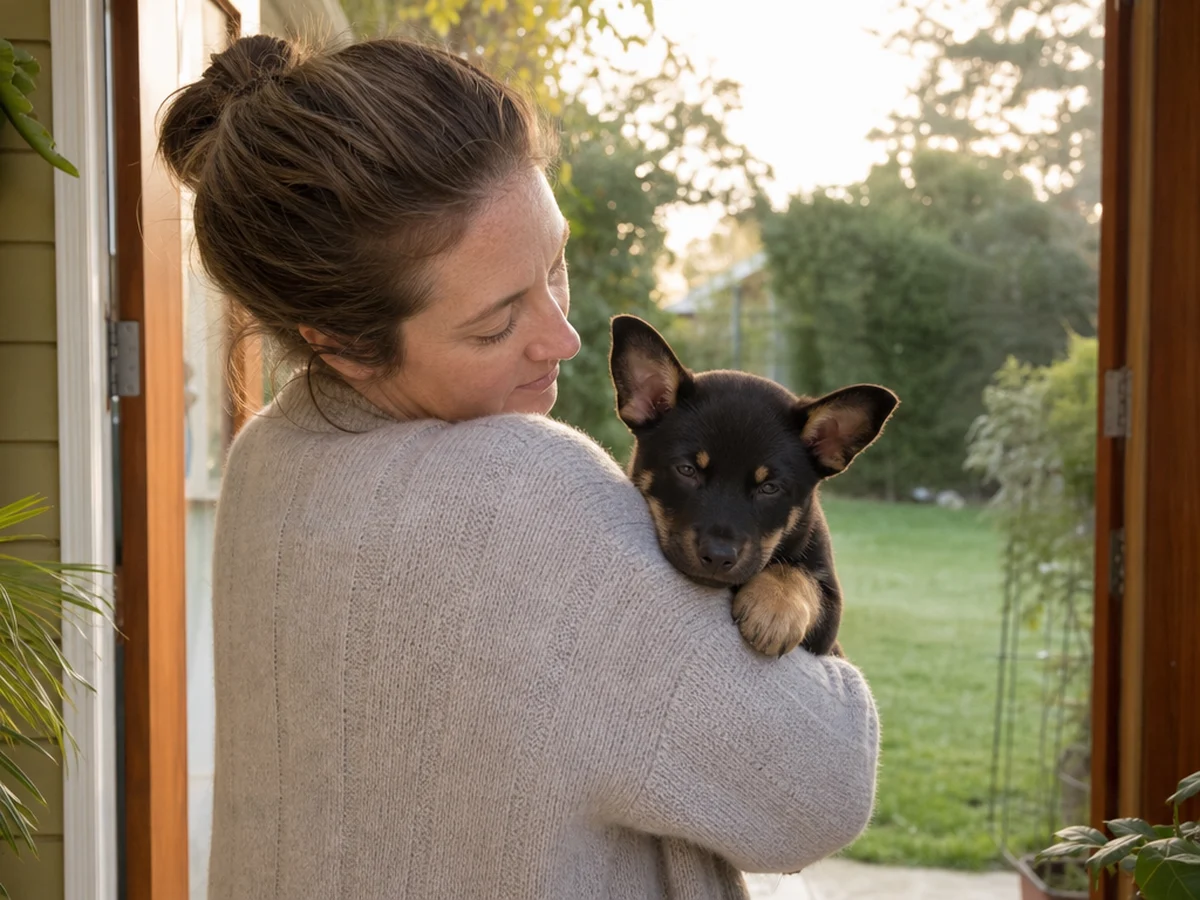
Do not build the routine around a rigid universal clock. Build it around events that change the puppy's body or activity. Waking, eating or drinking, energetic play, a training session, leaving the crate, returning from an outing, and preparing for sleep are all useful prompts to escort the puppy out. These events are easier for a household to recognize than an unseen internal need. Posting them near the exit can help every person respond with the same routine.
Movement is another clue. Sniffing with sudden purpose, circling, drifting away from play, or heading toward a previously used area should end indoor freedom immediately. Calmly take the known route instead of calling the puppy across the room and risking a delay. Calling can also turn the moment into a game for a quick, active puppy. Move with purpose, keep the route boring, and save enthusiasm for the marked success outdoors.
Act before certainty.
Complete the Outdoor Repetition
At the destination, keep the leash quiet and your attention neutral. Mark when the puppy has finished, deliver the reward there, then offer a little sniffing or play if the setting is safe. Outdoor access after success makes the result valuable without a long celebration. Do not end every successful trip by ending outdoor access. When safe, a little freedom afterward prevents the puppy from learning that finishing always makes the interesting environment disappear.
If the puppy is too interested in movement to finish, reduce the search area and wait quietly. An alert Kelpie can turn every sound into a new assignment. The breed description supports that alert, eager picture, which is why a low-distraction destination matters. As the routine becomes reliable, ordinary sights and sounds can remain in the background. Early on, reducing competition helps the puppy notice the behavior-reward connection clearly.
Then return to ordinary life.
Use Accidents as Potty Training Feedback
An accident is evidence about the setup. Perhaps the puppy woke and was given room to roam, the trip ended without a result, play continued past an early signal, or access expanded faster than the habit. Find the missed part and shorten that gap on the next loop. The purpose is not to predict every need perfectly. It is to make the correct option frequent enough that the puppy rehearses a strong destination habit.
Interrupt Without Creating Alarm
If you notice the puppy beginning indoors, interrupt gently enough to pause and escort them outside. If they finish at the destination, mark and reward that finish. The useful lesson is where completion pays, not that eliminating near a person creates alarm. Keep your movement direct and your voice ordinary. A startled puppy may stop in the moment without learning where the behavior should happen next.
If you find the accident later, there is nothing left to teach in that moment. Clean the area thoroughly and move on. The puppy cannot connect a delayed reaction with the earlier choice, while the next well-timed outdoor reward can still build the desired pattern. Delayed attention can also make the person, the mess, or the cleaned area unusually interesting. Neutral cleanup preserves the training value of the next live repetition.
Skip the drama.
Reset the Next Training Loop
After an accident, reduce unsupervised space and watch the next transition more closely. That may mean keeping the puppy in the room with you, using a gate, or returning to the Kelpie crate training plan for short, comfortable management periods rather than allowing access to the whole home. Management should still feel ordinary and comfortable. Give the puppy an appropriate resting activity, then escort them out at the next transition before expanding access again.
Change one variable first. If you tighten the timing, change the destination, switch rewards, and restrict several rooms at once, the next success will not tell you what worked. A clean feedback loop uses the smallest effective adjustment. Hold that version steady long enough to observe another result. If success returns, repeat before asking whether the puppy is ready for more freedom.
One change gives a readable result.
Potty Training Across the Day
The same loop applies all day, but the prompt changes. The table keeps the response tied to events rather than pretending every puppy follows the same interval. Use it as a decision map, then adjust from the pattern recorded by your own puppy. The row that repeats most often is the place to improve first. A reliable response to one common event can remove several accidents without making the entire day more restrictive.
| Event | Immediate action | Feedback to record |
|---|---|---|
| Waking | Escort directly to the chosen place | Whether the puppy finishes promptly |
| Food or water | Supervise, then take the known route | The transition that preceded success |
| Energetic play | Pause before attention scatters | Any sniffing, circling, or drifting |
| Crate or gate opens | Go outside before indoor freedom | Whether the management gap was right |
| Unfinished trip | Return to close supervision | What changed before the next attempt |
| Accident | Clean and tighten one part of the loop | The event or signal that was missed |
Read the Daily Feedback
A written record can reveal that accidents cluster after a particular kind of play, after an unfinished trip, or when one person handles the routine differently. Record the event and outcome, not invented conclusions about stubbornness. The pattern tells you where supervision should move. It can also expose a handoff problem, such as play ending with one person while another assumes the puppy has already been outside. Make responsibility explicit at transitions.
When the loop stalls, check these points:
- The destination is close, familiar, and less interesting than the rest of the yard.
- The marker lands after completion and the reward arrives at the outdoor spot.
- Every household member uses the same exit, word, and freedom rule.
- Indoor access expands only after repeated success in the current area.
- Regular veterinary visits are maintained, and a sudden change is raised with your veterinarian.
Consistency should remain kind. The reward-based position explains that structure and routine are compatible with humane training. In this loop, structure means controlling access and arranging success while the puppy learns, never turning an accident into a confrontation. The structure should make success easier to offer and easier to recognize. If the puppy cannot succeed in the current version, simplify the environment before asking again.
Keep the feedback clean.
Finish Australian Kelpie House Training
Fading begins when the puppy repeatedly chooses the correct place in the current routine. Expand one kind of freedom at a time, such as another room, a longer supervised activity, or less guidance along the route. Keep rewarding outdoor completion while the new version becomes reliable. Continue the old level of supervision around the new privilege at first. Freedom grows after the puppy demonstrates the route and destination still hold in that larger setting.
Test the habit across ordinary variations. A different family member can escort, weather can change, and the puppy can move from play to the door without losing the pattern. If reliability drops, restore the last successful setup rather than assuming the training has failed. Reliability in one room, with one person, or in dry weather does not automatically transfer to every variation. Treat each change as a small proofing step.
Progress is not perfectly straight.
An alert, quick learner benefits from rules that stay readable. The broader Kelpie temperament guide explains why fast learning and independent choices can coexist. House training succeeds when the correct choice remains easy to find and worthwhile to repeat.
Today, choose the exit, destination, marker, and reward before the next transition arrives. Run one complete loop, record what happened, and let that result decide the next adjustment. That is how well-timed repetitions become a dependable household habit.
 Training basicsLeash Training an Australian Kelpie Who Pulls and Lunges
 BehaviorSocializing a Kelpie That Is Slow to Warm Up to Strangers
 Puppy trainingTeaching a Kelpie Puppy to Settle: The Off Switch Lesson