 Kelpie
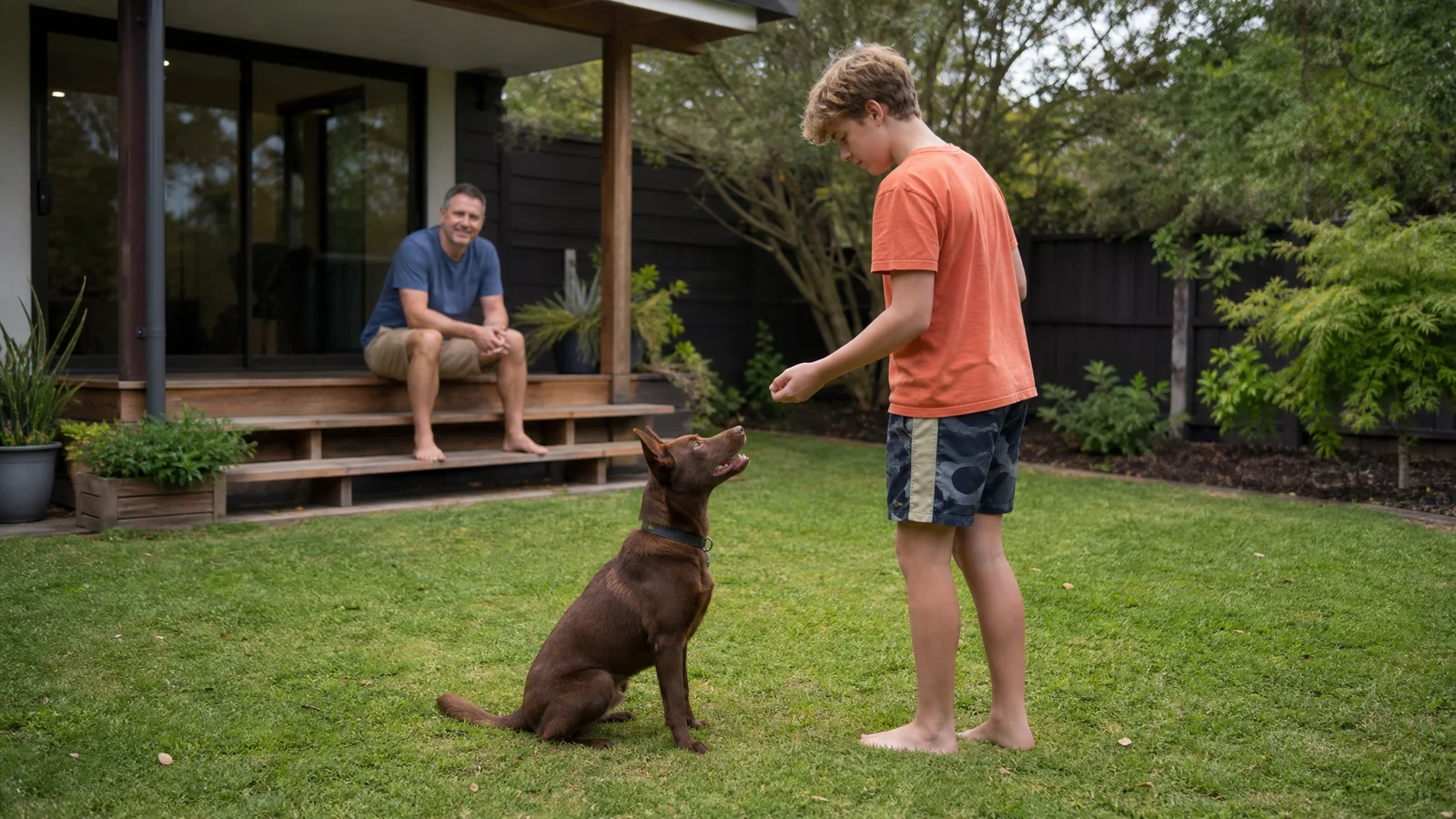
The usual description of the Kelpie is a dog who is very faithful, attached to one handler and slow to accept strangers. The household version is familiar: a dog who ignores the children and perks up only for one adult.
That split likely has a trainable cause. We specialize in Kelpie behavior and training, and our working rule is simple. The dog follows whoever makes the work and the rewards happen. When one person does all of it, everyone else becomes background. The bill arrives when that person travels, falls ill or leaves the room.
We'll walk you through the working history behind the bond, then the shared cues, reward rules, household jobs and common snags that spread that bond across the whole family.
The Australian Kelpie Working Story
The breed standard credits the Kelpie with a natural instinct and aptitude for working sheep, in open country and in the yard. One plausible explanation for that deep bond is the close coordination between a working dog and handler. That is reasoning from the breed's work and one-person reputation, not a claim that every Kelpie forms the same bond.
A Bond Built on One Handler
That arrangement shaped the dog. The likely result of working so closely with one handler is a dog who attends closely to that person's voice, posture and timing. The Working Kelpie Council author notes that the pup who grows up with you is generally a better dog than one broken in by someone else and sold on.
Bond and training came from the same person, so the two grew together. The dog had no reason to look anywhere else.
Independence in the Same Package
Mike Donelan says the Kelpie is more of an individual who likes to "do his own thing" than the Border Collie, which he says can be made a "push button dog." He adds that owners who do not accept this have chosen the wrong breed. A dog who thinks on the job will not turn into a push button for every visitor, and you should not expect one.
Kelpies are keen and active dogs, always ready to work. In a house with no sheep, that readiness goes to whoever offers the most interesting job. A family has to widen the circle on purpose because the Kelpie is known for one-person loyalty.
The One-Person Australian Kelpie
The reputation is real, but it is not a verdict on your dog. A likely reason for the one-person lean is that one person manages most of the work and rewards. Food, walks, games, doors and praise all flow through that person, so the dog learns to track them. Everyone else gets less attention because they have given the dog less reason to offer it.
The written standard points the same way. The UKC standard describes an extremely alert, eager and highly intelligent dog with a mild, tractable disposition, marked loyalty and devotion to duty.
It also calls an open, friendly, alert but placid disposition essential, with a good balance between keenness to work and ability to rest. Nothing there asks for a dog who ignores half the household. The one-person lean can still be widened when the household shares training and rewards consistently.
These household patterns can strengthen an existing one-person lean. Treat them as places to widen the bond through shared training. Look for these conditions:
- One person does nearly all the feeding, so the dog learns that food has a single source.
- One person runs the best games, so everyone else offers a weaker version of fun.
- One person gives every cue, so the dog never practices answering other voices.
- One person handles outings and new places, so the dog looks only to them for guidance.
Remove those conditions and the pattern loosens. The dog stays faithful, and the faithfulness spreads.
Strangers are a separate matter. A slow warm-up to new people comes with the breed and shows most in the good working dogs. Plan for patience with visitors, and aim your effort at the people who live there. For more on what drives this breed, see the Kelpie's working drive explained.
Family Training Basics
The story explains the dog. Practice changes the dog. Family training means every person in the house builds the same relationship under the same rules. It rests on an agreed plan, a shared word list and equal access to rewards. Each needs a short household conversation and no special skill.
One Agreed Plan
Choose the cues the dog will learn first and write them down. Name one person to teach each new cue. Once the dog answers reliably, that person hands the cue to the next family member, one at a time.
Teaching a new cue with several voices and several timings at once blurs it for a dog who reads fine detail. Keep the plan short. A few cues done well beat a long list done loosely.
A Shared Word List
Post the list where everyone sees it, such as on the refrigerator door. Each entry holds the spoken word, the hand signal and what counts as success. Decide the marker word too, the single word that tells the dog a reward is coming. Everyone uses that word in the same tone. A marker that sounds different from every mouth stops working as a marker.
Equal Access to Rewards
Every person should hold treats and be able to start a game. Keep a treat pouch or jar near the door, within reach of the adults and, with supervision, the older children. If the best reward lives in one pocket, the dog keeps watching that pocket. Put the rewards in more places and the dog's attention follows.
Shared Cues for Family Training
For a breed described as a one-man dog, consistent cues help transfer a familiar request beyond the favorite person. Every family member should use the same word, hand signal and reward rule. The table below is a model for your own household list. Swap in your words, but keep one version per cue.
| Cue | Spoken word | Hand signal | Reward rule |
|---|---|---|---|
| Sit | "Sit," said once | Flat palm raised | Marker word, then a treat from the signaling hand |
| Down | "Down," said once | Palm lowered toward the floor | Marker word, then a treat delivered low at the paws |
| Come | "Here," in a bright voice | Arm swept to the chest | Best treats or a game, every time |
| Settle | "Settle," in a low voice | Slow downward pat of the air | Calm praise and a treat on the mat |
Practice Shared Cues With Every Person
A breed developed to work closely with a handler can become especially tuned to one person's timing. Ask once, then wait, because every extra request can make the first sound optional. Help with the signal if needed, then mark and reward the answer. Match reward rules as carefully as words. If one person pays for a sit with a treat and another with a pat, the dog works for the first and shrugs at the second.
Keep a higher tier of rewards for harder moments, such as coming away from a distraction, and let every family member draw on that same tier. Then hand off a cue like this:
- The person who taught the cue demonstrates it once while the next person watches the word, the signal and the timing.
- The new person asks for the cue in a quiet room, with the teacher standing out of the dog's sight line.
- The new person marks the right answer and pays with the agreed reward.
- Both people swap places and repeat, so the dog sees that either voice works.
- Move the same cue to the yard, then to the hallway, so the habit does not belong to one room.
Toileting is the exception to treat-heavy habits. Battersea advises calm praise for toileting, because some dogs start offering pretend squats to earn treats. Whoever takes the puppy out uses the same quiet praise. Our guide to potty training an Australian Kelpie puppy covers the routine.
Roles in Australian Kelpie Households
A Kelpie wants a job, and a household can hand out jobs the way a farm did. Splitting care among people gives the dog several reasons to look at several faces. Give each person a clear part, and rotate the parts so no one becomes the only source of anything.
Who Feeds
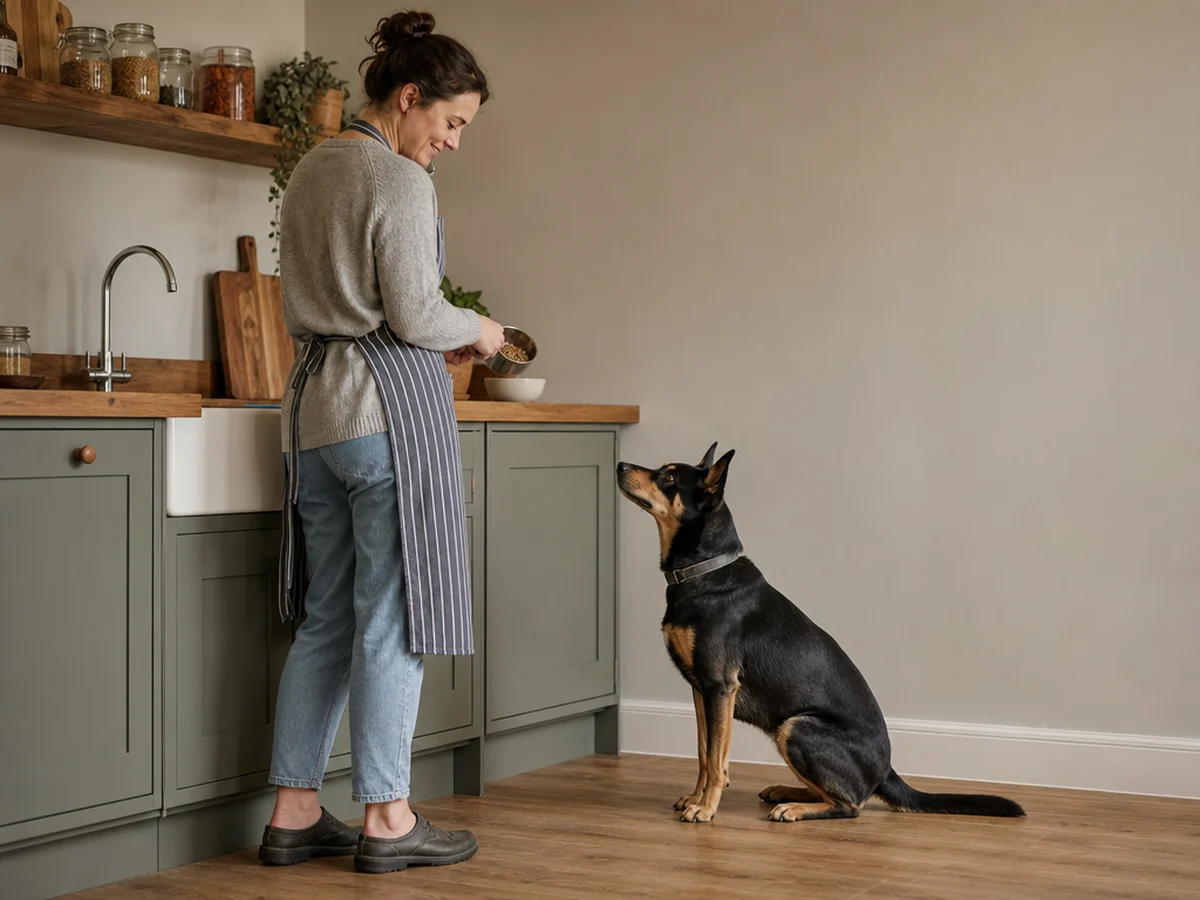
Meals are a daily reward that arrives on schedule, so share them. One adult can do breakfast and another dinner. A child can carry the bowl to the spot while an adult supervises. Ask for a sit before the bowl is lowered, with the same word from the list every time.
This is general information, not a feeding plan. Ask your veterinarian how much and how often your dog should eat, and keep up regular vet visits.
Who Delivers the Best Treats
This is the most useful rule in the article. Do not let the main handler hand out the best rewards. Give the top treats and favorite games to the family members the dog currently ignores. The main handler can still train and keep the dog's attention. The others become the source of the best things.
Start with a cue the dog knows well. A shaky cue adds a second problem to a new person. A known cue plus a great reward shows the dog that other people pay off.
How Children Take Part Safely
Children can take a real part with an adult beside them. They can ask for a known cue, toss a treat on the floor after a sit, or hold a mat while the dog settles. Hand them a pouch and the exact words from the list.
Keep children's games calm around the dog and separate the dog from running or chasing games. Teach children to leave the dog alone when the dog walks away. Let different family members hold the treats at vet visits too, so everyone builds the same positive link.
Common Family Training Problems
A few snags come up again and again. Each traces back to the working history. The dog follows the person who runs the show, and the rest is detail.
The Favorite Person
The dog will still pick a favorite, and that is normal. The goal is a dog who answers everyone, not one who loves everyone equally. If the favorite person hovers, ask them to step out while others run a short session. The dog then has to look elsewhere for the reward.
Finish each session early, with the dog still wanting more, and let the favorite rejoin once the dog works willingly for the others. A willing handoff is more useful than one long, tiring lesson.
Inconsistent Cues
If the dog answers one person and not another, check the cue first. Compare the word, the signal and the reward in each person's version. Usually one has drifted from the list. Walks expose this fast, because people hold the leash differently and use different words. If pulling is the issue, work from our Kelpie leash training guide and use the same cues for every walker.
A Dog Who Tests Newcomers
A Kelpie known for one-person loyalty may be slower to engage with a new person. Treat that as an individual response rather than assuming every dog will behave this way. Ask visitors to stay still, turn slightly sideways and ignore the dog. Have them toss a treat off to the side and let the dog choose how close to come, and when.
A new household member gets the same treatment. Give them the treat pouch, a known cue and a few days of easy practice before expecting full cooperation.
One Family Training Step Today
The Kelpie is known as a one-person dog, and your job is to widen that circle on purpose. You do not need a new program. You need one change that shows the dog other people matter.
Pick a cue your dog already knows well, such as sit. Ask a family member other than the main handler to give that cue, using the exact word and signal from your list. When the dog answers, that person marks the success and delivers the best treat you own. Keep the main handler out of the room if you can.
Do it today and again tomorrow. Over the following weeks, the dog learns that this person also holds the key to the things they care about most.
 BehaviorAustralian Kelpies Herding Other Dogs at the Park: Fair Play Rules
 BehaviorTeaching Australian Kelpies to Keep Four Paws on the Floor
 BehaviorGiving a Bored Australian Kelpie's Busy Jaws a Real Job