 Kelpie
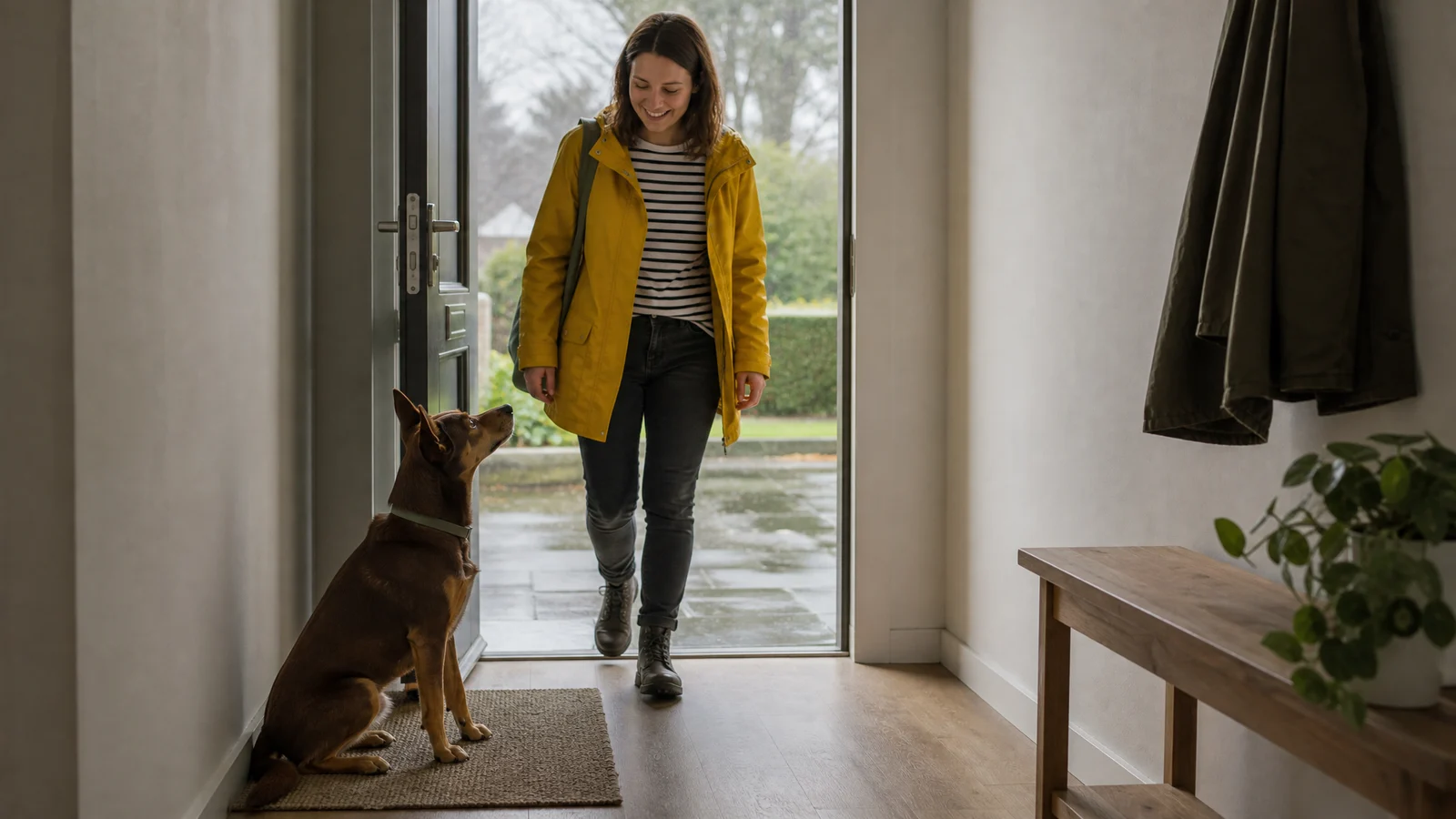
Pushing a jumping Kelpie off and saying down while turning to face them gives the attention they jumped for. To a bright, people-focused dog, that touch, that voice and that eye contact are exactly the reward they wanted. The fix takes one sentence: prevent the rehearsal, then pay generously for paws on the floor.
This matters for the breed because a Kelpie has almost inexhaustible energy and repeats whatever works. A jump that pays even now and then becomes a habit that is hard to retire, and it gets worse every time the doorbell rings. The same keenness works for you once the calmer greeting is the one that earns the reward.
Read on for why Kelpies jump, how the habit gets paid by accident, the management and replacement skills, a practice plan from hallway to door, signs of progress and when to call a vet.
Australian Kelpie Jumping at Homecoming
The Kelpie is a gathering dog, bred to use eye, bark and grip to move stock, with a lithe, hard-muscled body and great suppleness of limb. The standards call for a dog who can turn suddenly at speed and work tirelessly. A body like that finds springing upward almost effortless, so jumping is an excited greeting that has reached face height and keeps returning because it has paid off.
In the Australian bush, Kelpies often worked unsupervised, relying on their own wits. That history shows up at home as a dog who tries things and keeps whatever pays. If a leap earns a hand, a voice or a laugh, they will try it again, and a self-directed dog rarely needs to be asked twice to repeat a trick that works.
Many Kelpies also bond closely with one person and take a long time to accept strangers. A guest at the door is therefore a charged event, with excitement and uncertainty mixed together that comes out as bouncing. Our guide to socializing a slow-to-warm Kelpie covers gradual introductions in more depth.
Energy matters too. Where owners give actual amounts, they describe about two hours or more of outings a day, often with real sprinting. A young Kelpie who misses the big daily outing tends to become hard to live with and hard to teach, so a tired body comes before any greeting practice.
What Pays for Australian Kelpie Jumping
Jumping habits are often built by well-meaning people. Pushing the chest, saying the dog's name, looking down at them and even laughing all deliver what an attention-hungry dog wants most. Scolding is still contact, and contact is still a win.
Some rewards are quieter. The door swings open, the guest steps forward and bends down, or a slack leash lets your Kelpie reach the person. Then a tired family member gives in once and pets the dog mid-jump, which teaches a dog who works things out for themselves that the leap sometimes pays.
That "sometimes" is what strengthens the habit. A behavior that pays on and off gets repeated with more force, so the jumps become higher, faster and harder to interrupt. Excitement also climbs with every rehearsal, so each greeting starts from a more wound-up place than the last.
It helps to count the people involved. Every guest, child, neighbor and delivery person is a vote for or against the habit, and one visitor who pets a jumping Kelpie can undo days of careful work. That is why the next step is a set of household rules rather than a cue.
A Sit or Stand Greeting
Teach a sit, or a calm stand with all feet down, as the thing that makes people say hello. Deliver the treat low and close so the head stays down. Then add a check-in, where your Kelpie looks at you before moving toward a person.
The Australian Kelpie Greeting Baseline
Progress shows up in small, countable changes, so keep a simple tally on the fridge. Watch for these signs across several greetings rather than one. The direction over time matters more than any single visit:
- The number of jump attempts per greeting drops from visit to visit.
- Your Kelpie settles on the mat faster after the door opens.
- They offer a sit or look at you at the door before you ask.
- They greet a stranger almost as calmly as a family member.
- When they slip, one cue brings them back instead of a scramble.
Setbacks are normal. A new visitor, a long gap in practice or an unexercised day can bring the jumping back for a visit. Treat that as information about the level, step back one stage, add exercise, and rebuild.
Judge progress in more than one place. Many Kelpies guard or react at home or on leash yet are friendly and playful at the dog park, so a calm hello in one setting does not promise the same at your door. Practice in several settings before you decide the habit has gone.
Australian Kelpie Jumping at the Door
Management is what you do today, before any skill is learned, so that your Kelpie stops rehearsing the jump. You can stop others from rewarding the habit by using a leash, mat or crate to keep the dog from reaching the guest. Set up the entry in this order:
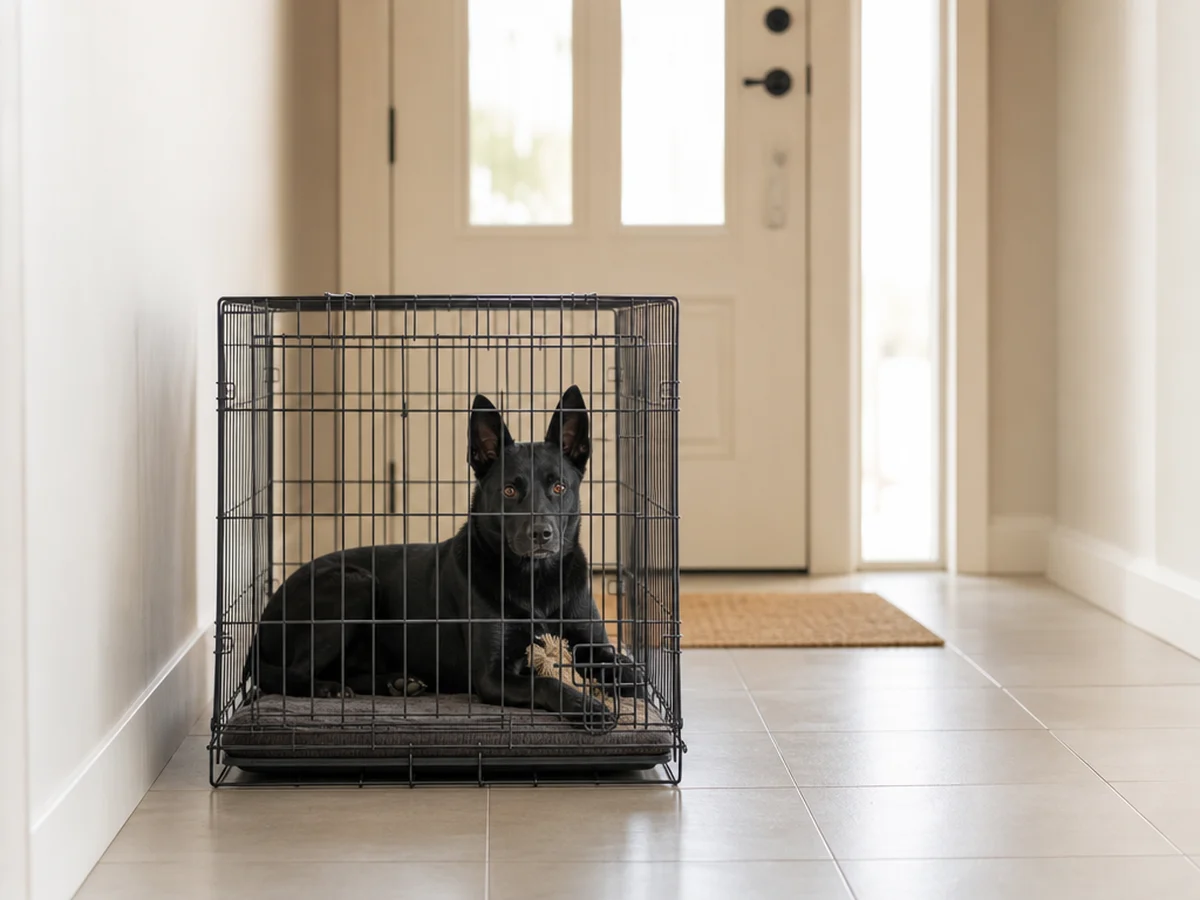
- Hang a leash by the door and clip on before it opens, so your Kelpie physically cannot reach the visitor.
- Put a baby gate or a closed door between the entry and the living area for any dog who bursts out when the bell rings.
- Place a mat a few steps back from the swing of the door, and scatter a handful of treats across it just before you open up, so the nose goes down and away from faces.
- Give every guest one rule in advance: no greeting, eye contact or touch while your dog's front feet are off the floor.
- Once the guest is settled, release your dog for a short run, which many Kelpies value highly.
You will often hear that the answer is to ignore a jumping dog. With a Kelpie that advice falls short, because the jump is fun in itself, visitors forget the rule, and an independent dog does not give up a game that sometimes works. Let the gate, leash and mat do the ignoring for you.
Exercise your dog before guests arrive so the greeting is not the main event of their day. If a visitor will not follow the rule, keep your Kelpie on the mat and let the person come in without any fuss.
The Australian Kelpie Replacement Job
A dog who is only told no still has to guess what earns the reward, so teach a replacement your Kelpie can do at the door. Choose behaviors that give them a clear job, so an eager dog knows exactly what to do. Use a marker word such as yes and small, quick treats, and offer clear choices rather than rigid, push-button drills, which rarely suit an independent dog.
Kelpies are so eager to run that the chance to run can be a strong reward. Ask for a short, clear behavior such as a sit or a check-in, then release your dog to run. That lets the independent streak work with your training instead of against it.
A Hand Target
A hand target, where the dog touches their nose to a flat palm, gives the face somewhere to go that is not up. The hand target is quick, active and clear, giving the dog a specific job. It also lets a guest offer a hand low down instead of leaning over the dog.
Australian Kelpie Jumping Away From Home
Practice moves from easy to hard, and you raise the difficulty only after your Kelpie succeeds on most tries at the current step. If they struggle, drop back a step without fuss. Keep sessions short and end each with a release to run, ideally after a good outing so their body is already settled. Younger dogs can start earlier, and our Kelpie puppy training timeline shows when.
- Practice alone in a hallway or quiet room: cue the sit or mat, mark the moment, and feed low until your dog offers the sit unasked.
- Add a helper standing still far away while your Kelpie wears the leash, and reward feet on the floor.
- Have the helper walk toward you across the lawn or front walk. As in greeting practice with a helper, if your dog stands up from the sit, the helper immediately turns and walks away, then returns once the sit is back.
- Move to the doorway with the helper outside. Add the knock or bell, open the door only while your dog stays down, and close it again if they pop up.
- Let the helper step inside and greet, with the leash on, rewarding each calm hello with a treat.
- Greet real visitors with the leash on, and drop it only after the sit has held through many visits.
Change one variable at a time: distance, noise or person. A new person or place counts as a new problem even when the skill is familiar.
If your Kelpie already works most readily with one person, that person can demonstrate the first drills before the household shares them. The rest of the household joins in once the routine is solid, using the same cues and the same rules.
A Mat Settle
A mat gives the whole body a place to be. The standard asks for a balance between keenness to work and the ability to rest, so teaching your Kelpie to settle on cue fits what they were bred for. For the wider approach, see our guide to training an independent Kelpie.
Jumping That Needs Professional Help
Most jumping is a learned greeting, but a few patterns point elsewhere. Book a vet visit if jumping starts suddenly in a dog who had stopped, or if it comes with yelping, stiffness, constant licking or scratching, or reluctance to put weight on a leg. A dog who is uncomfortable can be restless and hard to settle, so a physical check comes before blaming behavior. Regular vet visits are a good habit for a working breed anyway.
Frantic jumping with pacing, panting or refusing treats at the door can mean over-arousal or anxiety rather than simple excitement. Add distance, lower the difficulty and give a proper outing first. If the dog still cannot learn at that level, bring in help.
Raised hackles, growling or lunging at strangers are different from happy jumping. Some owners see more barking and reactivity toward visitors after a move, which is worth raising early. The right help is reward-based behavior modification guided by a qualified professional. Check credentials, since only veterinarians with board certification may call themselves behaviorists, while others face no such rule.
The Rule for Ending Australian Kelpie Jumping
The central rule is simple: manage the entry so jumping never pays, then reward the calm greeting every time. A Kelpie is keen, quick and ready to repeat what works, so make the floor the winning place and meet the need for exercise on purpose.
Keep practice brief and vary the person, place and noise one at a time. When the greeting slips, return to the last version your dog could handle instead of treating one difficult visitor as a failed plan.
Regular vet visits remain part of the routine, especially when behavior changes suddenly. With consistent management and a clear greeting job, your Australian Kelpie can learn that calm contact opens the door to people, play and the rest of the day.
 Training basicsReliable Recall for a Dog Bred to Work on Their Own
 Puppy trainingKelpie Puppy Chewing Everything? Redirecting Energy Into Rewarded Jobs
 Training basicsWhat Is an Australian Kelpie? Their Working Drive Explained