 Kelpie
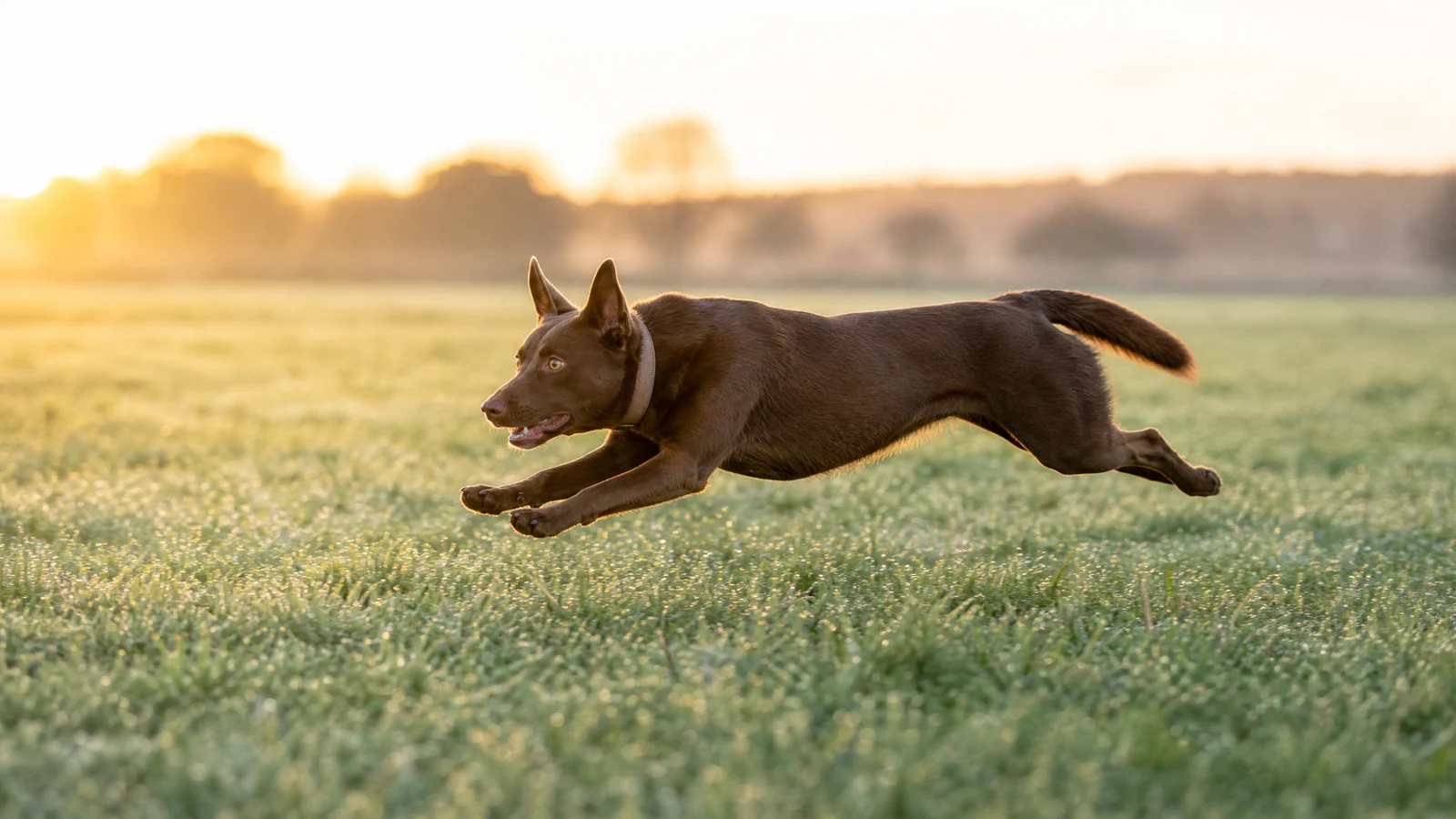
The breed standard describes movement that is "free and tireless," with almost limitless stamina and the ability to turn suddenly at speed. Owners tell a more restless story. Their Kelpies come back from a long run, gulp some water, and then look at you as if the real outing is about to begin.
That gap matters because a Kelpie with energy and no outlet will invent one, usually at the window, on the end of the leash, or in your furniture. Handled well, the same drive gives you a partner who sprints hard, turns on a dime and then switches off at home. Read on for how the working past explains the speed, what we can honestly say about top pace, which running outlets are safe, and the thinking games that finish the job.
Why Australian Kelpie Exercise Is Built on Stamina
To understand a Kelpie's engine, start with the job. These dogs were bred as working stock dogs, and in the Australian bush they often worked unsupervised, relying on their own wits to find and gather livestock. The standard asks for the stamina a sheepdog needs in wide open spaces, and it calls the temperament extremely alert, eager and highly intelligent, with almost inexhaustible energy.
Read that as a design brief. A dog who covers ground all day, makes decisions with no handler nearby and never seems to tire will not be satisfied by a lap around the block. Endurance is the core trait of this breed. Top speed is a bonus.
What Owners See Daily
Owners see it every day. Many describe Kelpies who are eager to run at every opportunity, with wild, excited behavior the moment the chance arrives, even on a leash in the snow. Where owners give real amounts, they describe about two hours or more of outings a day, often with proper sprinting in it. For a young, healthy Kelpie, treat that as a baseline, not an extreme.
Here is the useful twist. Because running is the thing your dog wants most, running is also your best reward. Ask for something short and clear, like a sit or a check-in with their eyes, then release them to run. That lets the independent streak work with your training instead of against it, and the dog quickly learns that listening is the doorway to the fun.
We have spent many years around this breed's behavior and training, and the Kelpies who struggle are rarely the ones who get too much running. They are the ones whose running has no rules and no thinking attached.
Fast Runs and Sudden Turns for an Australian Kelpie
The standard does not only praise stamina. It also asks for a dog who can turn suddenly at speed, and the UKC gait description adds that movement should be smooth, free and tireless, with a tendency to single track more as speed rises. It also names the capability of crouching, stealthy movement that the work demands.
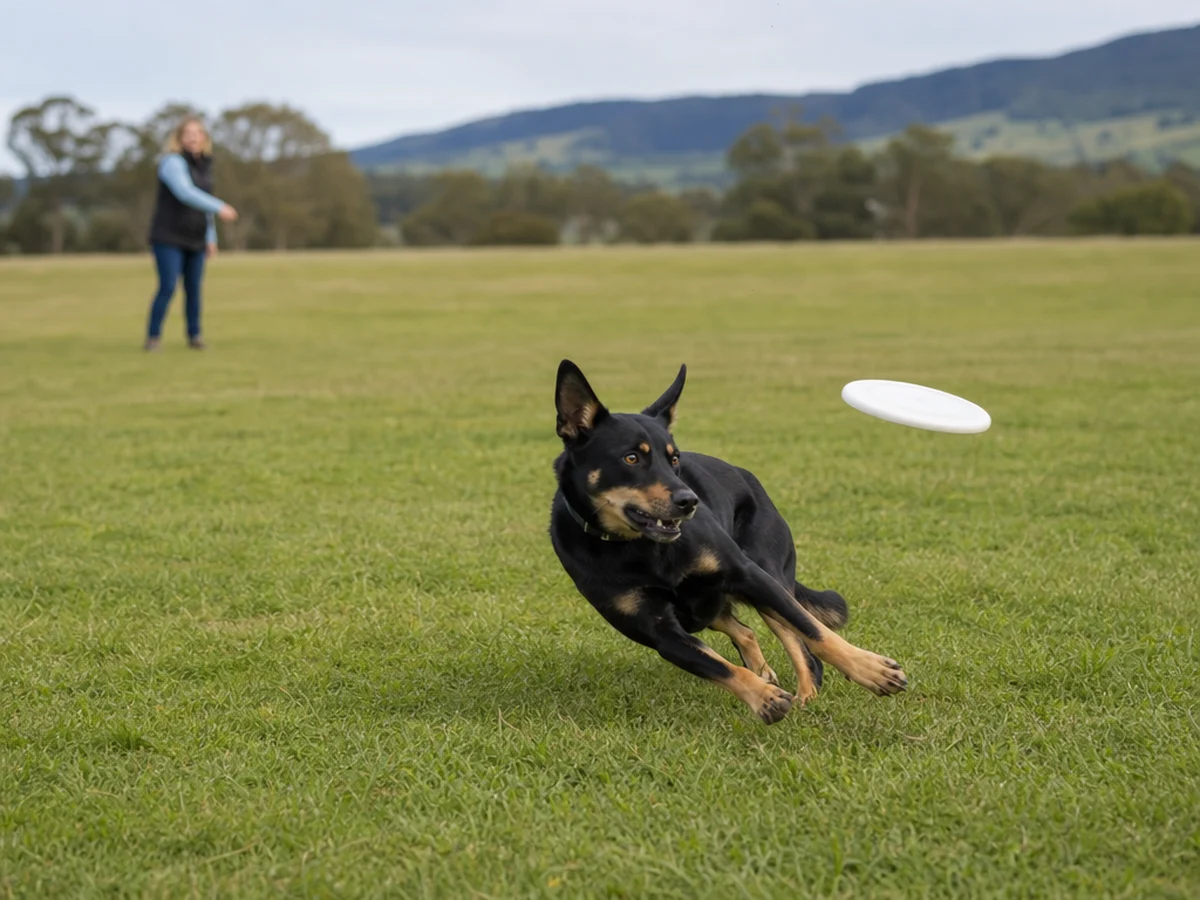
The body backs this up. Males stand approximately 18–20 inches at the withers and females approximately 17–19 inches, so these are medium, lithe dogs rather than heavy ones. Body length is a little greater than height, as 10 is to 9. Watch one work and you see a supple, muscular frame that folds low to stalk, then springs sideways the instant the stock moves.
That springiness is a joy to watch and a reason to be thoughtful. Hard stops and sharp pivots load the joints, and they come constantly when a Kelpie chases a ball or a playmate. A few sensible habits go a long way:
- Choose grass, packed dirt or other forgiving footing for fast play, and keep slick floors and hard sidewalk for walking.
- Build turns into games on purpose, such as weaving around cones or trees at a trot, so the dog practices controlling their body rather than skidding.
- Stop a game while the dog is still keen, because tired muscles twist more easily than fresh ones.
- Keep growing puppies to gentle play and short sessions, and ask your veterinarian how much sprinting, jumping and stair use suits their stage of growth.
Turning exercises double as training. Ask for a quick hand-target or a spin and reward it, and the dog learns that agility-style moves are a game with a payoff. Regular veterinary visits, from puppyhood on, are the easiest way to catch a sore hip or knee before it becomes a habit of limping.
How Fast Can an Australian Kelpie Run?
It is the question most people type, so here is the honest answer. Neither the standards nor the material we trust gives a measured top speed for the breed, and we will not hand you a miles-per-hour figure that nobody has verified. Any number floating around the internet is a guess.
What the standards do give you is more useful. They call for movement that is free and tireless and for the ability to change direction at speed. In other words, the breed was built to hold a strong pace for a very long time and to maneuver while doing it. A brief flat-out dash matters far less than how long the dog can keep working and how quickly they recover.
That shapes how you judge your own dog. Forget the stopwatch and watch these things instead:
- How fast their breathing settles after a hard run, and how soon they are willing to drink and rest.
- Whether they can still respond to a cue, such as a sit or a recall, once they are excited and moving.
- How they behave in the hours after exercise, calm and loose or wired and pacing.
- Whether their stride stays smooth, with no limping or stiffness the next morning.
Sprinting builds fitness, so pair it with structured work that satisfies the mind. Bursts of speed train the body, while sustained, structured work is what keeps a thinking dog content.
Controlled Running Exercise for Australian Kelpie Stamina
Control does not mean taking the fun out. It means the run has a start, a rule and an end, so the dog learns to be fast and still listen. The best outlets for an Australian Kelpie share that feature.
- Long-line runs in a safe, open area let the dog stretch out while you keep a connection. Reward a check-in, then release them to run again.
- Fetch with rules works well when the dog waits for the throw, brings the toy back and drops it before the next one flies. The wait and the drop are what make it training.
- Trotting beside a bike suits fit adults on quiet paths. Use a harness, keep to a steady trot, and reward them for staying beside the wheel.
- Off-leash time in a fenced space gives them a place to zoom. Plan a regular one, and reward calm walking on the way there.
That last point matters most for people without a yard. Owners in that spot report that the dog has nowhere to zoom, so outings turn very excitable, especially on the leash. The fix is a dependable safe place for running, plus a habit of rewarding loose-leash walking on the route to it.
Puppies
Young Kelpies have enormous enthusiasm and developing bodies. Keep running playful and short, on soft ground, with plenty of rest between bursts. Let the rest of their energy go into sniffing, simple cues and gentle tug games. Your veterinarian can tell you what suits your puppy's growth.
Adults
A healthy adult can handle the long outings owners describe, around two hours or more a day, often split into several parts. A sensible day mixes a brisk run, a training session and a calmer walk. Some owners find that a young dog turns difficult on days without exercise, so they run the dog for hours on top of training. It tends to work best when the training comes first and the run is the reward.
Hot-Weather Limits
Stamina does not make a Kelpie immune to heat. Run in the cool hours of early morning or evening, carry water, and stop in the shade often. Check sidewalk with your own hand before you let the dog run on it. A dog this keen will keep going when they should stop and will not tell you, so you must make the call. If the weather is bad or outdoor exercise is restricted, shift the day toward brain work.
Can Brain Games Replace Fast Running Exercise?
Not entirely, but it can do a surprising amount of the job. A dog bred to think for themselves needs problems to solve, and a tired mind settles more deeply than a tired body alone. Treat thinking games as the second half of every run.
Three kinds of work suit the breed well. Scent games send the dog searching for hidden treats or toys in the grass or around the house. Sorting tasks teach the dog to drop toys into a basket or push the right object with their nose.
Shaping rewards tiny steps toward a new behavior, such as touching a target or stepping onto a mat, until the dog works out the whole trick. Mental stimulation like scent games and puzzle feeders is also the standard advice for boredom barking.
Be careful with the idea that boredom explains every noise, though. Some Kelpies bark hard at the window even when they get hours of outings and sprinting every day, and owners in that situation suspect something other than boredom. Often the dog has simply found a very interesting view, perhaps after a move to an apartment with a window onto the street. More exercise alone may not fix it.
Pair the exercise with calm. Reward quiet moments at the window, give them a mat or bed to settle on, and soften the view with a film or curtain so there is less to react to.
A reliable order for the day looks like this:
- Warm up with a short training game, such as a few sits and hand-targets for treats.
- Run hard in your safe place, with a check-in and release every so often.
- Walk home on a loose leash, rewarding the dog for staying beside you.
- Finish with a scent search or a shaping session on a mat, then let them settle.
The dog comes home with a body that is spent and a mind that has been used. That combination is what produces the quiet evening you wanted.
Channeling Australian Kelpie Exercise Into the Senior Years
The honest long-term picture is a pleasant surprise. This is a breed whose stamina stays high well into middle age, so the routine you build will adapt rather than shrink. A teenage Kelpie needs enormous outlets and clear structure. A mature one still wants a long day, only with smarter use of their time. The table below shows how the mix tends to shift.
| Stage | What the routine leans on |
|---|---|
| Adolescence | Big outlets, short training bursts, lots of rewarded check-ins during excitement |
| Young adult | Long outings with real sprinting, controlled runs and plenty of scent and shaping work |
| Middle age | Still long days, with steadier trots replacing some hard turning |
| Senior | Shorter, gentler walks, sniffing and brain games, adjusted with your veterinarian |
As the years pass, change the shape of the exercise before you reduce it. Swap bursts of hard turning for steady trots, long-line sniff walks and scent work. Keep the brain games going, because a mind that has been busy all its life tends to stay hungry for tasks long after the legs slow down. Regular veterinary check-ups are the best way to catch stiffness or soreness early, and they tell you when to adjust.
So what does a well-channeled Kelpie look like at the end of all this? They run hard when invited, turn smoothly, check in with you in the middle of the excitement and come home ready to rest. They have a window routine instead of a window problem, and they treat running as something you share. The speed was always there. What you give the dog is somewhere worthwhile to take it, and that job never really ends for a breed with almost inexhaustible energy.
 Training basicsHow to Potty Train an Australian Kelpie Puppy
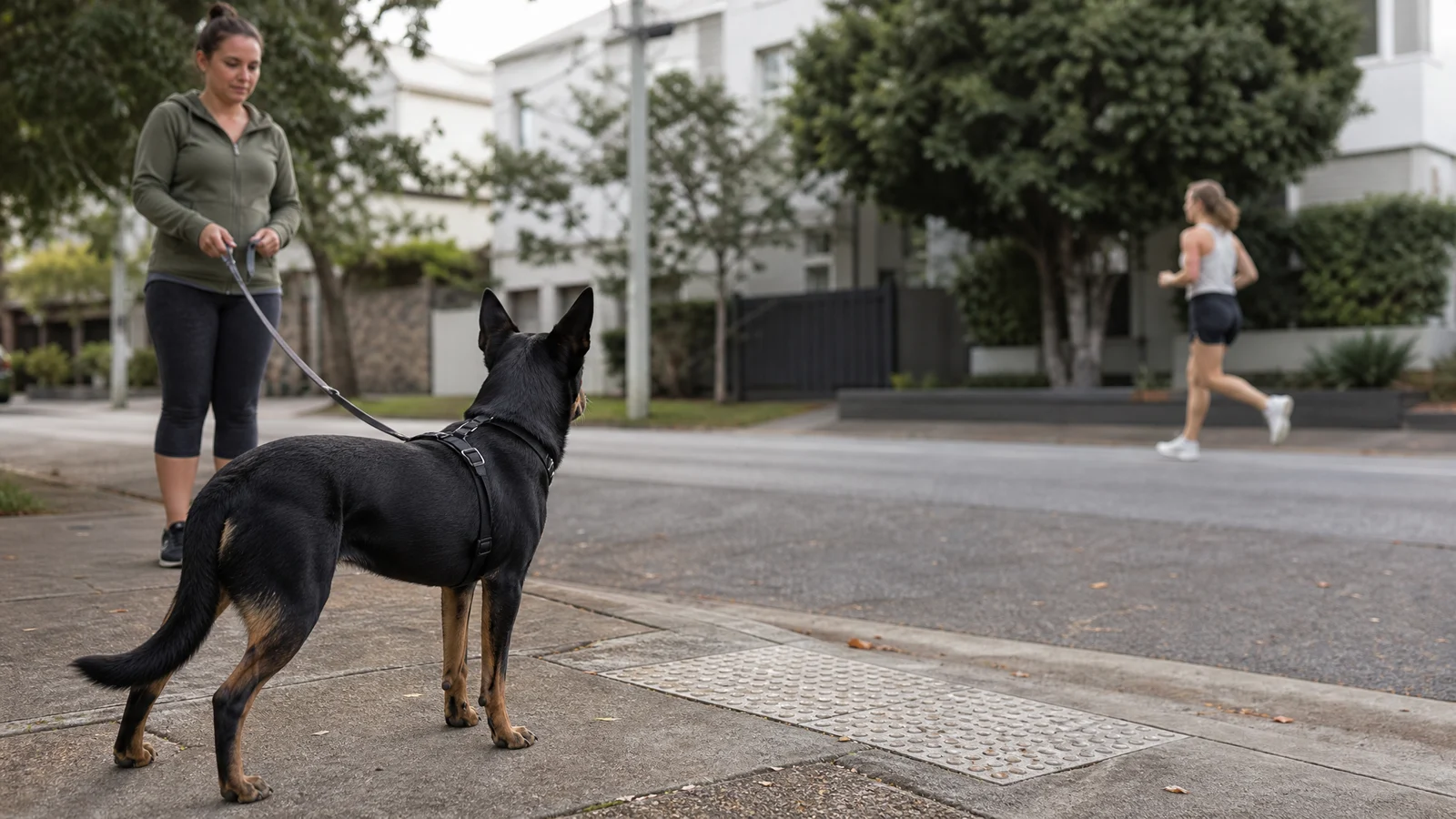 Training basicsLeash Training an Australian Kelpie Who Pulls and Lunges
 BehaviorSocializing a Kelpie That Is Slow to Warm Up to Strangers