 Kelpie
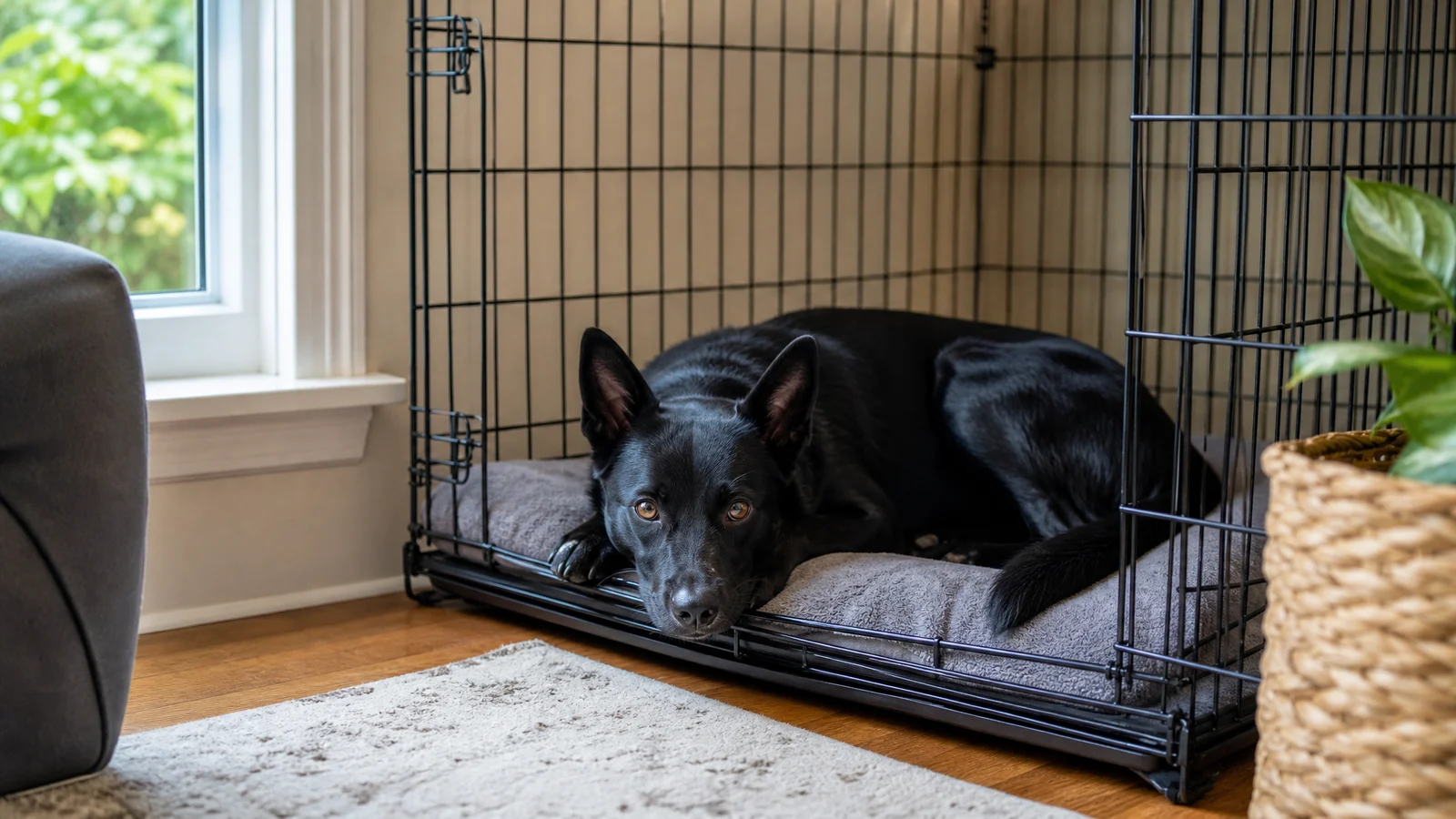
An Australian Kelpie can walk into a crate for food and still panic when the front door closes. Entry is a physical behavior. Remaining comfortable during an absence is an emotional skill, and treating them as the same lesson is where ordinary crate advice fails this loyal, alert working breed.
We separate the plan into two tracks. First, teach the crate as a place to rest while life continues nearby. Then build absence tolerance in steps that end before distress. Success in one track is useful information, but it is never permission to skip steps in the other. We'll walk you through the setup and door work, then show how to read setbacks without turning the crate into a test.
Two Crate Training Skills
The crate is one piece of equipment serving two possible jobs. It can provide a predictable resting place, and it can be part of a safe management plan during short absences. The first job can succeed even when the second is not yet appropriate. Keeping the jobs separate also makes a setback easier to read, because you can identify whether the problem began with confinement, distance, or departure.
The Physical Settle
A physical settle means the dog can enter, lie down, eat, watch household movement, and rest without being constantly entertained. For a breed described as alert, eager, and almost inexhaustible, that downshift deserves direct practice instead of waiting for exhaustion to create it. The dog should be able to notice ordinary sound and movement without feeling responsible for following every change. Rest is active learning here, not simply the absence of motion.
Start after normal exercise and a toilet trip, not after a frantic effort to wear the dog out. Reward the first small signs of settling, such as a hip rolling to one side, a lowered head, or attention leaving the room. Calm is the behavior being taught. Deliver rewards low and quietly so the payment does not restart the dog. Increase the gap between rewards only after the dog remains soft through the current interval.
The Absence Skill
Absence tolerance means the dog remains comfortable when you move out of sight and eventually leave. Loyalty and close attachment can make departure cues important to a Kelpie. Shoes, keys, and a closed door may predict separation long before the crate itself matters. Practice those cues at times when nobody leaves, pairing them with an ordinary return to the room, so they lose some of their predictive weight.
A dog who rests beside you but becomes distressed when you leave does not need stricter crate practice. They need absence work below the point where fear begins. This track progresses by emotional comfort, not by how long the latch can stay closed. A short absence with relaxed breathing and a return to rest teaches more than a longer interval survived in rising tension.
Australian Kelpie Crate Training Setup
A useful setup makes choosing the crate easy. It should be large enough for the dog to stand, turn, stretch, and lie comfortably, with stable footing and nothing that catches. Place it where the household is present but where traffic does not constantly pass the opening. Keep the path to water and the chosen toilet routine clear before a session begins. A practical setup removes needs that could be mistaken for resistance to the crate.
Location and Comfort
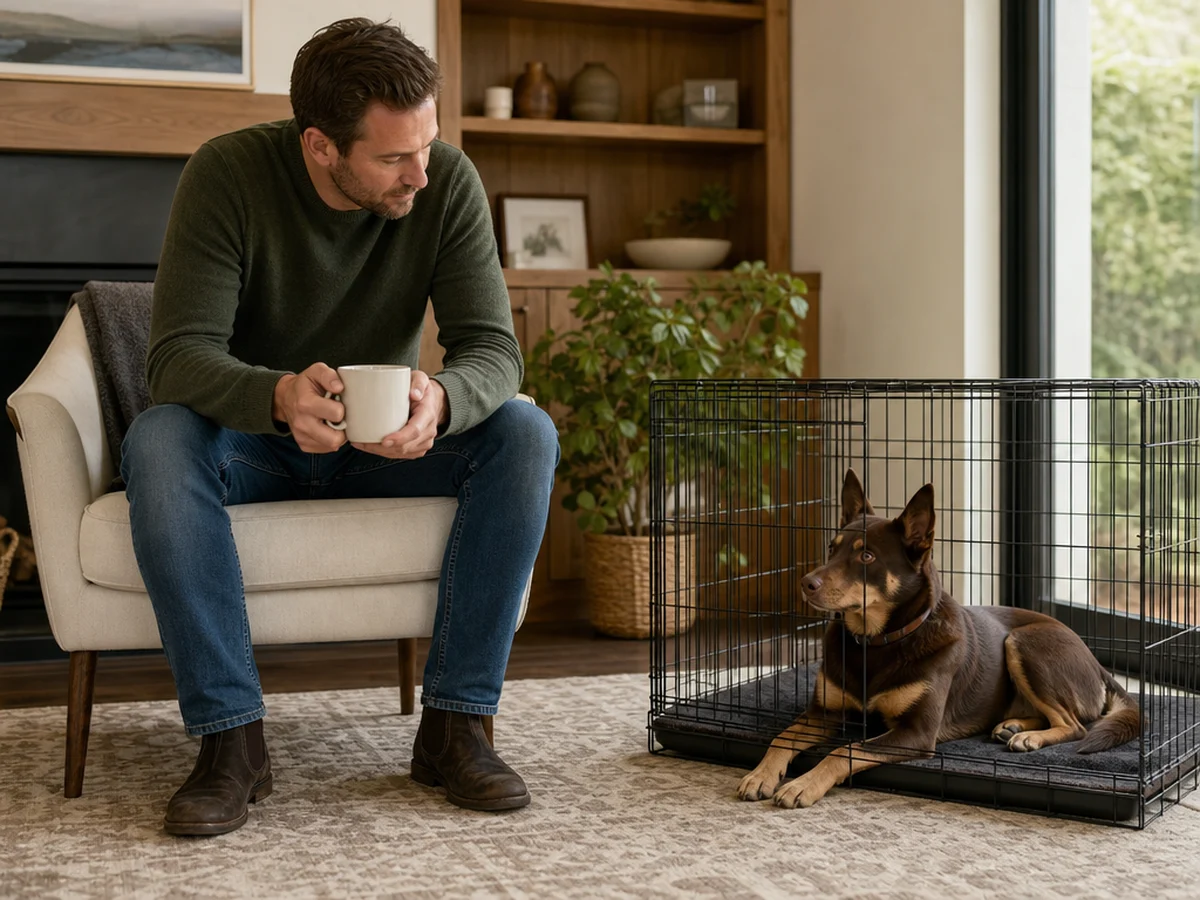
Begin in a lived-in room so the Kelpie can practice resting without social isolation. If every sound sends them upright, move the crate away from the door, window, or busy walkway. The aim is access to family life without a job monitoring all of it. Sit nearby without interacting at first, then vary your position while rewarding continued rest. The dog learns that closeness does not always mean a task is coming.
Offer safe resting items your dog already uses appropriately. Comfort is individual, so watch whether bedding supports sleep or becomes a project to pull apart. Keep regular veterinary visits, and ask your veterinarian about any sudden restlessness, discomfort, or change in sleep.
The Door as Its Own Lesson
A dog entering freely has not automatically accepted confinement. Touch the door, reward, and move it away. Swing it partly closed, reward, and open it. Latch it briefly only when those movements are ordinary, then release before the dog asks to leave. Mix easy open-door repetitions between harder ones. That contrast keeps entry voluntary and prevents every approach to the crate from predicting a closed door.
The door should predict a short, successful repetition rather than the end of choice. The crate guidance recommends short sessions and watching for signs that progress is too fast. Build duration only while the dog stays loose.
Crate Training Without Leaving
Complete the physical-settle track while you remain home. The dog learns that entry is voluntary, the door can move, household life can continue, and release arrives without fuss. This creates a reliable resting behavior before departure adds a different kind of difficulty. Practice at different calm points in the day so the crate does not become usable only after one particular walk or evening routine.
Work through the pieces in an order that keeps each one clear:
- Toss food just inside and let the dog leave immediately after collecting it.
- Wait for a voluntary step or lie-down, mark it, and deliver the reward inside.
- Move the door through small arcs while feeding for relaxed body language.
- Latch briefly, stay close, then open the door while the dog is still calm.
- Add ordinary movement around the room before adding any disappearance.
Release on a consistent cue so waiting is part of the routine. If the dog rushes the opening, shorten the next repetition and reward a pause before the door moves. The lesson is that stillness opens the way, not that pushing is required. Sometimes open the door and ask for another moment of rest before the release cue, which separates door movement from permission to rush out.
The crate remains a safe haven, never a place assigned because the dog made a mistake. That distinction protects voluntary entry. Reward-based training, as set out in the humane training position, teaches the behavior wanted and arranges the setting for success.
Alone-Time Training
Begin this track only after the dog can settle with the door closed while you move normally nearby. Step out of sight and return before posture changes. The first absence may be no more than a quiet movement around a corner, because the quality of the return matters more than the clock. Return neutrally, pause nearby, and reward continued calm. Dramatic reunions can make the contrast between presence and absence feel larger than the exercise requires.
Use this progression as a set of separate questions, not a race:
- Can the dog stay loose when you stand, sit, and cross the room?
- Can they remain settled when you disappear briefly inside the home?
- Do keys, shoes, or a bag change their breathing or attention?
- Can the exterior door open and close while another person observes?
- Can a short real departure end before any distress appears?
Record a departure when you cannot observe directly. Look for a dog who returns to rest, not merely one who stays quiet. The separation anxiety guidance says practice absences must remain shorter than the time it takes the dog to become upset.
Change one feature at a time. Longer absence, a different time of day, and a full departure routine are three separate increases. If stress appears, return to the last comfortable version rather than exposing the dog to the full absence and hoping repetition makes it easier. Keep notes on the precise change, the dog's first response, and whether they returned to rest. That record prevents guesswork and shows when progress depends on time of day or departure cues.
Australian Kelpie Distress Signals
Noise alone does not reveal everything. A complaint that stops as the dog takes food and settles differs from escalating vocalizing paired with panting, drooling, frantic escape attempts, house soiling, or distress when departure preparations begin. Read the cluster and its direction. A dog who grows quieter and settles is moving toward comfort. A dog whose movement, breathing, and efforts intensify is moving away from it, even if the elapsed time is still short.
The distress criteria distinguish separation anxiety from poor manners by those accompanying signs. If they appear, stop using longer absences as practice. The crate may intensify panic for some dogs and should not be assumed to be the right absence space.
Crate Training Troubleshooting
If whining begins as soon as the door moves, go back to rewarding door motion without latching. If it begins after you leave sight, the physical track may be sound while the absence step is too large. Fix the part that changed instead of restarting everything. One clean adjustment gives useful information. Changing the location, duration, reward, and departure routine together may stop the noise without revealing which part actually helped.
Wait for a brief gap in ordinary noise before opening, but do not hold a distressed dog inside to prove a point. Prevention is the safer tool. Shorten the next repetition enough that the dog can remain comfortable, and use a pen or dog-safe room when confinement triggers the reaction. The goal is safe learning, not loyalty to one piece of equipment. A wider space can support absence practice while crate comfort continues separately.
Exercise and thinking work support settling but do not treat separation distress. A Kelpie whose daily training needs are met still needs deliberate rest practice. Link that work with Kelpie temperament so rewards, routine, and independent choices remain consistent.
Australian Kelpie Crate Training Expectations
Long term, the crate should be one comfortable resting option, not the only place your dog can settle and not evidence that they can tolerate any departure. Practice mat rest in other rooms and calm time behind a gate so the skill belongs to the dog, not only the equipment. Continue occasional easy crate repetitions when there is no practical need to confine. That history keeps the resting place from predicting only departures or disrupted household moments.
A durable result is quiet choice and quick recovery. Your Kelpie enters without being lured, rests while you move, and handles departures built within their comfort. Keep the two tracks separate whenever progress slips. The physical settle may need practice, the absence skill may need a smaller step, or the crate may not fit that moment.
 Exercise and jobsHow Fast Can an Australian Kelpie Run? Channel Their Stamina
 Training basicsHow to Potty Train an Australian Kelpie Puppy
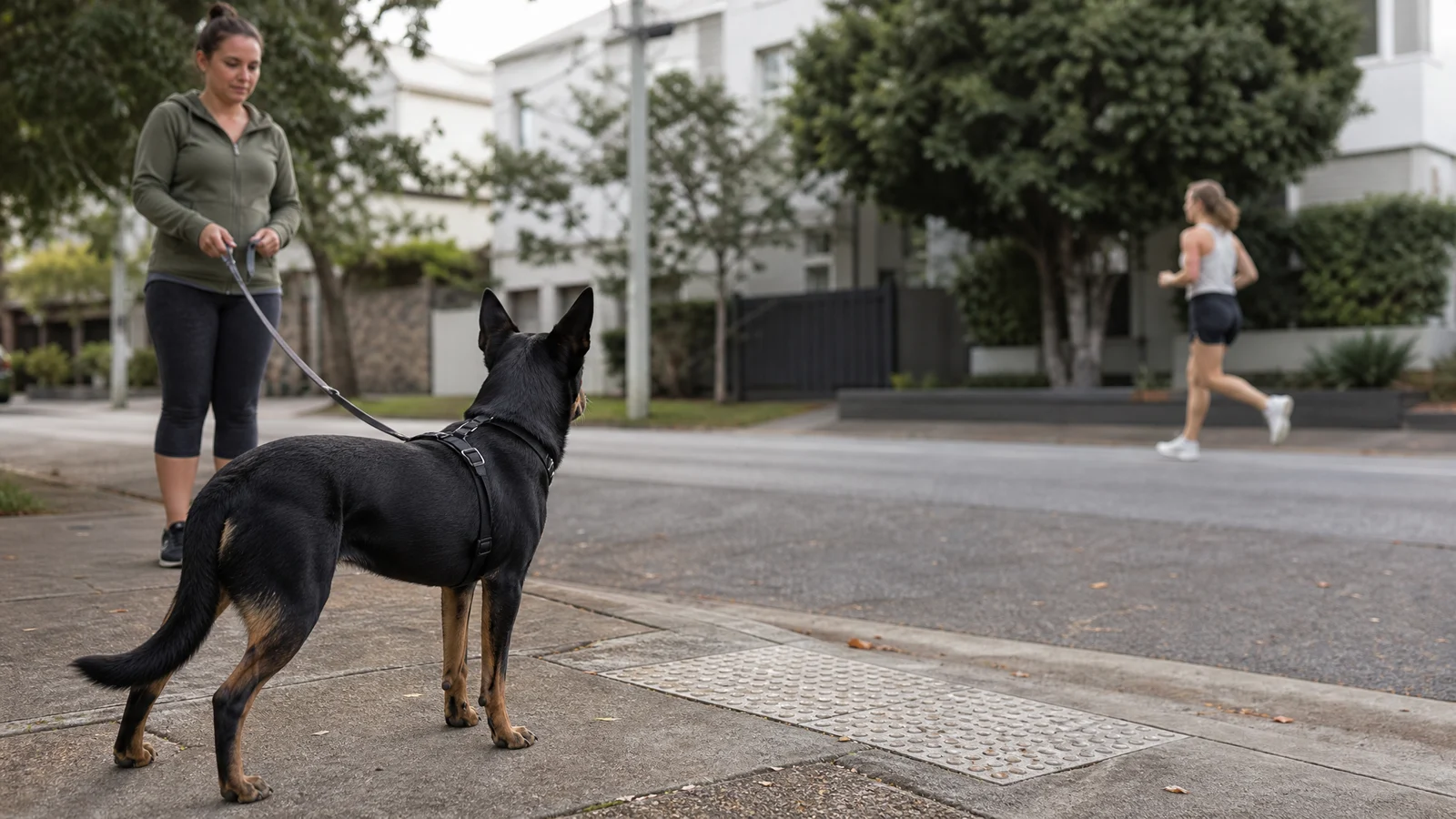 Training basicsLeash Training an Australian Kelpie Who Pulls and Lunges