 Kelpie
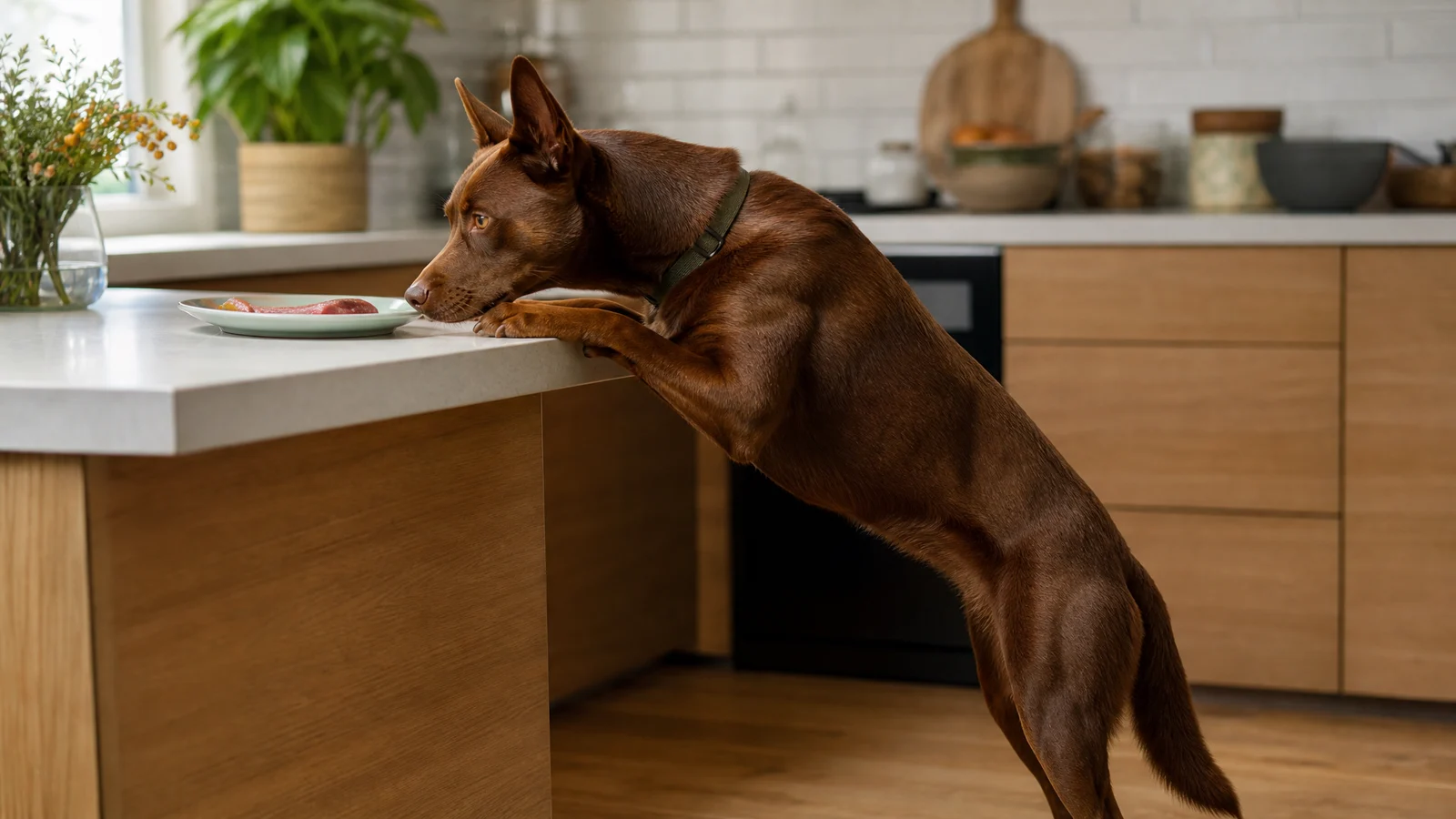
Ordinary dog advice says to ignore the counter-surfing and say "off" when it happens. With a Kelpie that plan fails, because they treat height as both a vantage point and a puzzle, and a counter solves the puzzle with snacks on top.
The cue and the setup have to support each other. Until surfaces stop paying, even a well-taught off loses to a loaf of bread, while a cleared room without a replacement leaves the dog searching for another lookout.
This article starts with off and place, then helps you identify what pays for climbing onto everything, provide a legal lookout, carry the rules to cars and furniture, and remove the remaining payoff. You finish with clear signs that four paws down is becoming the easier choice.
Australian Kelpie Off and Place
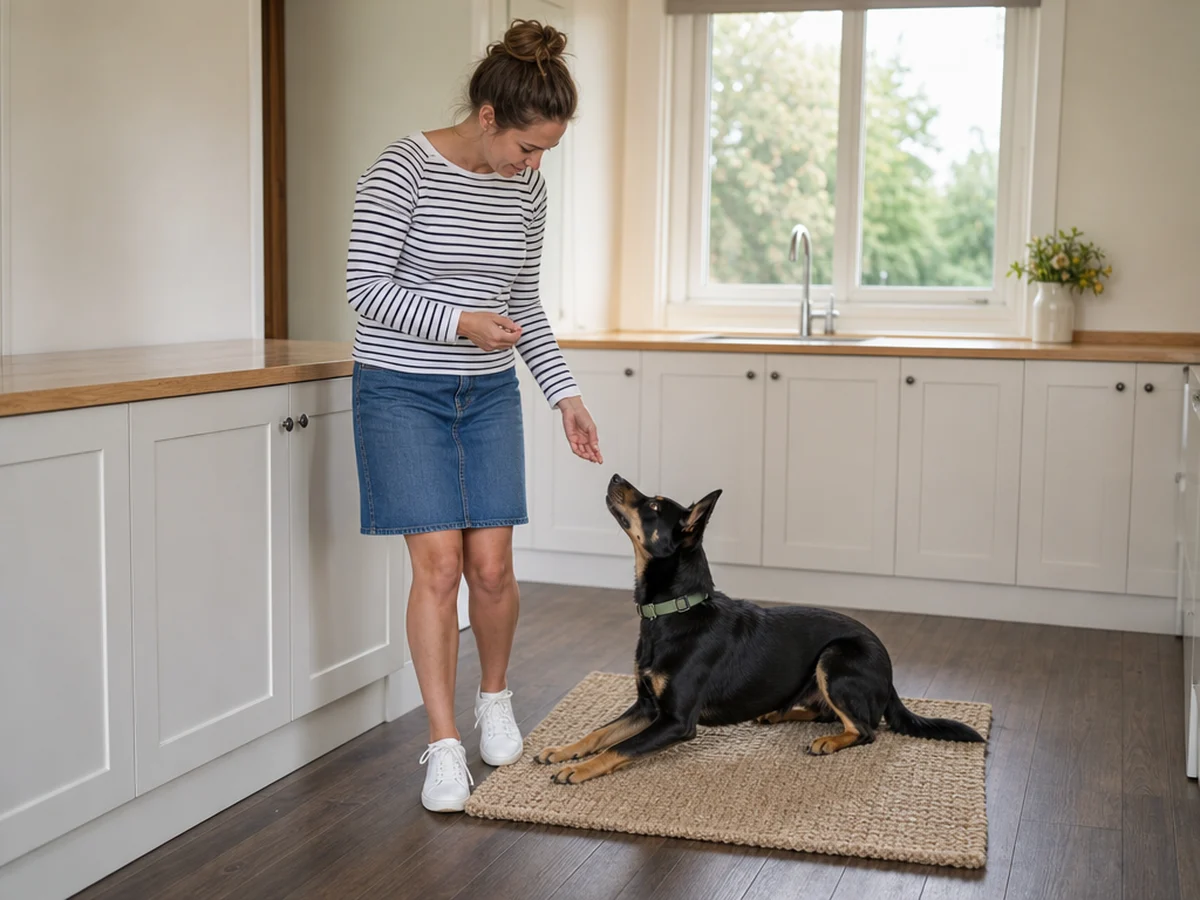
Off means all four paws on the floor, and place means go to your mat and stay there. Teach them away from the temptation first, then bring them into the kitchen.
Teach Off
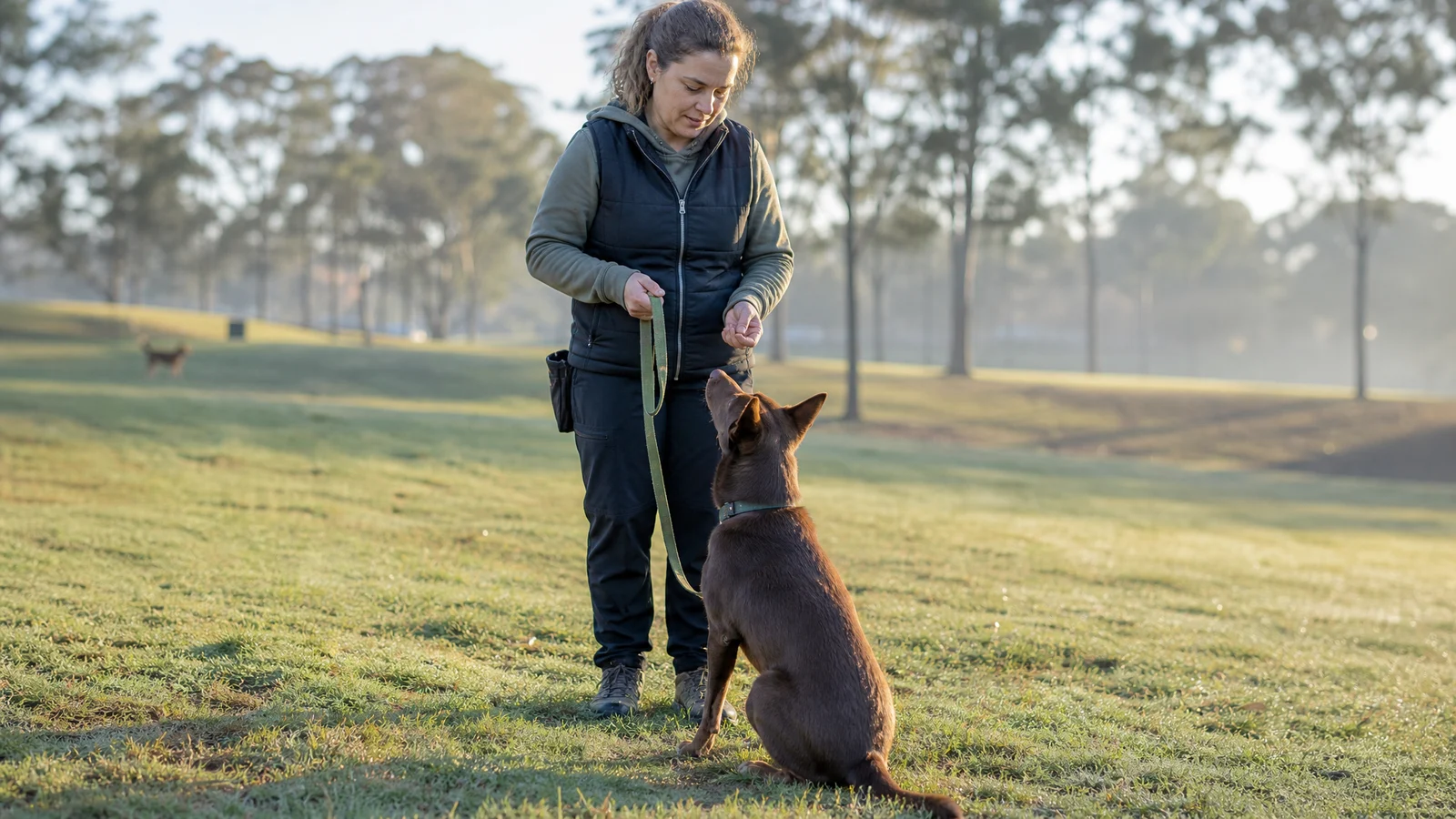
Use a low, sturdy stool. When the front paws land on it, say "off," lure the nose down with a treat at floor level, and mark the instant all four feet touch the ground.
Say the cue once. Repeating it teaches a clever dog that the first one is optional.
If the dog is already fully up on something high, call them in a friendly voice and reward with something better than whatever they found. Pay only on the floor, never on the surface.
Build Place
The mat gives the dog a better answer than climbing. Teach it in small stages, one at a time:
- Put a mat down and mark every time the dog steps onto it.
- Wait for a down on the mat, mark it and pay there.
- Add the word "place" just before the dog steps on.
- Release with a clear word, so leaving the mat is also part of the game.
- Move the mat toward the kitchen a little at a time.
- Later, set the mat on top of the platform so one cue means a legal lookout and a rest.
The breed standard asks for a balance between keenness to work and the ability to rest. The mat teaches that off-switch, which an alert, eager dog does not always find alone.
Run Short Rounds
Keep each round to a handful of repetitions and end on a success while the dog still wants more. Several mini-sessions across the day beat one long drill for a dog who tires of repeats.
Practice with different people and in different rooms. A cue that works only for you, in the kitchen, is not finished.
Why Does Australian Kelpie Climbing Pay?
Climbing usually pays with food, attention, a wider view or the excitement of reaching a new place. Identify that payoff first, because the reward decides which part of the setup must change.
The breed is built to turn suddenly at speed, so a table is just another obstacle. Add a heritage in which Kelpies often worked unsupervised and relied on their own wits, and vaulting makes sense.
Is it defiance? The verdict is probably not. One Working Kelpie Council author describes the Kelpie as more of an individual than a push-button dog, so expect them to try things and check the result.
Your job is to read what the dog gets from the height. Notice which surface they choose and what happens just before the climb.
- If they go for the counter while you cook, the prize is food or your attention.
- If they choose the dining table at mealtimes, the prize is the view of the family.
- If they climb when left alone, boredom is a likely cause, so build a real outlet like the ones in our guide to a real job for busy jaws.
- If they climb during excited play, the climb is part of the game and the play needs a calmer pace.
Match the fix to the payoff. Food needs clearing, a view needs a legal perch, and boredom needs work.
A long run helps, but it rarely cancels a payoff that is still on offer. Every successful vault is a rehearsal, so keep the barriers up while you teach the cues below.
Where Should an Australian Kelpie Lookout Go?
A legal perch gives an eager, agile dog the height they want without turning the kitchen into an obstacle course. Teach that option before an off-limits surface has another chance to pay.
Keep Every Reachable Surface Low
Block the sofa arm, the stair landing and the car seat edge with pens or closed doors until the floor habit is solid. A puppy who never finds the top of the table never learns that it is worth a try.
Offer a Legal Climb
Build a low, sturdy platform with a nonslip top and set it where the family spends time, so the puppy sees the room from it. Lure them up with a treat, mark the instant all four feet are on, and pay on the platform.
Add a release word for stepping down and pay that too. The platform then becomes a short game with a start and an end, not an all-day perch.
Pay Four Paws Down
Mark when the puppy walks past a table leg or sniffs a chair and keeps the front feet on the floor, then drop the treat low. Many people only pay for dramatic moments, but the quiet non-event of a puppy crossing the kitchen is the behavior you want more of.
Deliver treats at floor level, not up near your hands. A raised treat pulls the nose up and the front paws after it, the same trap behind Kelpie jumping up on people.
Climbing Around Cars and Furniture
Hoods, roofs, tailgates and picnic tables look like the kitchen lookout, only bigger and outdoors. Treat each new place as a fresh version of the same decision, because the floor habit does not travel automatically.
Cars and Tailgates
The fix is the same two cues with tighter rules. Do not assume the floor habit travels, because a new place is a new test.
- Keep the dog on a leash near parked cars until the habit is proven in that spot.
- Have them load and unload on cue, and wait for a release word before jumping out.
- Carry the mat and ask for "place" beside the car or the picnic table, paying there.
- Choose a parking spot with room to manage the dog, not a tight lot.
Furniture, Walls and Away From Home
Outdoor furniture follows the same logic. Block the chair, reward the floor, and give the dog a legal spot to survey the yard.
If the climbing is really a route over a fence or onto a wall, treat it as an escape problem, covered in our guide to why your Kelpie roams. Keep that work separate from kitchen practice.
A grown dog who climbs after a long quiet spell usually found a gap. Look for an unwatched moment, an unlocked door or a new item, and fix that first.
Adults also need a real outlet for the climbing urge. Kelpies are entered in agility, so a club's equipment, or a safe homemade version, gives that agile body a legal obstacle.
Remove the Climbing Payoff
Start with the room, not the dog. Every climb that ends in food, a view or a chase pays for the next one, so this section covers what to remove and what to block.
Remove the Rewards
The breed standard describes a lithe dog with great suppleness of limb. To that body a counter is a small obstacle, and what sits on top is the real draw.
Our work with Kelpies has centered on their behavior and training for many seasons, and we know why the ignore-it plan fails. Food and a view reward the dog without any help from you, and a snack found once keeps a dog checking for months.
Clear the room before teaching. Start with the items below, because each can reward another climb:
- Put all food, including bread, fruit bowls and soaking dishes, into cabinets or the fridge.
- Wipe crumbs and grease right away, because a Kelpie will re-check a spot that paid even once.
- Close wrappers, grocery bags and anything food-scented into a lidded bin or a high pantry.
- Push chairs in, because a chair is the staircase to the table.
- Move sponges, gloves and phones out of sight, since dogs often grab small items.
Block the Access
Clearing food removes the prize but not the lookout. A closed door is the most reliable barrier you own, and a tall gate is next best.
A low baby gate is only a hurdle to an agile dog, so treat it as a suggestion. If you use any barrier, leave a chew on the dog's side, since some anxious dogs show displacement behavior when confined.
When you cook, put the dog on a mat or behind the barrier, never underfoot. A surface that is boring and out of reach gets checked less often.
Safer Climbing for Every Age
Safety changes the setup even when the four-paws-down rule stays the same. As a Kelpie ages, the urge to climb can outlast the body's comfort with jumping and landing.
Swap jumps for ramps and steps. A ramp for the car, a step for the sofa if you allow it, and a lower platform with a nonslip top all cut the strain of landing.
Keep the floor rules exactly as they were. A senior dog who has relied on "off" and "place" all their life finds that consistency calming.
Watch for change. If a dog who used to hop up stops wanting to, or hesitates on stairs, raise it at their next routine vet exam, and keep those exams regular as the years add up.
Mental work still matters. Gentle walks, scent games and a comfortable lookout keep the mind busy, and a busy mind climbs less out of boredom.
Four Paws Down Becomes Habit
Expect climbing to fade into a habit, not vanish. The agile, curious dog behind the habit never leaves, so the setup does the long-term work.
Relapses will come. A new home, a visitor's car, a renovation or a changed routine can bring the old vaulting back for a while.
When that happens, go back to management first. Clear the surface, restore the barrier, pay for the floor, and cue the mat until the pattern settles again.
That is the whole plan across a life: surfaces that never pay, a legal lookout in the house, and steady rewards for four paws down. A Kelpie raised this way learns that the floor and their own platform are where the good things happen, so they choose them almost automatically, and the occasional slip is a signal to tighten the setup, not a sign that you have failed.
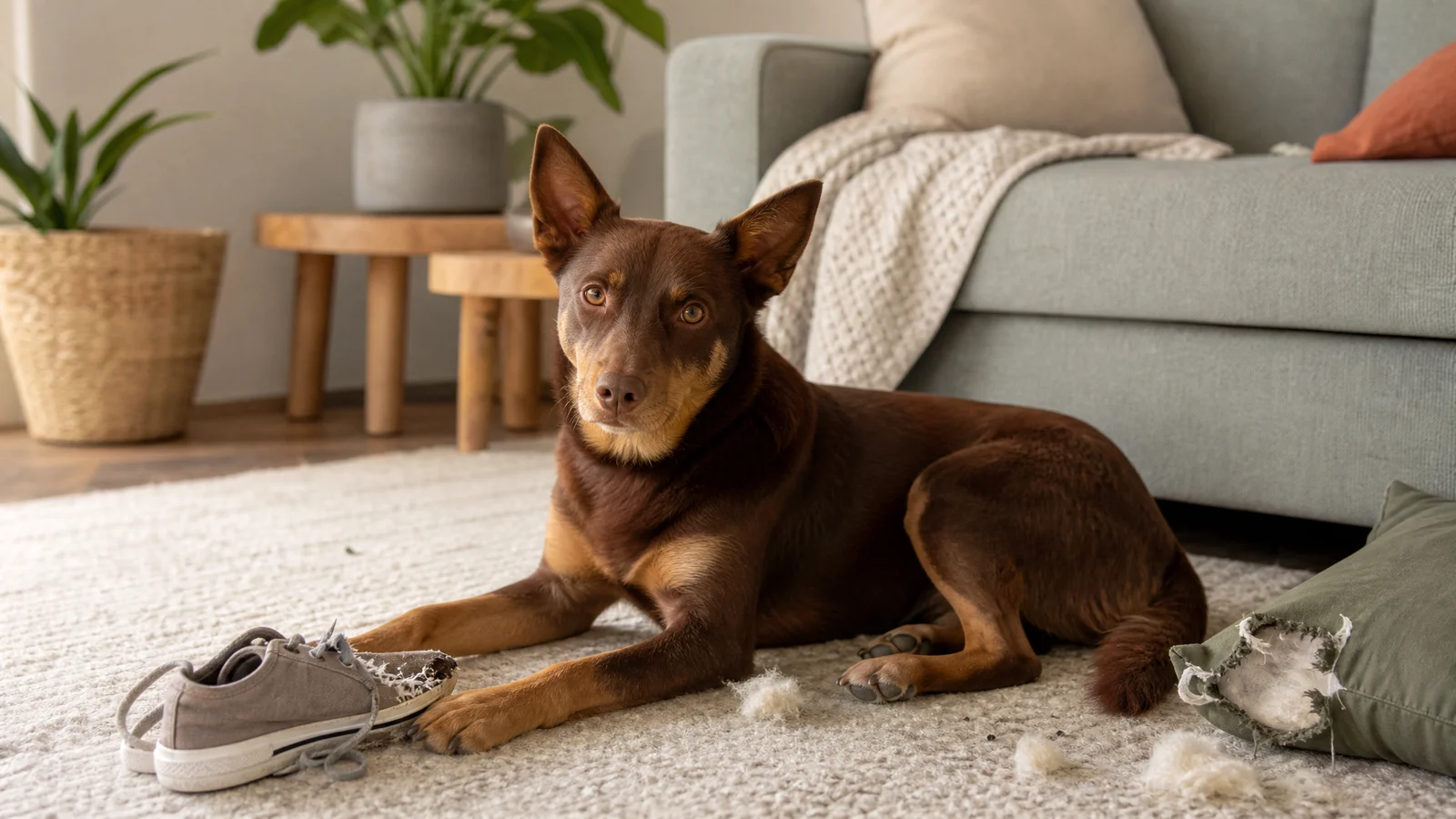 BehaviorGiving a Bored Australian Kelpie's Busy Jaws a Real Job
 Training basicsAre Australian Kelpies Easy to Train? Temperament and Trainability FAQ
 Puppy trainingHow to Train Australian Kelpie Puppies Week by Week to Age Two