 Kelpie
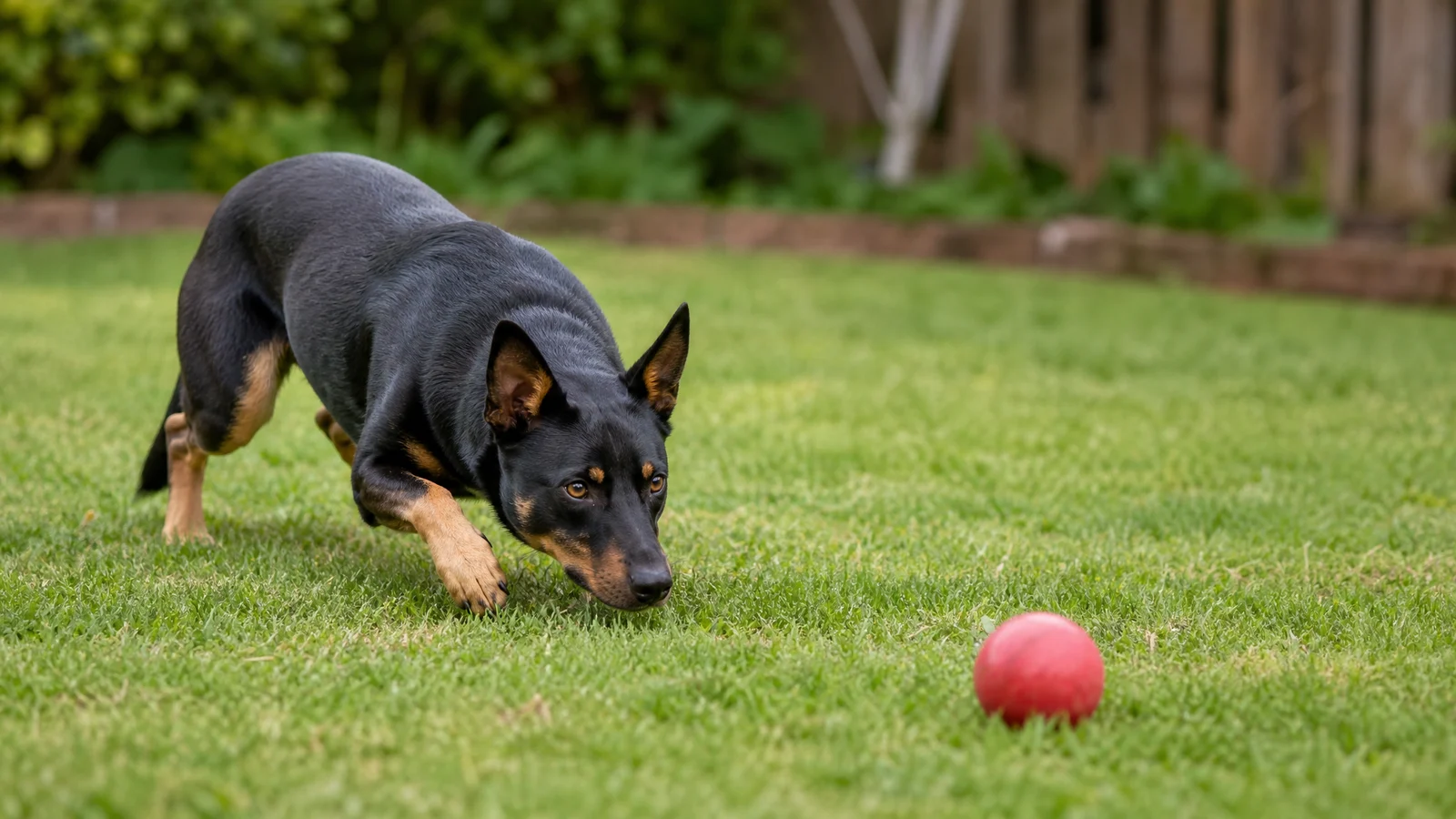
Some Australian Kelpie owners watch their dog circle the kids, nip at heels and freeze into a low stare at anything that moves, while other owners with the same breed never see any of it. Barking splits the same way. Some Kelpies bark hard at the window after two hours of outings and sprinting a day, and others watch the street in silence.
The difference is rarely love, effort or even exercise. It comes down to what happens to the breed's working instincts, eye, bark and grip, and whether those get rewarded, directed or left with nowhere to go. Handled badly, a bright dog invents their own jobs. Handled well, the same drive makes a sharp, eager partner. We have spent many years specializing in Kelpie behavior and training, and the same few misreadings come up again and again.
In this article, we'll go through what nipping, stalking and barking mean, why exercise and age do not settle them, and how to redirect each one with rewards.
Nipping Is Not Aggression in Kelpie Behavior Problems
The common belief is that a Kelpie who nips must be a mean dog. The breed is a gathering dog, and that style uses eye, bark and bite, the last meaning a grip, to move stock as conditions warrant. A nip at heels, sleeves or a running child is that grip applied to the nearest moving thing in a house with no sheep in it.
The rest of the body tells you which situation you have. If the nip targets movement such as heels, bikes or running kids, comes with a fast, loose body and stops when the movement stops, it is gathering. If it comes with a hard stare, stillness, growling or raised hackles, it is fear or conflict, and the plan changes from redirecting to creating distance and calm.
Reactivity After a Move
That second pattern often follows a change. Some owners link a sharp rise in reactivity toward strangers to a move, whether to an apartment with a window or across the country. On leash, reactivity toward strangers can show as growling and raised hackles. Treat a move as a reset. Go back to a distance where the dog can look at people and still take a treat, then rebuild in small steps.
For ordinary gripping, give the grip a legal target. Keep a tug toy within reach, cue it when the circling starts, and reward the grab. If teeth land on skin, the game ends. Step away or use a gate for a short time-out, then restart when mouths are calm.
Children help the process by standing still instead of running and squealing, and every adult should supervise. Anything sudden or escalating needs a vet first, because ruling out health problems comes before behavior work, and regular checkups catch pain that can look like temper.
Nipping at movement is the job showing up, while a stiff, growling dog is sending a message.
Australian Kelpie Stalking Is Gathering, Not Hunting
Owners often read the low, silent approach as a dog about to attack. The breed standard describes a dog who must turn suddenly at speed and move in a crouching, stealthy way as their work demands, and in the Australian bush Kelpies often worked unsupervised, relying on their own wits to find and gather livestock. Stalking is how a dog steers movement, not how they end it.
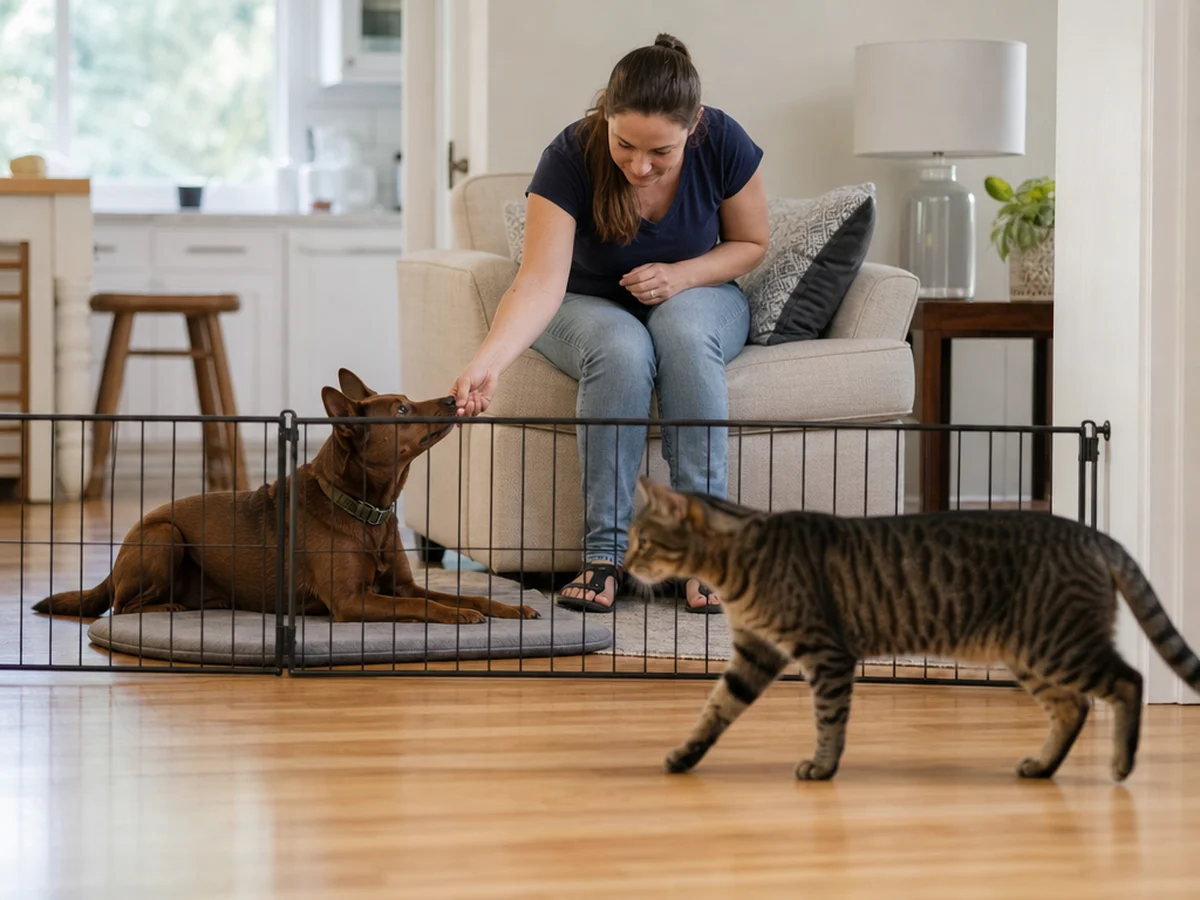
At home it looks like a fixed stare at a cat, a toddler, a rolling ball or the other dog, then a freeze, a drop and a dash to cut the target off. The eye is the control, because the dog holds a moving thing in place with attention alone. If the stare breaks and the dog circles wide, that is gathering. If the dog is rigid and silent while closing on a small animal, manage with gates and leashes and bring in a trainer.
Give Idle Time a Project
Stalking tends to fill idle time. A dog bred to think for themselves invents projects when none are offered, so if you see the stare building at the same time each day, hand over a project before it starts. Scatter part of a meal in the grass, run a scent game, or ask for a hand target.
To change the stare itself, mark the instant the eyes soften or flick toward you, and toss a treat away from the target so the dog has to leave the line to collect it. Practice at a distance where they can still break away. Over weeks, looking back at you becomes the better-paid habit.
A reliable eye-contact cue is the most useful skill a stalker can learn. Stalking is not a sign that something is wrong. It is a sign that nothing has been assigned.
Barking as a Working Tool, Not a Behavior Problem
The belief is that barking is only a nuisance habit. In a stock dog it is equipment, and the Working Kelpie Council's author notes that a dog for yard work generally needs to bark, while one used in large paddocks should not because the noise spooks stock. Voice varies by line and job, and indoors the bark becomes a driving signal aimed at whatever moves past the glass.
Sorting Out the Trigger
The useful diagnostic question is what happens just before the first bark. Use these if-then checks:
- If the dog barks at passers-by even after two hours or more of running and sprinting, exercise is not the lever, so reward quiet and calm at the window instead of adding miles.
- If the dog watches the street quietly and only escalates when an unfamiliar person comes onto the property, especially while the household sleeps, the trigger is a specific situation. Reward the quiet watching and teach a settle cue.
- If barking jumped after a move, rebuild calm exposure with rewards at a distance the dog can handle.
- If the barking is new, sudden or arrives with other changes, book a vet visit before anything else.
Learn the early signs, such as a stiffening body or a fixed look at the glass, and ask for a sit or down before the first bark. If barking has already started, call the dog away with a recall or an eye-contact cue and reward that. Pulling them off the glass with a happy recall works better than competing with the noise.
In Public and on Leash
Some Kelpies bark at any person or dog who approaches, and on leash the barking can turn to growling with raised hackles. The breed is described as basically a one-person dog who usually does not take to strangers for a long time, so this is no surprise. Reward calm looks, create distance, and let the dog choose to move away before anyone approaches. Our guide to socializing a slow-to-warm Kelpie goes deeper.
Pain is another cause, so have the dog examined to rule out medical causes before working on the barking. Barking at the window is the job being done in the wrong place.
This is general information, not a diagnosis or treatment advice. If your Kelpie's nipping, stalking or barking changes suddenly, or you suspect pain or illness, check with your veterinarian before starting a training plan.
Tiring Your Australian Kelpie Won't Fix Behavior Problems
The most repeated advice is that a tired Kelpie cannot be bothered to nip, stalk or bark, and it fails for a reason built into the breed. The standard calls for almost inexhaustible energy and almost limitless stamina, so more exercise mostly produces a fitter dog. Some owners already give two hours or more a day of park runs and sprinting, and exercise alone still does not settle barking at the window.
Instinct is not fuel that runs out. A tired dog may be quieter for an hour, but the urge is still there when the energy returns. Owners also report a trap: a young Kelpie turns difficult without exercise, so they run the dog for hours on top of training. That treadmill teaches the dog to expect constant action, and the next outing only raises the bar.
Give the Instinct a Job
Use exercise for health and fitness, then add what the instinct actually wants, which is a job. Short training sessions, Kelpie scent games, scatter feeding, tug with rules and a chase game with a toy all feed the eye, bark and grip cycle in a form you control. Without a place to run, leash outings can leave a dog wildly excited, and brain work fills that gap.
Then teach the other half of the breed's stated balance, keenness to work together with the ability to rest. Reward lying on a mat, stretch the gap between treats, and practice while the house is busy. If your dog can only settle after a long run, the off-switch has not been taught yet.
Exercise sets the baseline, and cues and jobs do the rest.
Australian Kelpie Behavior Problems Do Not Fade With Age
Another belief is that a Kelpie grows out of all of it. Kelpies are keen, active dogs who are always ready to work, and nothing in that job description expires. What changes with age is how the instinct looks and how well practiced the instinct is, though dogs vary.
A puppy tends to show it as circling, ankle grabbing and bouncing at movement. An adolescent adds speed, persistence and a real stare, and may test cues that were reliable weeks earlier. An adult usually looks calmer, but the habits that paid off, such as kids who squeal and run, are now polished.
To tell whether a behavior is fading or just hidden, use this reasoning. If it drops because you have been supplying outlets and cues, it is learned and will hold while the outlets stay. If it drops because the dog is left alone with nothing to herd, expect it back the moment something moves. If it jumps after a change such as a move, the dog is reassessing a new place, so return to distance and rewards.
The breed's loyalty works in your favor here. A Kelpie who grows up with you is generally the better working partner, and attachment to one person is part of the package. Plan for the drive to last the dog's whole life.
Redirecting Nip, Stalk and Bark Instincts, Not Removing Them
The last belief is that good training erases the instinct, so any nipping, stalking or barking means you have failed. The opposite is closer to the truth. The same drive makes the breed eager, alert and tractable, and your aim is to point it at something you chose. Having trained this breed for many years, we would rather you spend your energy on outlets than on suppression. Each part of the instinct has a ready one:
- Grip: cue a tug toy or a carried toy when the dog starts circling, reward the grab, and end the game calmly if teeth touch skin.
- Eye: mark and reward the moment the stare breaks, toss a treat away from the target, and keep a dependable eye-contact cue.
- Bark: reward quiet watching, ask for a sit or settle before the first bark, and call the dog away if barking has already started.
- Idle time: scatter feeding, scent games and short sessions give a self-directed worker a project you control.
Keep everyone in the household using the same cues, and expect setbacks after changes. If growling, snapping at people or fear is getting worse, get your vet involved and find a trainer who uses rewards.
Today, pick the one trigger that happens most often, the one you could name right now, and interrupt it with a cue and a rewarded alternative. If it is kids running, call your dog to a tug toy and play a chase game with the toy. Do that consistently and the instinct has a job that is yours to give.
 Training basicsCrate Training an Australian Kelpie and Preventing Separation Anxiety
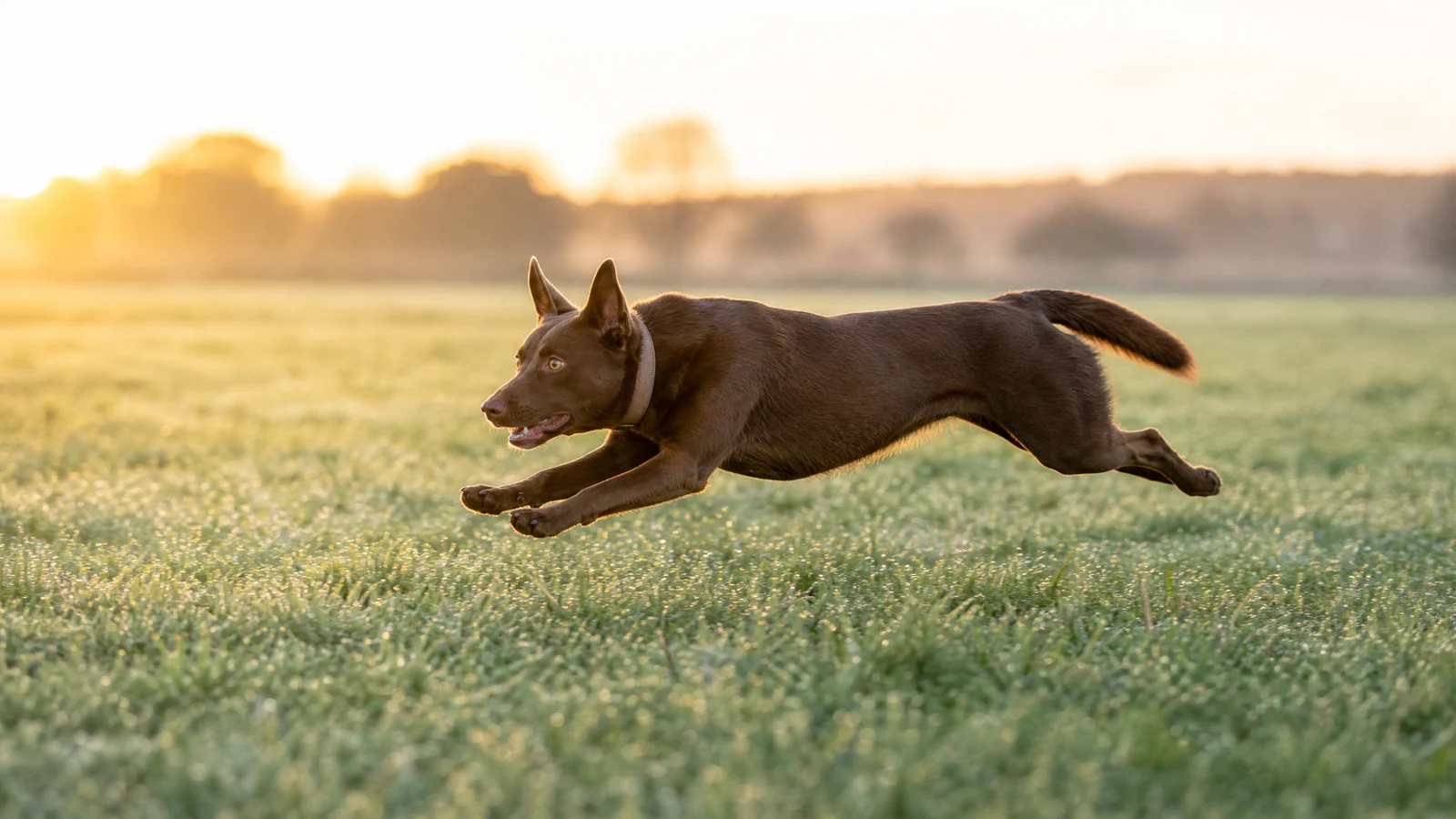 Exercise and jobsHow Fast Can an Australian Kelpie Run? Channel Their Stamina
 Training basicsHow to Potty Train an Australian Kelpie Puppy