 Kelpie
Why does your Kelpie chase and nip at other dogs, and how do you make it stop? The usual answers are to let the dogs work it out or to tire your dog out first. Both fall short for a breed made to muster stock, because a Kelpie can sprint hard and still lock eyes on the next dog through the gate.
We specialize in Kelpie behavior, and the pattern holds across households: what feels like work to your dog feels rude to everyone else. Many Kelpies are friendly and playful at the dog park even when they guard at home or react on leash, so a happy hello does not prove polite play. Handled well, the same drive gives you a sharp partner who can switch off on cue.
Below, you'll find the muster instinct behind rounding up other dogs, a calm gate routine, practice during quiet park visits, a plan for fast play and one familiar dog, and the markers that show the work is paying off.
Australian Kelpie Herding Instinct
Every move your Kelpie makes toward another dog traces back to a job. In the United States, Kelpies work all types of livestock and also compete in herding trials, Obedience and Agility. Their style is gathering, which means eye, bark and grip used to move stock as conditions warrant. At the park, they point that same toolkit at a dog instead of a sheep.
The Eye, Stalk, Chase Sequence
In the Australian bush, Kelpies often worked unsupervised and made their own calls about how to find and gather livestock. That is why the standards describe a dog who can turn suddenly at speed and move in a crouching, stealthy way.
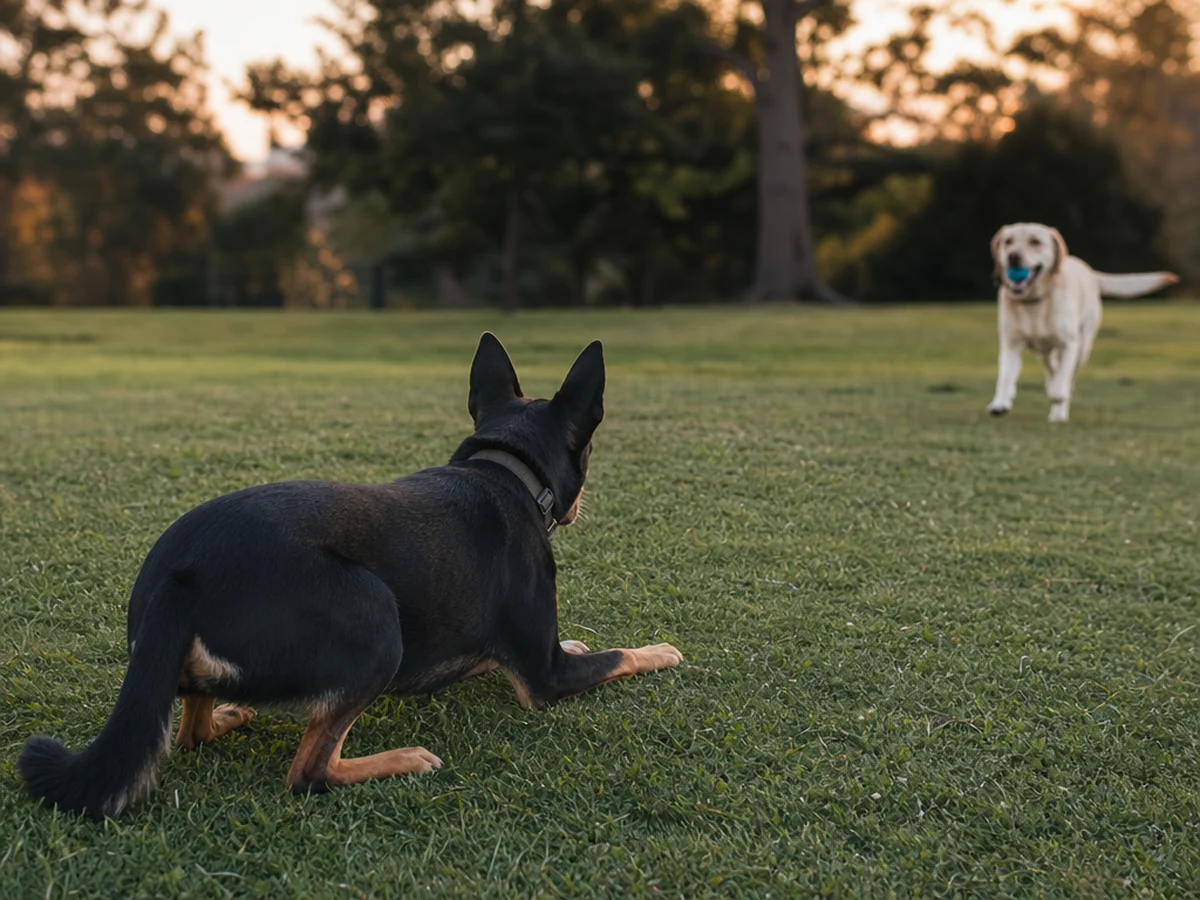
On a park lawn, the sequence arrives in order: a fixed stare, a low creep, an arc around the other dog, a burst of chase, then a nip at a heel or flank. Each stage is harder to interrupt than the one before. Aim for the stare, when a treat can still beat the game.
How Other Dogs Read It
Polite dogs approach in curves, sniff sideways, play bow and swap roles between chaser and chased. Your Kelpie holds a straight, silent stare and rarely takes a turn being chased, so most dogs read it as a threat. Eye and grip are made for stock that runs, which means a dog who flees gets pursued harder.
Watch the dog on the receiving end. A stiff body, a tucked tail, ducking behind their owner or sudden freezing all say they are uncomfortable. A quick snap from them is a clear request to stop, so treat it as information, not bad manners.
Why Distance Comes First
Training only works below the point where your Kelpie stops listening, so find that point first. A hard stare, a closed mouth and a body drifting forward mean you are too close. Add space until your dog can see another dog and still take a treat.
Kelpies are also individuals who like to do their own thing, so your cues must pay better than the game in front of them. The standards ask for a balance between keenness to work and the ability to rest. You are not deleting the instinct. You are adding the rest.
Australian Kelpie Park Entry
An evening park run can carry all the excitement your Kelpie has been holding in. They arrive wound up, and the first minutes at the gate are when stalking starts. Hard running alone often misses the mark: some owners give two hours of outings with lots of sprinting and still hear intense barking, so pair exercise with rewards for calm.
Add a short pre-park job before you leave the house. Scatter-feed part of a meal, run a few rounds of hand targets or play tug with clear start and stop cues. That gives the working brain a task you control, and our guide to giving your Kelpie a real job has more ideas.
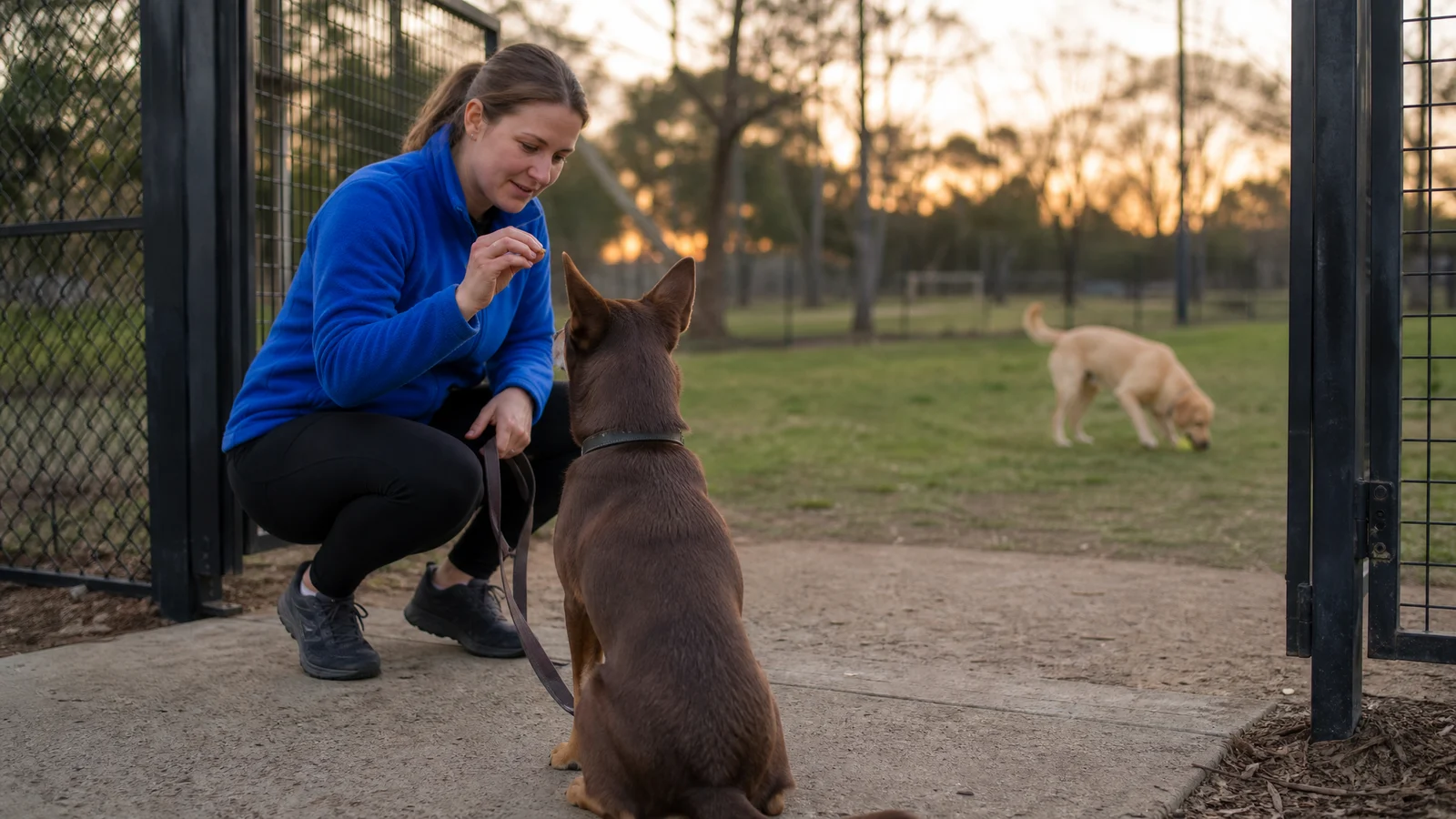
Then decompress. Walk the first stretch slowly on a loose leash, let your dog sniff and ask for a sit and a brief settle before you reach the gate. The first minutes inside the park decide the visit, so control them:
- Stop outside the gate and wait for a check-in before you open it.
- Enter on leash and walk away from the entry, not toward the crowd.
- Mark and pay each glance away from another dog.
- Release your Kelpie to play only when their body looks loose and wiggly.
- After a short burst of play, call them in, treat and send them to the mat for a breather.
Rounding Up Other Dogs
Quiet park visits make it easier to teach a Kelpie that seeing another dog does not start a gathering job. Make each visit count with setup, not hope. Go at quiet hours, when your dog meets one dog at a time instead of a crowd, and keep a leash on at first so you can hold the distance while skills build. Then run this routine:
- Pick a spot well away from the entry gate, where dogs cluster and every arrival becomes a new target.
- Stand where your Kelpie can see another dog and still take a treat.
- The moment they glance away from that dog, say your marker word and feed at your leg. Pay for a softening of the stare, not only a full turn.
- Walk parallel to other dogs on curved paths and skip nose-to-nose greetings, which leave two keyed-up dogs no room to curve.
- Leave while your dog can still check in, not after they are wound up.
Your goal is simple: your dog sees another dog, looks at you, then goes back to relaxed play. Break it into small steps and close the gap only when the current step feels boring. Reward-based does not mean anything goes. Your dog thrives on structure, routine and guidelines.
If greetings are the bigger worry, use the slower introductions in our guide to socializing a slow-to-warm Kelpie. Keep this session focused on looking away, checking in and returning to loose play.
Fast Play and Rounding Up Other Dogs
Dogs who sprint, yelp and swerve can pull a Kelpie straight into the eye-stalk-chase sequence. The wider pattern behind nipping, stalking and barking is covered in our behavior guide for Kelpies. Here the job is to interrupt the sequence before another dog feels trapped.
Start Far Enough Away
At a comfortable distance, mark and pay every look back at you, and pay more when a moving dog is close. Once check-ins come often, say your dog's name before the stare starts and reward the turn.
Use Recall as a Play Break
A dependable recall keeps your dog safe when play speeds up. Say the cue once, wait without repeating it and reward generously when your Kelpie arrives.
Send the dog back to play after the reward when their body is loose. Returning to the game teaches that recall creates a short reset instead of ending every good interaction.
Add a Mat Break Outside the Gate
Teach the mat indoors first by rewarding a step onto it, then a down and then a little more time. Use it outside the gate when play turns frantic, where distance makes settling easier and no loose dog can rush the resting space.
Australian Kelpie Partner Practice
A Kelpie who shares a home with another dog usually practices on them first. Watch for stares across the hallway, arcs around the resident dog as they cross a room and blocking at doorways or the food bowl. What you sort out at home shows up at the park, and your resident dog can show your Kelpie what calm looks like.
The Home Rules
Feed the dogs apart and give each their own bed or mat. Keep doorways clear so the resident dog is never cornered. When you see a stare, say your Kelpie's name and pay when they look at you. Reward your Kelpie for settling when the resident dog settles, and let them copy the relaxed body beside them.
The First Park Meeting
Bring both dogs on leashes, with a handler for each if you can. Start far from the gate, walk parallel and let your resident dog set the tone, since they greet in curves. Introduce park dogs gradually, one at a time, and pay your Kelpie for glancing at you before each new dog. Keep early visits short and leave on a good note.
When to Separate Them
Calm breaks protect your bond with both dogs. Separate them, using a mat or a gate, when you see any of these:
- The resident dog keeps trying to leave and your Kelpie keeps following.
- Your Kelpie freezes and stares and does not look away after you say their name.
- The resident dog pins their ears, snaps or hides behind you.
- Play has lost the chase-and-be-chased swap and become one-way pursuit.
Rounding Up Other Dogs Eases
Progress shows up in small shifts, not in one day when everything is fixed. Look back over your last few park visits and check for these signs of progress:
- The stare softens and breaks sooner, and your dog turns away without help.
- Check-ins arrive before you cue them, even with other dogs close.
- Circling turns into loose running with real chase-and-be-chased play.
- Other dogs stay near, play bow back and keep returning.
- Your Kelpie disengages quickly on recall and settles on the mat a little faster each time.
Bring in a trainer or behaviorist if any nip breaks skin, if fixation will not break even for your best treat, or if other dogs keep freezing, fleeing or hiding from yours. Growling or raised hackles toward dogs or strangers on leash, especially after a move, also deserve a professional look. Keep up regular vet visits, and mention it to your vet if your dog's play style changes suddenly.
Your Kelpie was bred to find a job and carry it out with little supervision, so without a job they will choose the nearest dog. Fair play at the park comes down to managed distance plus paid calm: space your dog can handle, rewards for checking in, a recall that always pays and a mat for rest. Do that on every visit, and the park becomes a place where other dogs relax and a working brain gets an honest outlet.
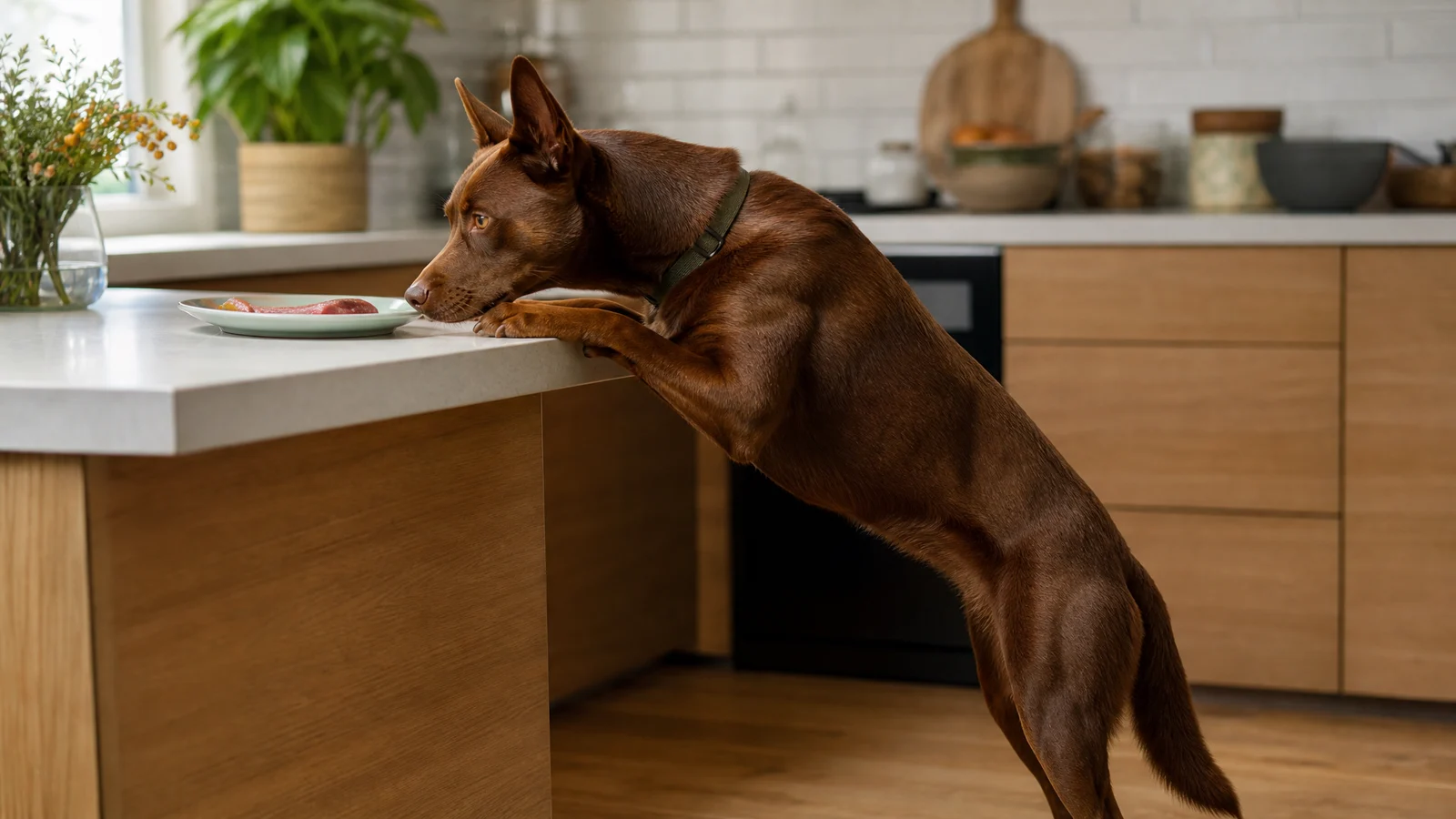 BehaviorTeaching Australian Kelpies to Keep Four Paws on the Floor
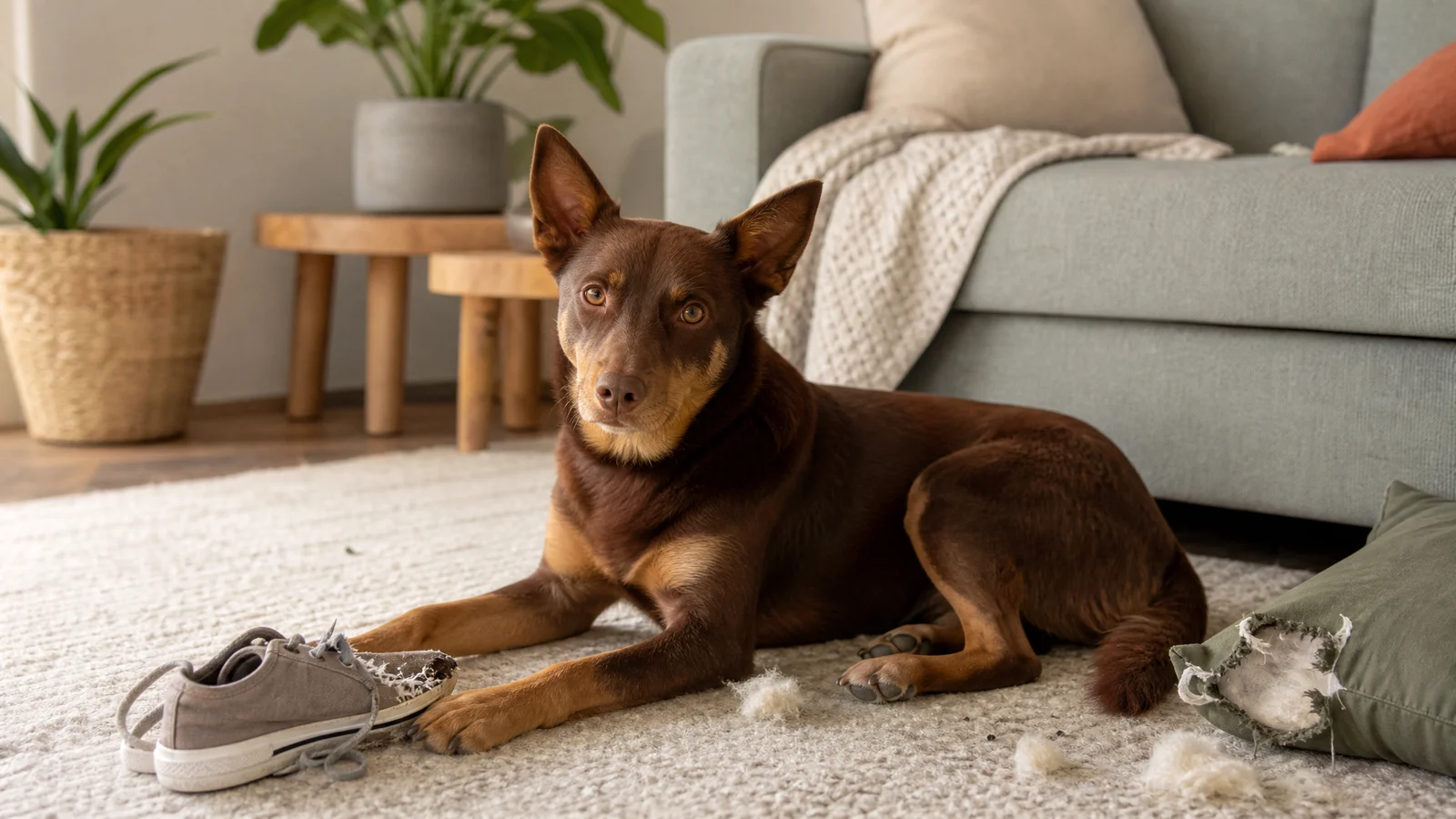 BehaviorGiving a Bored Australian Kelpie's Busy Jaws a Real Job
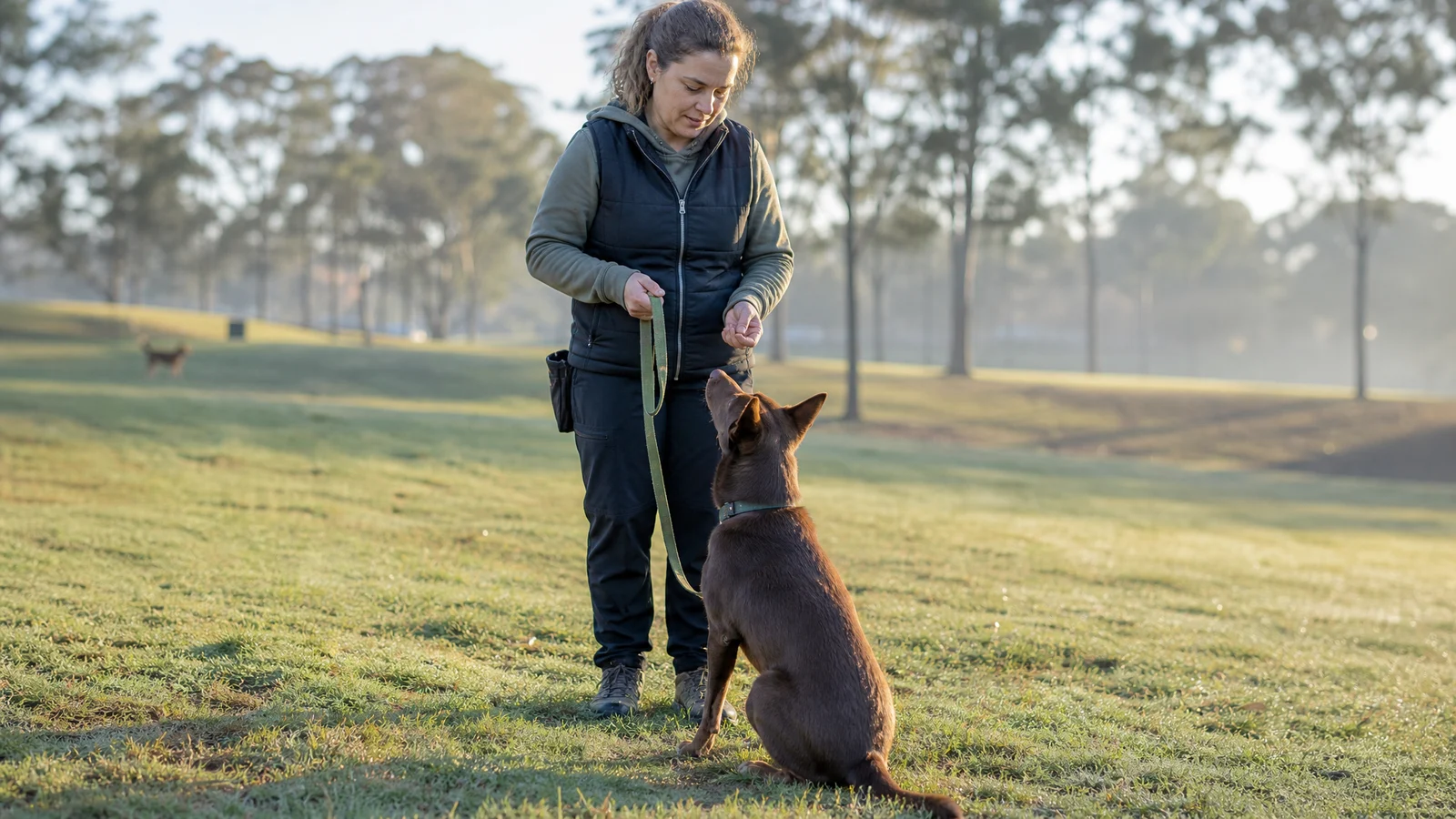 Training basicsAre Australian Kelpies Easy to Train? Temperament and Trainability FAQ