 Kelpie
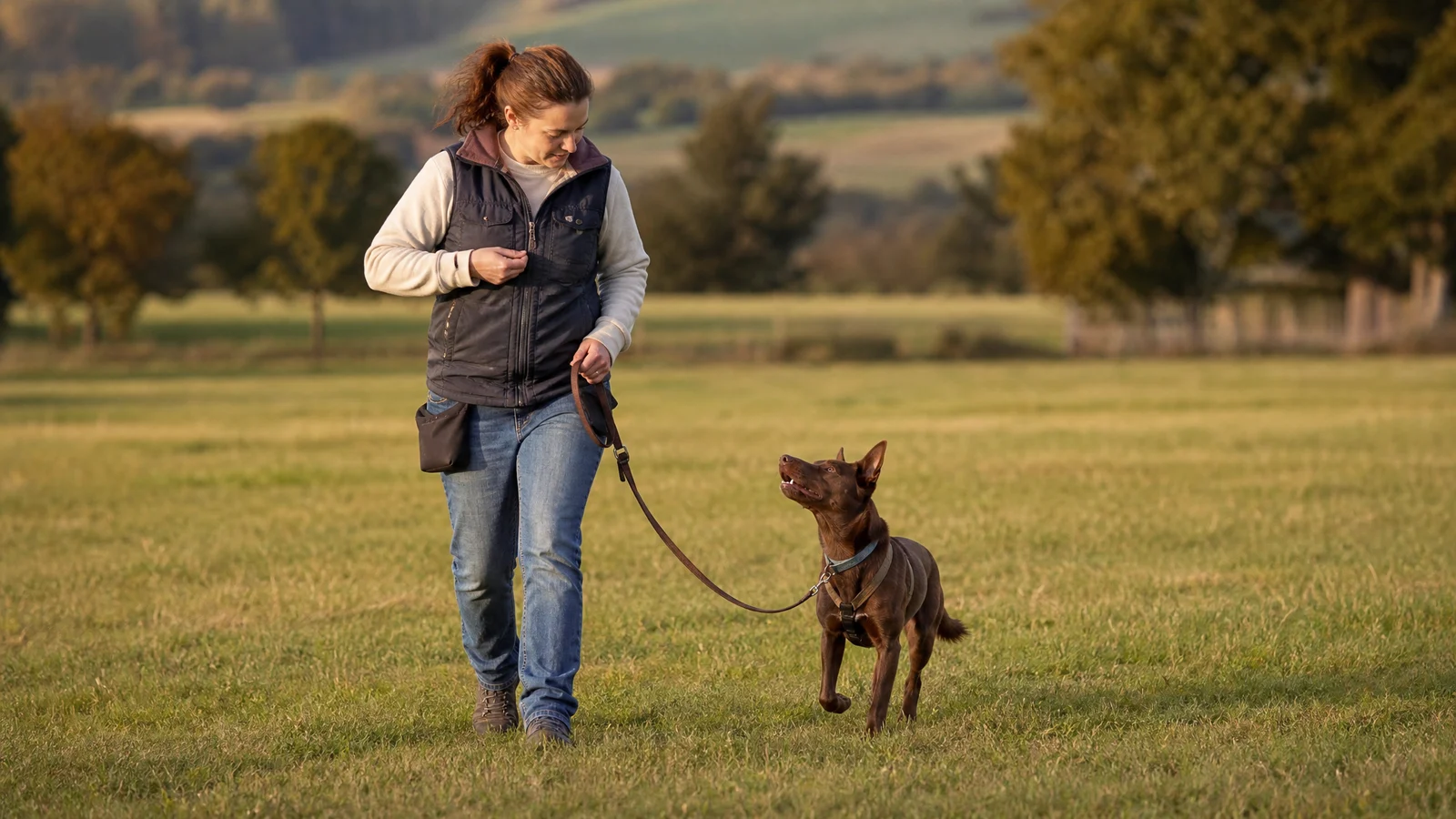
You train an Australian Kelpie with small, well-timed rewards for the choices you want, and you make those choices worth more than anything the dog can arrange alone. That second half is where most plans fall short. On paper the breed is bright and tractable, but Kelpies were developed to think for themselves far from the handler, so they often weigh your cue against a better offer.
Handled badly, that independence gives you a dog who invents their own entertainment, usually at your expense. Handled well, it gives you a partner who checks in because checking in pays. This guide covers reward-based training for a dog who likes to do their own thing, from what intelligence really means in this breed to ranking rewards, timing them, setting session length, working near distractions and following a two-week plan.
Australian Kelpie Intelligence in Training
Teach a young Kelpie to sit and they may be reliable within a handful of repeats, then give you a long, thoughtful look when you ask again at the far end of a paddock. Both reactions come from the same sharp mind. Working out which one you are seeing is the first judgment in any plan, because it tells you whether to teach more or to pay more.
Learning Speed
The breed standard calls the Kelpie extremely alert, eager and highly intelligent, with a mild, tractable disposition. Our verdict is that "tractable" here means quick to learn, not automatically obedient. A Kelpie who picks up a cue in a few repeats picks up a bad habit just as fast when it pays.
If barking at the window draws attention, or a stolen sock starts a chase, that lesson is banked within days. The cost arrives months later, because a habit rehearsed through adolescence is far harder to undo than one that never started. Prevent the rehearsal, pay for the alternative, and the fast learner works for you.
Willingness to Take Direction
Willingness is a separate trait, and working breeders say so bluntly. Mike Donelan, quoted by the Working Kelpie Council, describes the Kelpie as more of an individual who likes to "do his own thing" than the Border Collie, which he says can be made a "push button dog". He adds that owners who do not accept this have chosen the wrong breed.
We agree with the first half and would soften the second. You do not need a push-button dog. You need a dog who has learned that listening to you is where good things come from. Kelpies are also described as very faithful, close to one-person dogs and slow to warm to strangers, so the bond you build early is your biggest asset.
Reward-based does not mean anything goes. Even a free-thinking Kelpie settles faster when the day has structure and clear guidelines, taught without fear or intimidation. Predictable mealtimes, a regular resting spot and a few household rules do more for focus than any amount of clever cueing.
Choosing Rewards That Matter in Training
Many owners describe Kelpies who are eager to run at every opportunity, wild with excitement even on a leash in snow. That single trait changes the usual advice to "just use treats". For a lot of these dogs, the most valuable thing you control is not in your pocket. It is permission to go.
Ranking What Your Dog Wants
Our verdict is to rank rewards by what your dog actually chooses, and to expect movement near the top. After the same sit, offer two options and watch which one they lean toward. Rankings shift with place, hour and time since the last outing, so recheck often.
Giving something the dog really likes, whether food, toys or praise, makes the behavior more likely to return, which is the heart of reward-based training. A typical Kelpie ranking looks like this:
- A release to run or chase a ball, earned by a short, clear behavior such as a sit or a check-in, sits at the top for most Kelpies.
- Tug or ball play comes next and suits energetic cues and recalls, because it keeps the dog's body in the game.
- Small, soft, smelly food works for fast repetitions and early learning, when you need many rewards in a row.
- Praise and life rewards, such as walking through a door or sniffing a post, fill the gaps and cost nothing.
Using the Release as Pay
The release is where the independent streak starts working for you. Ask for the sit or the look, mark it, then say your release word and let the dog go. They get what they wanted, and they learn that your cue is the key that opens it.
Use the release where you control the outcome, such as a fenced area or a long line. Save the best reward for the hardest task, and keep food for the moments when you need many quick repetitions.
Exercise Comes Before the Session
Common advice says a tired dog is a trained dog, so just run them harder. We would adjust that. Owners find that a young Kelpie who misses the big daily outing becomes hard to live with and hard to teach, and that hours of running on top of training keep them workable. A tired body comes before the session, not instead of it.
Where owners give amounts, they describe about two hours or more a day, often with real sprinting. Treat that as a baseline for a young, healthy dog rather than an extreme, and plan your week around it. Regular vet visits help you judge what suits your own dog as they grow, especially while a puppy's joints are still developing.
Timing and Delivering Training Rewards
A Kelpie moves quickly, so the moment you want to pay for is often over before your hand reaches the treat pouch. A dog who sat for half a second and was already turning away will not connect a reward delivered two seconds later with the sit. Our verdict is that precision beats generosity, and three pieces decide it.
The Marker Word
Choose one short marker, a word such as "yes" or a clicker, and use it the instant the behavior happens. The marker promises a reward is coming, which buys you a second or two to deliver it.
Charge it first by marking and then treating, many times, until the dog's head swings toward you at the sound. Keep the word for payment only. If you also use it to call or to calm, it loses its precision.
Where the Reward Lands
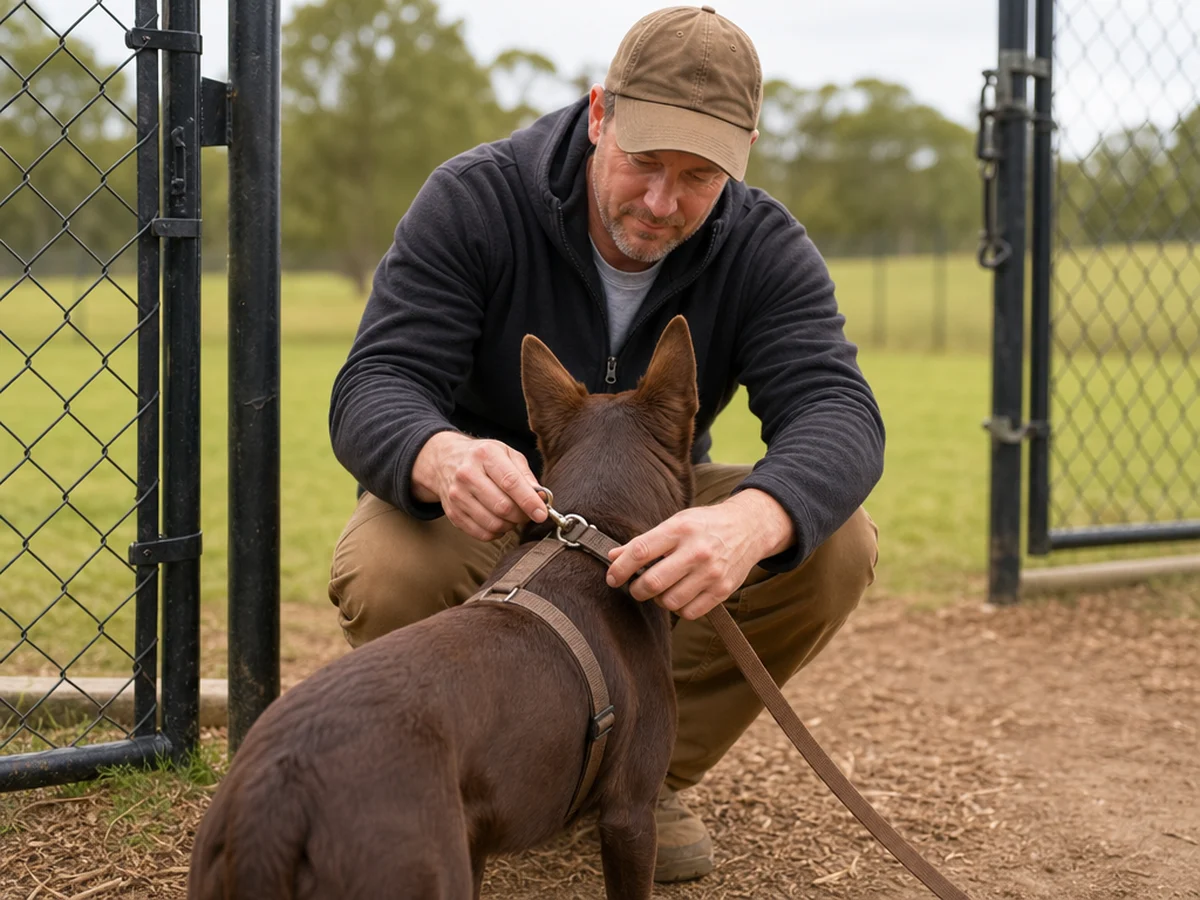
Where the reward arrives teaches as much as the behavior. Deliver it at your side or in front of you, so the dog learns that the good place is near the handler.
Now and then toss a treat or toy a short distance away, then wait for the dog to come back and offer attention. For a breed built to work at a distance, that return trip is the habit you are building, and out in the world it becomes a check-in.
Fading Food Without Losing Focus
Move from a reward every repetition to a reward every so often, and keep the pattern unpredictable. Between treats, stay engaged with a smile, a word or a quick game, so the dog feels paid even when no food appears.
Fade gradually and keep the release to run as a lasting reward. Fade too fast and you teach a dog who only works when they see a treat, and you find out the first time you step outside.
Training Session Length
The clearest sign a session has run too long is a Kelpie who stops looking at you and starts sniffing, scanning or wandering toward a fence line. That drift is not stubbornness. It is the dog doing their own thing because your session stopped being the best offer in the yard. Our verdict is short, sharp and purposeful, ending before the dog gets there.
In practice that means a clear start, one small goal, a quick burst of repetitions and a finish on a success, followed by a release. A few minutes is plenty at first. Several brief sessions spread across the day beat one long block, and they fit a busy household.
Watch the early signs of fading attention: slower responses, a glance at the horizon, a sudden interest in the ground. When you see them, ask for one easy behavior you know the dog can do, pay well and release. You have ended on your terms, and the dog remembers a win rather than a drift.
Aim for settled rather than exhausted. The standard asks for a good balance between keenness to work and the ability to rest, so teach settling on a mat as its own skill and reward it often. A Kelpie who can switch off between bursts of work learns more in each burst.
Training an Australian Kelpie Who Does Their Own Thing
Your Kelpie turns away mid-cue, nose lifted toward a smell, or drifts toward the gate when you were sure they were with you. Our verdict is to treat that choice as information rather than defiance. The dog is telling you what they value right now, and a good planner reads that signal and adjusts. Three situations cover most of it.
When Your Kelpie Checks Out
Checking out usually has a cause you can fix. The cue may be too hard for this place, the session too long, the reward weaker than the surroundings, or the dog under-exercised and buzzing.
Make the task easier, shorten the work, upgrade the reward or let the dog burn off energy first, then try again. Treat each drift as a prompt to change your side of the deal.
When Your Kelpie Self-Rewards
Some behaviors pay the dog without any help from you. Window barking is the classic case. Some owners who give a couple of hours of outings daily, with plenty of sprinting, still see intense barking at passersby, and they suspect boredom is not the cause.
The barking works because people keep walking away. More exercise alone may not fix it, so pair it with rewarding quiet at the window. Reduce the view with film or a closed door while you train, mark and pay for calm glances, then teach a mat as the place to go.
Making Check-Ins the Better Option
Pay for every voluntary glance at you, especially on walks, and often follow it with a release to sniff or run. Start in easy places so the habit sinks in.
Over weeks the dog learns that looking at you is the shortest path to what they want, and the independent streak starts working for you.
Reward Training Around Distractions
A bike, a running child or a ball in the next yard can erase a cue the dog knew perfectly in the kitchen. Kelpies are wired to watch movement, so distractions are a standing feature of training rather than an exception. Our verdict is to build focus with three dials, distance, reward value and difficulty, and to change only one at a time.
- Start far enough from the trigger that the dog still takes treats and answers to their name.
- Use your highest-ranked reward, since the trigger is competing with it.
- Mark and pay each time the dog glances away from the trigger toward you.
- Move closer in small steps, and step back whenever the dog struggles.
- Finish with a release, so the trigger itself sometimes becomes the payment for good work.
Treat strangers as a distraction too, since the breed can be slow to warm to new people. Let the dog watch from a comfortable distance and reward calm. Relaxed dogs learn better, and a 2020 PLOS ONE study of companion dogs found more stress behaviors and bigger cortisol rises after training in dogs taught mostly with aversive methods.
Raise the difficulty over months, not days. Noise, other animals and movement each need their own ladder, and a Kelpie who copes with one will not automatically cope with the next. Expect setbacks in adolescence and simply return to an easier step.
Rewarding Your Australian Kelpie's Choices
Every verdict above comes down to one rule: pay the dog for choosing you. Make the choice easy to see, quick to reward and more valuable than the alternative, and a bright, independent breed will keep making it. The dog stays an individual, and you become the best option on offer. Here is a two-week plan to put that to work.
Charge your marker word until the dog turns to you at the sound. Test which rewards your dog prefers and write down your ranking.
Run several brief sessions a day on sit, a check-in and a mat, always ending with a release. Deliver rewards at your side and toss a few away so the dog returns to you.
Move the same skills to a quiet yard, then a park edge, keeping a good distance from movement and other dogs. Pay every voluntary glance at you and use the release to run as your top reward.
Fade food a little, but keep play and praise flowing between treats. End each outing with one question: did your dog choose you, and did you pay for it?
 BehaviorWhy Does My Australian Kelpie Nip, Stalk and Bark?
 Training basicsCrate Training an Australian Kelpie and Preventing Separation Anxiety
 Exercise and jobsHow Fast Can an Australian Kelpie Run? Channel Their Stamina