 Kelpie
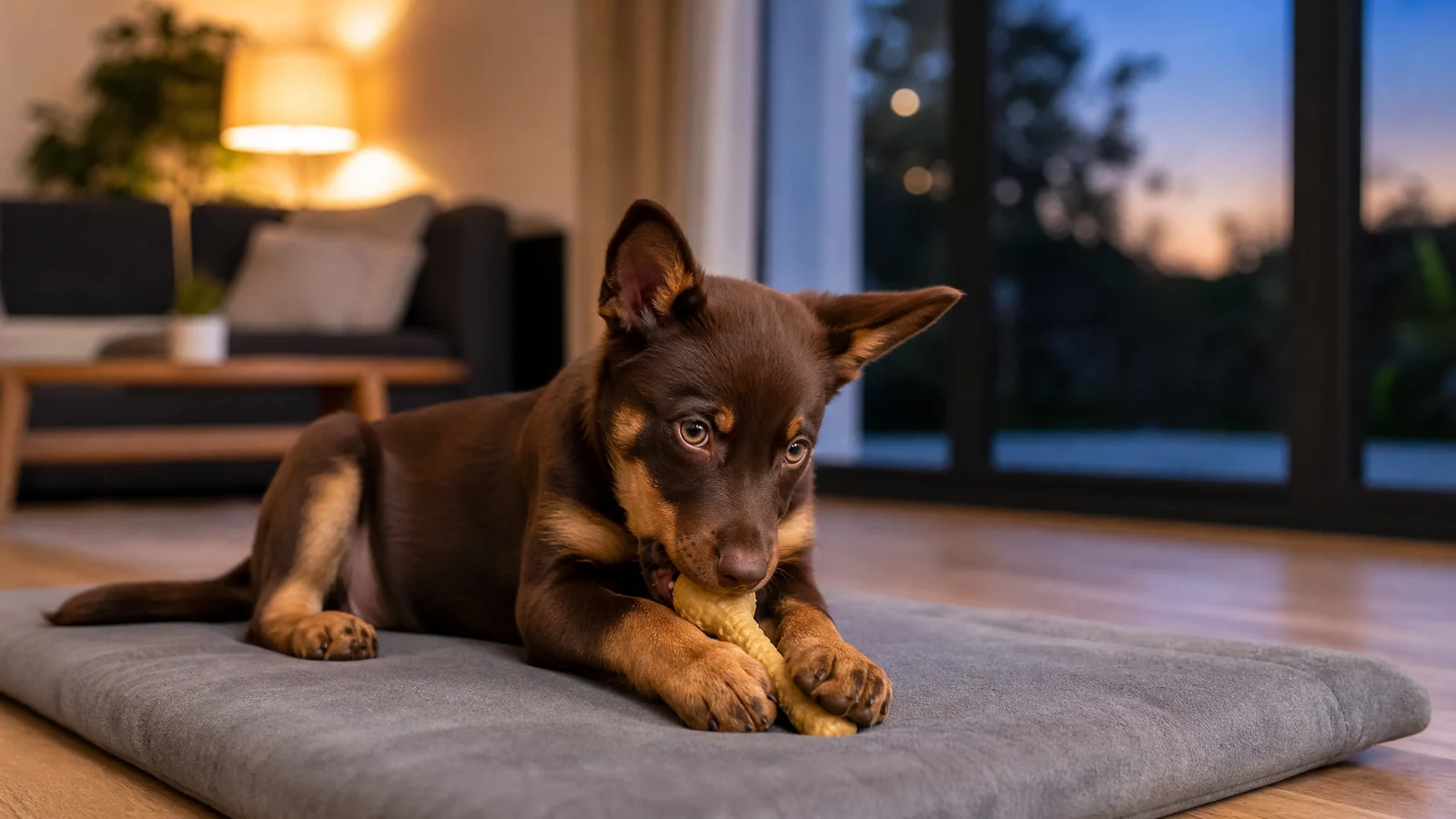
Around dusk, your Kelpie puppy may rocket through the house, skid around the sofa and latch onto every sleeve in reach. Twenty minutes later they could still be wired, circling and whining, unable to lie down even though they are plainly worn out.
It is the breed's design showing up in your living room. Kelpies were built for long days of work, and the standard credits them with almost inexhaustible energy. Keenness comes preinstalled, but the off switch has to be taught. A puppy who never learns it grows into a restless, mouthy adolescent, while one who learns it early becomes a dog who works hard and then rests.
Below, you'll find a plan that runs from your first week with the puppy to their second birthday, including settling taught before any cue, session lengths by age, focus built in short bursts, and what the teenage months ask of you. Our work centers on Kelpie behavior and training, and this is the order we would hand any new owner.
Train Your Australian Kelpie Puppy to Settle First
Settling comes before sit, down or recall because it is the counterweight to everything else you will build. The breed standard asks for a good balance between keenness to work and the ability to rest, and a puppy will not find that balance alone. Treat rest as a skill you reward, exactly like any other.
Teach the Mat in Small Steps
Start on day one with a mat and a pen or crate nearby. A clever puppy learns fast when calm behavior is the thing that pays, so work through these steps:
- Drop a treat on the mat while the puppy is already lying near it, then say nothing.
- Reward again for every few seconds they stay down, delivering treats low and slowly.
- Step away, return, and reward before they get up.
- Add a cue word only after they head to the mat on their own.
Tire the Body Before the Brain
Many owners find that a young Kelpie who misses the big daily outing becomes hard to live with and hard to teach. So the order of the day is running first, training second, settling third. Where owners give actual amounts, they describe about two hours or more of outings a day with real sprinting, and that is a fair baseline for a healthy young dog rather than an extreme.
Here is where common advice falls short. "Exercise them until they drop" builds a fitter Kelpie, not a calmer one, because almost inexhaustible energy means stamina rises to meet the workload. Practiced settling teaches the switch, so pair every big outing with a quiet rest on the mat. Our guide to channeling that stamina goes deeper on the outings themselves.
Training Australian Kelpie Puppies in Weeks Eight to Twelve
Whatever your puppy rehearses from weeks eight to twelve becomes the default, good or bad. A Kelpie puppy practices fast, so a sleeve grab that wins a game three times is already a habit. Set routines and gentle limits at once rather than waiting for the puppy to grow out of things.
Build a Predictable Day
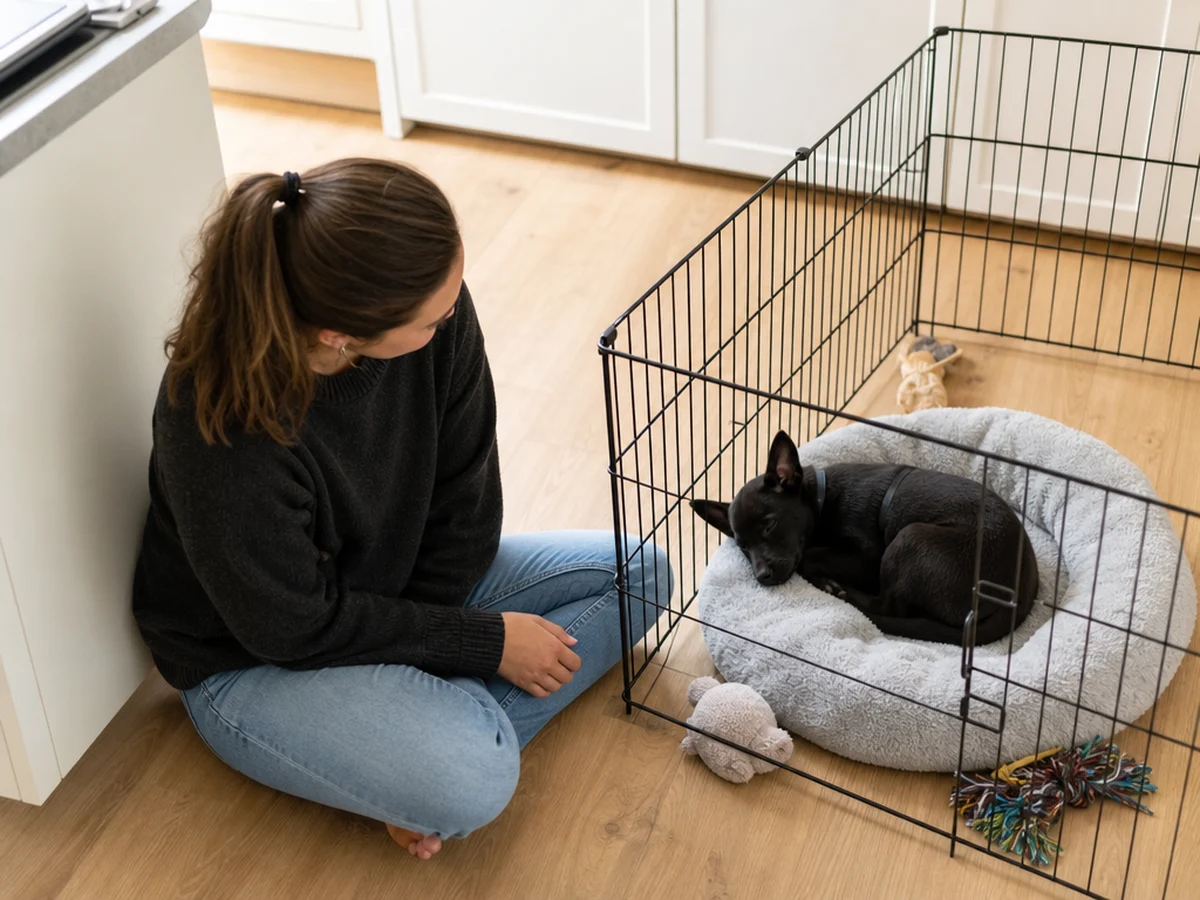
Meals, toilet trips, play and naps should happen in roughly the same order, with naps in a pen or crate away from household traffic. Puppies who get regular rest tend to be the ones who can settle at dusk, so protect those naps even when the puppy argues. A boring, repeatable day is the quickest way to a calm evening.
Set Mouthing Limits
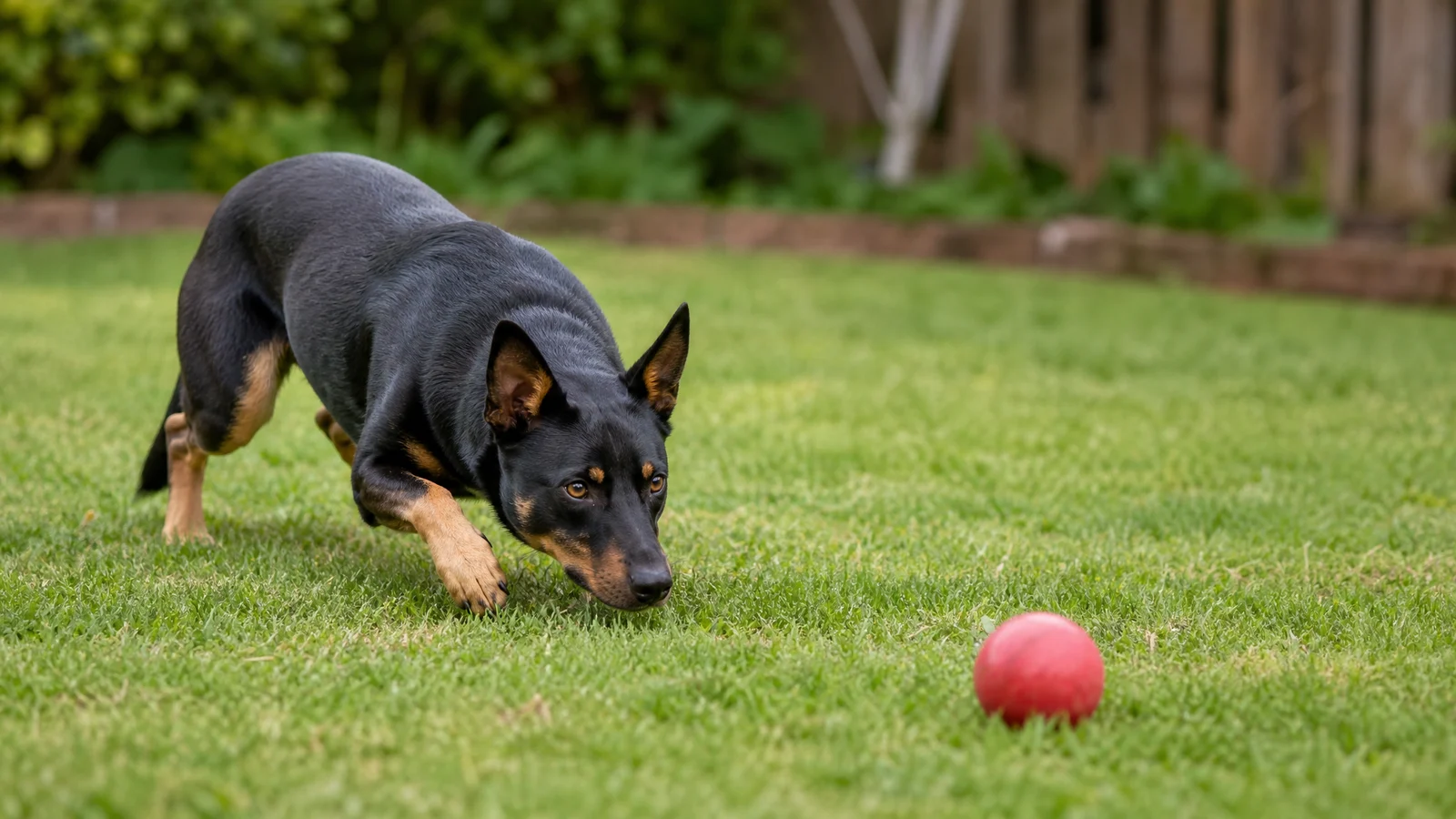
Kelpies are gathering dogs, and many puppies nip at heels, sleeves and moving feet as soon as the zoomies start. When teeth touch skin, stop the game and stand still or step out of reach for a moment. Then offer a toy and praise when it is taken. Keep chew toys in every room so a better option is always within reach, and see our piece on Kelpie nipping and stalking for the instinct behind it.
Introduce People Gradually
Kelpies often bond closely with one person and take a long time to warm to strangers. Let visitors ignore the puppy, toss treats from a distance and wait for the puppy to approach. Book regular veterinary visits from the start, and ask your vet which outings are safe before vaccinations are complete.
This is general information, not medical advice. Your veterinarian can tell you when vaccinations allow public outings and how much running and jumping suits your puppy's growing joints.
How Long Should a Week-by-Week Puppy Session Last?
Shorter than you think, and always stopping while the puppy is still keen. A Kelpie will happily work until frantic, which looks like enthusiasm but is really a puppy losing the ability to think. Several tiny sessions a day beat one long one, and each should finish with a settle on the mat.
Under Four Months
Think in moments, not minutes. Run a few minutes at a time, a few times a day, with a handful of repetitions of one skill such as a hand target or a sit. Pay well, stop, and give something quiet like a chew on the mat before the next round.
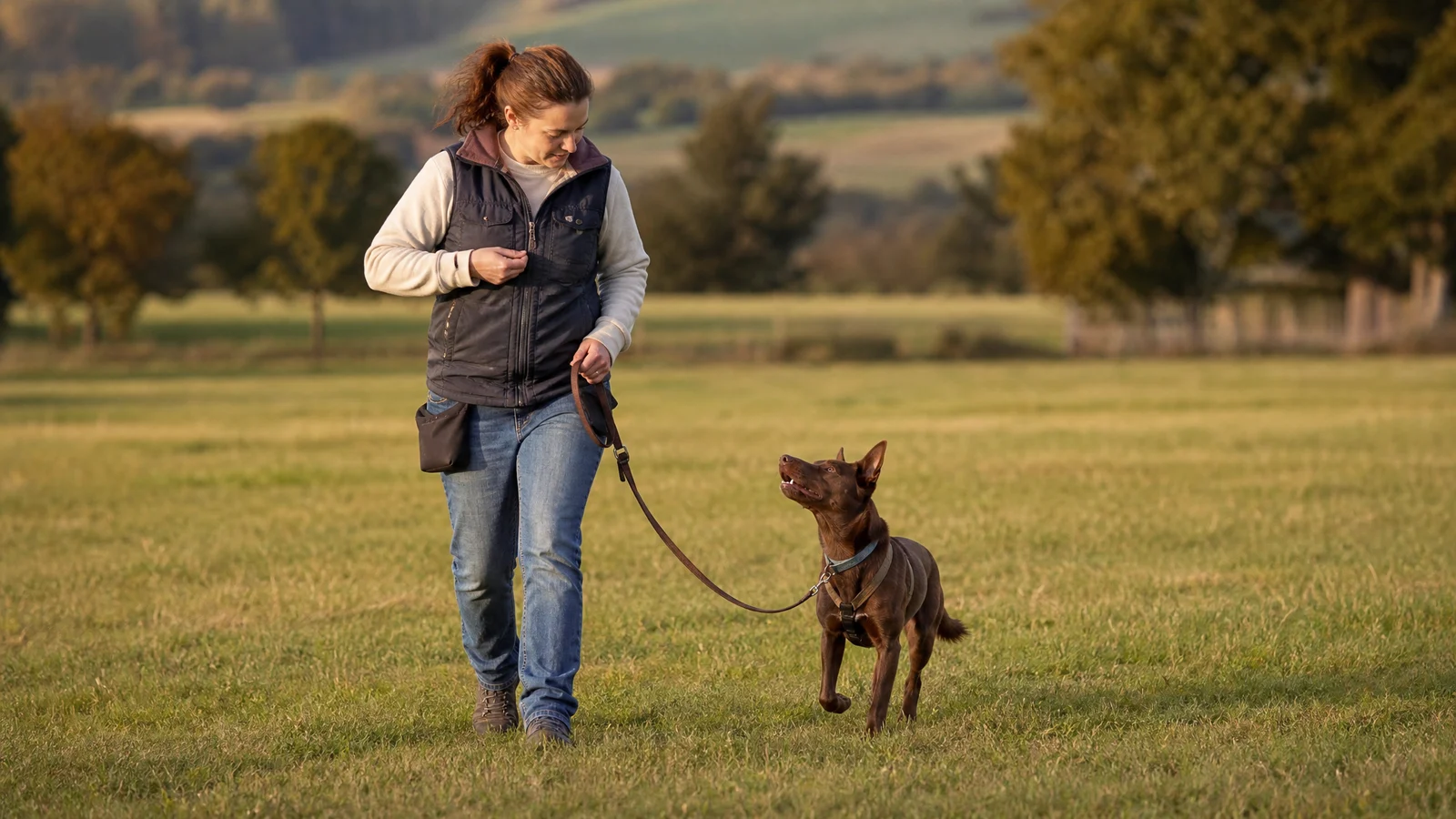
Mix play into the rewards. The breed has a reputation for liking to do its own thing, so a short game of tug as a reward keeps your puppy engaged without turning training into rigid, push-button drilling. Our guide to rewards for an independent Kelpie covers that approach in more depth.
Four Months and Older
Sessions can stretch a little as focus improves, but resist the urge to double them overnight. A better use of extra attention is to string two or three short exercises together with a break between each. Watch for the signs a session has run too long: sloppy responses, mouthing, spinning, or sniffing the ground in every direction.
End on an easy win, then let your puppy rest. A dog who likes to make their own decisions stays more willing when sessions finish before the fun runs out.
Week by Week Puppy Training Builds Focus in Bursts
Focus is not something a Kelpie puppy has, it is something you pay for. Reward every time they look at you without being asked, and the habit of checking in becomes automatic. Start inside where nothing competes, then add distraction one step at a time.
Raise difficulty in this order so each step stays winnable:
- Practice in a quiet room, then a hallway, then the yard.
- Add a family member walking past, then someone playing with a toy.
- Move to a calm outdoor spot, then a busier one, rewarding each check-in generously.
- Bring out your best treats whenever the puppy is more excited than usual.
Nose work is a strong tool here. It helps high-energy dogs focus, and hiding treats in boxes or around a room gives a keen Kelpie brain a real job without needing space. It also makes a reliable plan B for wet weather.
Outings need a plan as well. Kelpies are eager to run at every chance, and owners without a yard report that their dog becomes very excitable on leash, even in snow, because there is nowhere to let off steam. Find a regular safe place for off-leash running and reward calm walking on the way there. Keep indoor games and settling practice ready for days when access changes.
What Changes When You Train a Teenage Australian Kelpie?
Adolescence tests everything you taught earlier. A puppy who settled beautifully at four months may suddenly ignore the mat, chew again and sprint off at the first chance. Keep the rules exactly as they were, and give the working drive somewhere useful to go.
Six to Twelve Months
This is the stretch where consistency pays off most. Drop back to easier exercises, raise the reward value and keep a long line on in open spaces until recall holds up. Put sprint outings and settling sessions in the same day, so your dog learns that big effort is followed by quiet.
Do not assume every behavior is boredom. If your dog barks at the window, manage the view, reward quiet, and teach settling on a mat away from the window rather than adding yet more running.
Twelve to Eighteen Months
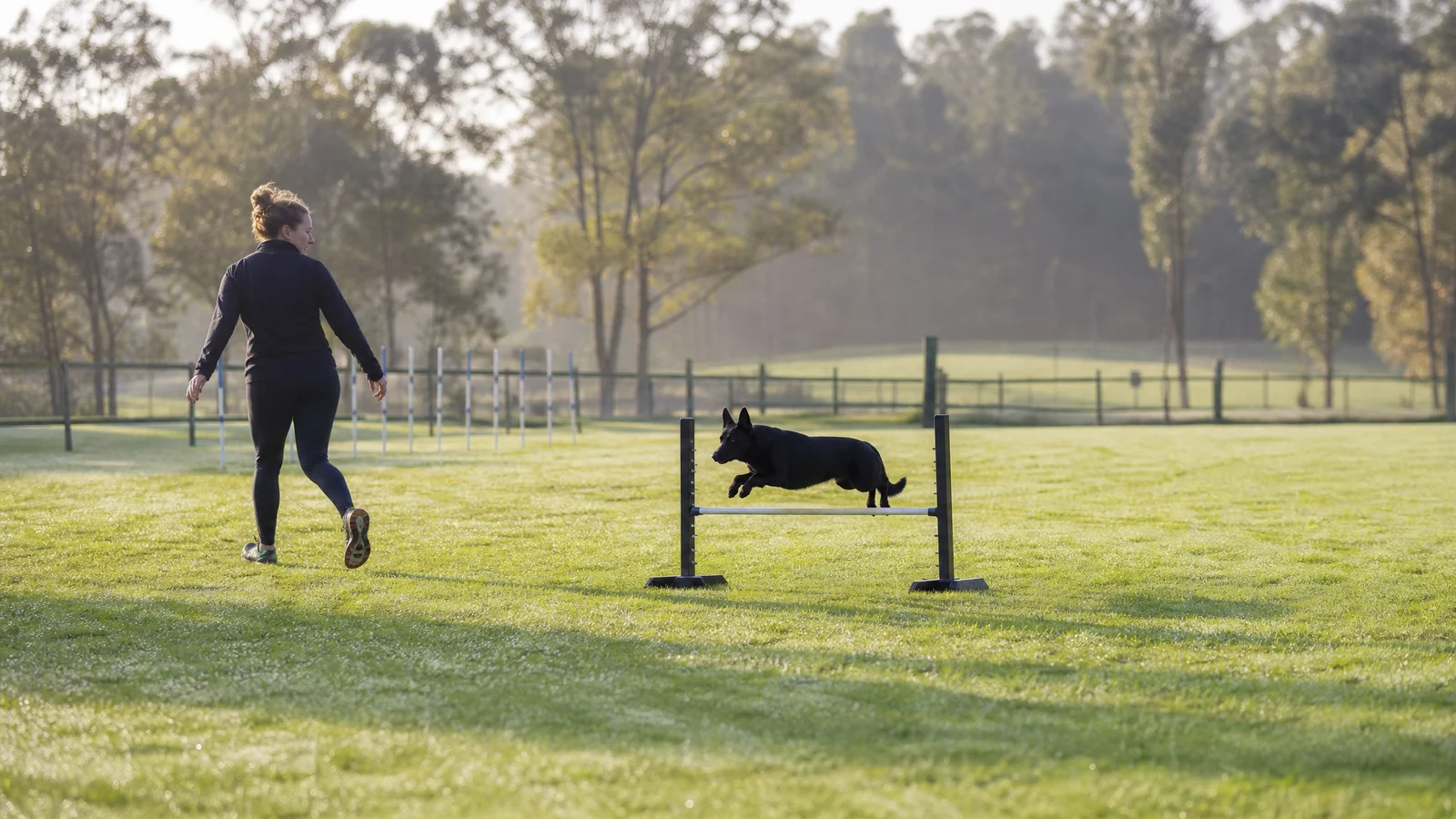
Now you can proof skills around real life: other dogs, bikes, visitors and food on the ground. Add duration to stays and mat settles, and give your dog work with a purpose. Trick chains, scent games and low-impact agility basics all suit a breed made to work closely with people.
Sports like rally runs reward teamwork and control rather than raw speed, which suits a Kelpie who needs practice at calm precision. Ask your veterinarian whether your dog is ready before any jumping or fast turns.
Training Puppies to Age Two Needs Weekly Practice
The goal at two years is a dog who works keenly and rests easily, and that comes from a weekly rhythm rather than a single breakthrough. Each week, practice one longer settle, one new distraction level, one scent or trick session and a few big outings. The table shows how the emphasis shifts through the stages.
| Stage | Main focus | Settling practice |
|---|---|---|
| Weeks eight to twelve | Routine, gentle limits, introductions | Mat and pen naps |
| Up to four months | Tiny sessions, name, hand target | Chew on the mat after games |
| Four to six months | Check-ins and distraction | Settle while family moves around |
| Six to twelve months | Steady rules, long-line recall | Settle after every big outing |
| Twelve to eighteen months | Proofing and a job | Longer settles in new places |
| Eighteen months to two years | Reliable cues, chosen activity | Calm on cue anywhere |
Judge progress by how quickly your dog comes back down, not by how little energy they have. These are the signs to look for:
- Your dog settles on cue, even when household activity continues around them.
- They recover quickly from excitement, going from zoomies to lying down within a short time.
- They check in with you outdoors and walk calmly to the off-leash spot.
- They greet visitors politely after a short wait, without a frantic rush.
Reach out to a reward-based trainer or your veterinarian if you notice any of these:
- Constant frenzy that no amount of rest, exercise or settling practice reduces.
- Fixation on shadows, lights, reflections or a single object to the point of ignoring food and you.
- Growing fearfulness, hiding or snapping at strangers. For a nervous or reactive dog, one-to-one sessions are a sensible start.
- Sudden changes in movement, appetite or temperament, which a vet should rule out first.
A Kelpie's keenness never goes away, and it should not. Teach your dog early to rest as willingly as they work, keep that practice steady through the teenage months, and you will have a partner who is as easy to live with at the end of the day as they are impressive in the middle of it.
 Exercise and jobsAustralian Kelpie Sports and Jobs for Their Instincts
 Training basicsHow to Train an Australian Kelpie Who Does Their Own Thing
 BehaviorWhy Does My Australian Kelpie Nip, Stalk and Bark?